Tag: writing

  • From Campus to Community: The ComMUniversity Journey

    From Campus to Community: The ComMUniversity Journey

    What if university did not always mean going to a university?

    That simple idea sits at the heart of ComMUniversity, an initiative of the Department of Adult and Community Education at Maynooth University that has been bringing university learning into local communities for more than a decade.

    The roots of ComMUniversity reach back to 2011, during a period when Ireland was still living with the effects of the economic crash. At a time when much adult education policy was understandably focused on employment and skills development, research carried out through local libraries suggested something else too: communities wanted opportunities to explore interests that had meaning for them through subjects like history, sociology, politics, philosophy and other university subjects simply because they were curious and wanted to learn more.

    A partnership began to take shape between Maynooth’s Department of Adult and Community Education, the public library service and Local Development and LEADER organisations. In 2012, the first programme were piloted in Kildare Town and Coolock, involving 49 participants. What began as a small experiment would develop into a ComMuniversity. What made this incentive different was that instead of asking people to cross the threshold of a university campus, they brough the university to them.

    Local libraries provided familiar, welcoming learning spaces. Community organisations brough their knowledge of local people, needs and supports. Maynooth University brought subject specialist to share knowledge with communities. Over the years the programme has included Local History, Politics, Ecnomics, Psychology, Philosphy, Criminology, Community Development, Geography and Law. As the model is responsive newly areas of learning around Environmental and Sustainability topics are also being explored.
    ComMUniversity is not defined simply by the subjects it teaches

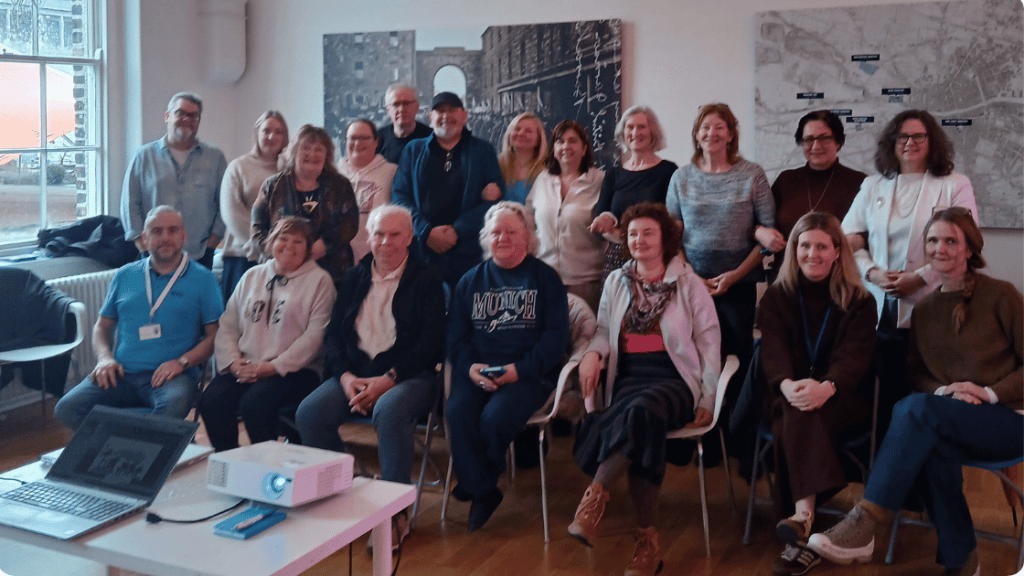
    The programme focusses on participatory and action learning to include real-lived experiences of the participants. As Dr Derek Barter the Director of the ComMUniversity has descried it, each ComMuniversity can become an “Agora”: a place where academics and members of the public meet to ask questions, exchange ideas and learn from one another.

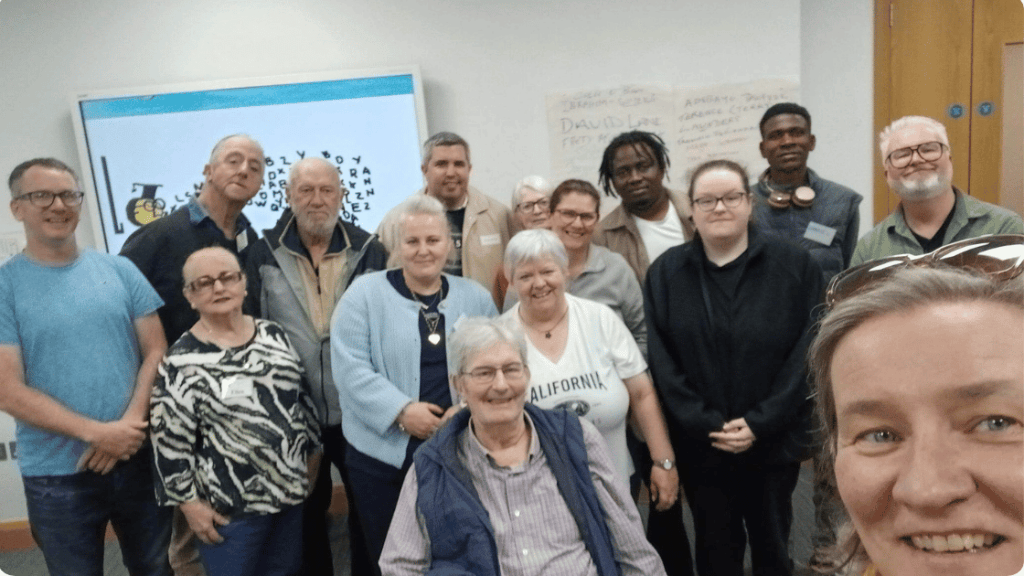
    In 2024, the ComMuniversity received well deserved national recognition when they won the AONTAS STAR Award for Third Level Access and Engagement. The journey continues. In 2026, programmes took place Coolock, Inchicore, Enniscorthy and Clondalkin, involving approximately 100 participants and subjects ranging from Social Analysis and Local History to Psychology, Criminology and EU Law. At the annual Celebration of Learning at Maynooth University, learners, community partners, librarians and academics came together nt for a conferring ceremony, but to recognise learning itself.

    Recent participants feedback suggest that the original idea remains as relevant as ever. Learners describe welcoming classes, interesting subjects, different perspectives, supportive lecturers and opportunities to meet and learn with others.

    Recurring suggestions is wonderfully simple: More: More classes, more subjects and more opportunities to continue learning. Perhaps that is the best way to understand ComMUniversity.
  • A Journey Back to Education – Through Maynooth’s Evening BA

    A Journey Back to Education – Through Maynooth’s Evening BA

    Can you tell us a bit about yourself and what you are currently studying?

    Paul:

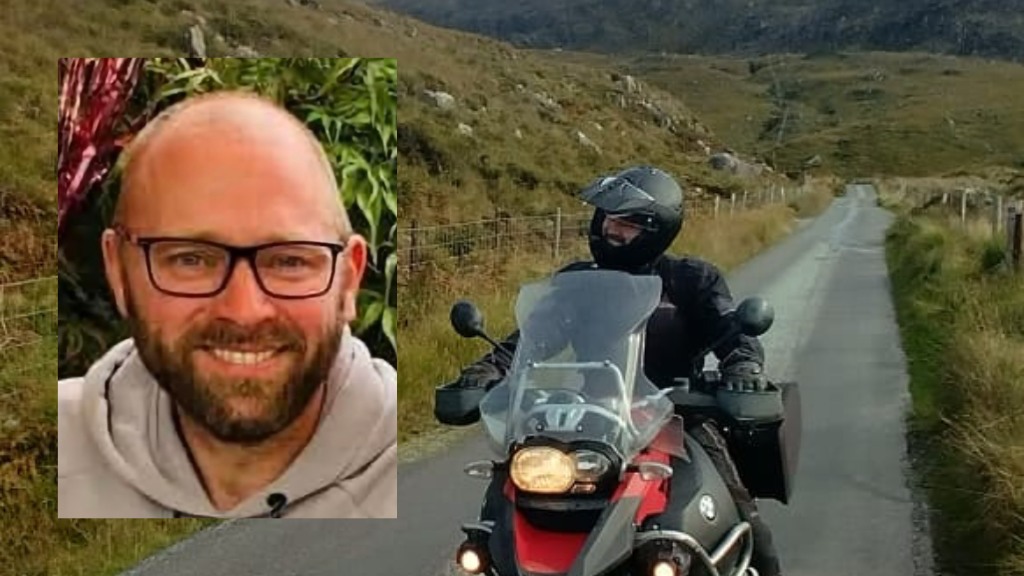
    “I’m Paul Roberts, a mature student at Maynooth University, studying a BA in Community Studies.”


    I imagine it was a very big decision to come to university as a mature student, adults can have so many things going on in their lives and it can be hard to find time to anything. What was it that led you to choose Maynooth’s evening BA programme?

    Paul:

    “The reason I chose this course is quite simple. I originally brought a young lad to the university’s open day to help him look at what his college options might be. At the time, I was fed up with my own job but I was really only going there looking for advice for him. While I was there, I met one of the lecturers at the Adult Education stand and I remember asking them if there were any courses for someone like me. My situation is that I had left school with absolutely no qualifications. I am also heavily dyslexic, so education was always something I struggled with and, if I’m honest, something I avoided.”


    So, what was your life like before returning to education?

    Paul:

    “Well, I spent most of my life working in labouring jobs, truck driving, security, and as a nightclub doorman. But when I got to 54, I realized that I’d had enough. I was tired of the same routine and I wanted a change. I realised I needed to face something I’d always run from – education.”


    Okay so there is thinking about returning to education and then there is doing a degree! That sounds like a very brave choice to dive straight in like you did. How did you feel about the idea of doing a degree at first?

    Paul:

    “When the lecturer that I met at the open day suggested doing a degree, I genuinely laughed at first. I didn’t even know how to spell ‘degree.’ But something stuck with me, and I thought about it, and thought about it, then decided to give it a go.”


    That was a brave choice, but I honestly thing that lots more people than realize it are capable of doing a degree. Often it is as simple as what happens to you, that another person puts it to them ‘why don’t you do a degree?’ I have lost count of the number of times I have suggested this to people only for them to tell me that I am the first person who ever said that to them – that still surprises me to this day.

    What was it like starting at university as a mature student?

    Paul:

    “Starting the course was a massive challenge. Walking into the university on the first night, I felt like I didn’t belong there. But that quickly changed when I met the other mature students. We were all in the same boat—nervous, unsure, but willing to try. That made a huge difference.”


    It can’t have been all plain sailing though, how have you managed balancing college with the rest of your life?

    Paul:

    “Balancing college with work and family life hasn’t been easy, but once you get into it, you find your rhythm. I’ve made great friends, met incredible people, and learned so much—not just academically, but about myself as well.”


    What support have you received during the course?

    Paul:

    “The lecturers have been brilliant. They’re supportive, approachable, and genuinely want you to succeed. If you ask for help, they’re there. They guide you in the right direction and give you the tools to do your best.”


    And the question that I always like to ask people – how has the course changed the way you see the world?

    Paul:

    “This course has really opened my eyes to how communities work and what can be done to improve them. It’s changed how I see things.”

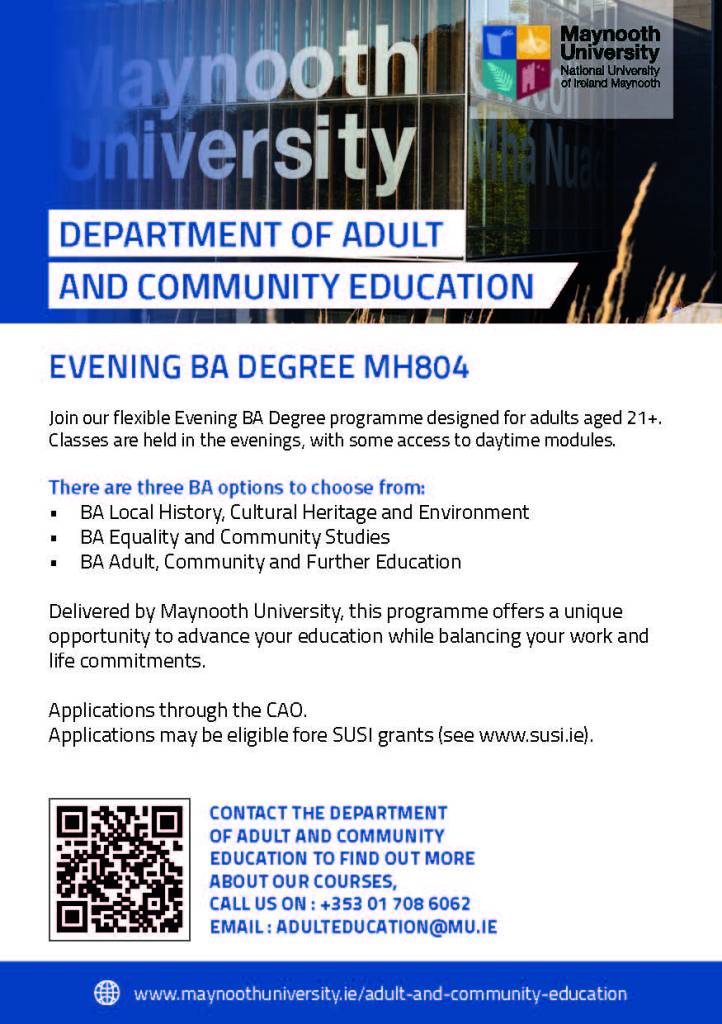
    The Evening BA is now open for Late CAO applications, closing 1 May 2026. SUSI funding is available for eligible applicants, making it an accessible opportunity to return to education. Clicke here for more info: https://www.maynoothuniversity.ie/adult-and-community-education/our-courses


  • Inclusive Education at Maynooth University: a Graduate Story

    How did I come to Maynooth?

    My mother heard about this course and told me about it. My brother, sister, and parents attended different colleges and universities. I wanted to attend university, so I applied for this course. I had an interview and told them that I wanted to study media studies. One day, I received a letter in my mailbox, and I opened it. I was accepted into Maynooth University. I felt over the moon and couldn’t believe I had been accepted—this was my dream come true. 

    What is the ILI? 

    It means Inclusive Learning Initiative. Five people with intellectual disabilities joined the first group of the ILI. We all studied different courses in Maynooth. This course was fully inclusive.

    What I studied and why

    I wanted to study media studies. I studied the history of media, creating a documentary, script writing, editing, and presenting for radio and television.

    What parts of college did I enjoy?    

    I enjoyed being there.  Inclusion is a feeling I’ve experienced through making friends and creating memories. It was difficult at the beginning, but then I focused on my module. Lecturers got used to me and the way I work. I am a visual learner. I also met people who really cared and wanted me to succeed. I enjoyed Kairos and working with the lights. I enjoyed doing voice-overs. I interviewed Shay Healy.

    How did I show my learning?

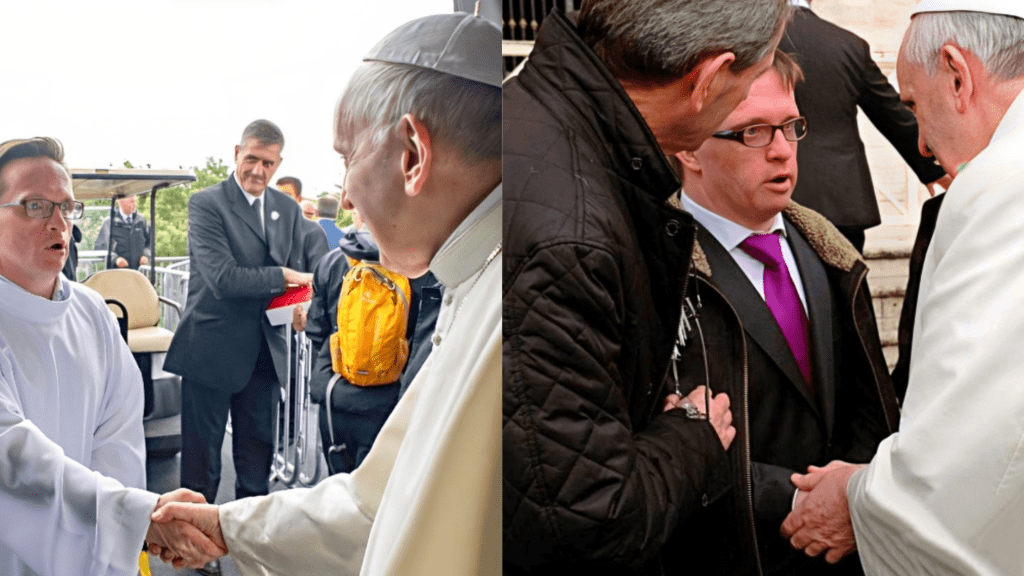
     I created a show reel by compiling all my assignments. I made a documentary about my journey through college, titled Don’t Tell me, Show me. I am a visual learner who prefers structure and uses a portfolio of work. I also express myself through writing, poetry, and music. I received support from the ILI facilitator. As the lecturers got to know me, they became more open to different teaching and assessment methods. My assignments were practical; I interviewed Shay Healy, compared two wildlife programmes and shared my opinion, and conducted interviews in Rome during my work placement. All of this was assessed, including a report from Vatican Radio about my placement. I felt very honoured and humbled to meet Pope Francis, and I was very happy to see him.

    What does inclusive education mean to me?

    It means fostering natural and existing supports by learning from all the lecturers and students. Inclusive means I am involved in all modules. I want people to see me for who I am while living with Down syndrome. 

    The power that objects create?

    I love music; it is very powerful. Two songs truly resonated with me. One is ‘This is me’ from The Greatest Showman. I like the line – but I won’t let them break me down, I know that there’s a place for us, for we are glorious.

    The second song that resonated is ‘The River’ by Garth Brooks

    I will sail my vessel till the river runs dry

    Like a bird upon the wind

    These waters are my sky

    I’ll never reach my destination

    If I never try

    So I will sail my vessel

    Till the river runs dry.

    The last song I will mention is ‘The Climb’ by Miley Cyrus. It reminds me of getting through college assignments and life in general.

    There’s always gonna be another mountain

    I’m always gonna want to make it move

    Always gonna be an uphill battle

    Sometimes I’m gonna have to lose

    Ain’t about how fast I get there

    Ain’t about what’s waiting on the other side

    It’s the climb.

    My advice to students!

    The advice I can give to students is to enjoy their time with friends. Make use of the support available. Be creative in what you do and be honest with yourself.

    My advice to universities

    My advice for universities is to support students and guide them by recognising their potential.  

    What is important and why?

    The most important thing is to follow your heart in everything you do. Focus on your studies and recognise your potential.

    What kind of supports is important for students?

    Patient and kind lecturers are essential. Support from family, friends, and other students is vital in helping the student achieve his potential.

    Life is what you make it by Michael Gannon

    Life is what you make it

    Grab a hold and shake it

    Hold on tight and take it

    Don’t be afraid and fake it

    You may think I’m a dreamer

    More likely I’m a schemer

    You may think I’m a sinner

    But in truth I’m a winner

    I do my best

    Never mind the rest

    My life is blessed

    I’ll stand the test

    So life is what you make it

    Don’t lose your nerve

    And break it

    Michael’s Biography

    Michael Gannon has a wide range of interests, including drama, dance, writing, fitness, and travel. Michael has never let his disability hold him back from his ambitions. He was a student at the National University of Ireland, Maynooth, for three years, studying media studies. His philosophy in life is that anything is possible and that you should never give up on your dreams.