Tag: Paulo Freire

  • What’s Going on Today in Palestine is Not New

    Blog Authors: Anne Ryan and Tony Walsh

    I’m from the sound of tanks

    I’m from a hot place

    I grew up with the suffering and cruelty of occupation that still plagues my daily life

    I’m from an unjust world

    I really want to make peace with myself (first) then with others and with the world,

    But every time I try to do that I fail. I don’t know why, but maybe that’s my bad luck

    I grew up with the tears of my mom that make me very sad

    One day I walked up and saw a very strong man building the bad wall. I didn’t know what to do, cry or be happy

    Then my father told me that I had to accept that idea

    because we can’t do anything

    Rana Sameeh Gabbash[1]


    [1]  From the ‘Book of Poems’ Summer School Program, Al-Quds University Community Action Centre, (c2008)

    While this poem encapsulates the overt and covert violence of the Palestine we encountered more than a decade ago it also speaks to what we see nightly on our televisions these days.

    Between 2008-12 the Department of Adult and Community Education, Maynooth University was involved in an EU funded project in partnership with 4 Palestinian Universities – Al-Quds, Bethlehem, Birzeit, and the Islamic University of Gaza[2]. The project known as LLIPS, focused on identifying existing lifelong learning provisions on the part of our partner universities with a view to enhancing it to even better meet the needs of Palestinian communities in the West Bank and Gaza.

    During the project we were fortunate to meet and work with many academics in the partner universities. We also met with members of community groups and local NGOs – all engaged with different sectors of the population. We learned a great deal about life in the country; the most striking reality being that – every day – Palestinians lived in an environment where they faced issues of social, economic, political and educational marginalization. They lived in a society where their very way of being, their culture and history were silenced and subverted by the hegemony of the Israeli state. We were particularly struck by the restrictions imposed upon colleagues in our partner universities and by the complex strategies in which they had to engage in order to maintain their programmes. One such example was movement. At a local level for example it was difficult for Al-Quds University in Jerusalem to maintain contact with its Adult Education Centres.  The problem was the Wall. The main campus was outside the wall and the Centres were inside.  Crossing the Wall was no easy task. At a national level movement was also difficult. The LLIPS project found it impossible to bring all the partner universities together within Palestine because those from Gaza could not travel to the West Bank and visa versa. Instead, we all met in Jordan. Many Palestinians spoke of how restrictions on movement effect their everyday lives. They also regretted the negative impacts these have on other staff, on their students and indeed on their own families and friends. They had lost contact with many of the latter over the years.

    As the LLIPS project progressed we were increasingly aware of the subtle, as well as the overt issues of power which constructed the identity and lived reality of those we encountered.

    We found that the nature of the oppression and resistance across Palestine was multi-layered. Although we saw the Wall, the settlements choking the little towns and villages, the checkpoints, the guns, and the multiplicity of minor indignities casually doled out, as outsiders we could barely begin to imagine what it felt like to live there and what it took to sustain one’s self, one’s family and one’s sense of identity and nationhood in the face of unmitigated hostility.

    The emotional and psychic toll on the individuals working there, as well as the community members was very evident.  Even back then the need for support, solidarity, respite and resilience-building was clear. How much more the needs must be now and will be in the future.

    One picture remains strongly, symbolically evocative.

    We were being driven from Jerusalem to Jericho- the iconic path the ‘Good Samaritan’ of old had traversed. We were to lead a seminar for academic colleagues there. A black cassocked priest expertly drove, negotiating the multi-laned motorway. A seeming anomaly speaking of wealth and modernity, it wound its way seamlessly through ancient, barren hills, through an arid, desert landscape. Only the occasional Beduin, hazardously perched upon a donkey and following a small flock of sheep or goats up precarious hillsides broke the dun-coloured monotony. And then I noticed that here and there the dusty countryside was dotted with black tree trunks. Evidence of earlier habitation, perhaps of olive-farms?

    ‘Was this land cultivated not so long ago, Father’ I asked our driver.

    The reply was swift. “Yes there were lots of Palestinian olive farms here. Olive tress can cope with the most arid conditions. And the trees provided shade and vegetation. They’d been there – like the farmers – for generations. Since Jesus’ time. But the Israeli Government confiscated the farms and chopped the trees. They said they were a threat to security. Hammas fighters could hide among the foliage and threaten the army….or settlers.’

    The lifeless trunks bore silent witness to dispossession…and more. 


    [1]  From the ‘Book of Poems’ Summer School Program, Al-Quds University Community Action Centre, (c2008)

    [2] The project was entitled Lifelong Learning in Palestine (LLIPs). The Maynooth University Team were Josephine Finn, Bernie Grummell, Tony Walsh, Shauna Busto-Gilligan and Anne Ryan

    Anne Ryan is Emeritus Professor at Maynooth University.  She was chair of the Department of Adult and Community Education from 2005 to 2018. Anne has worked in developing countries that experience extreme poverty (such as Bangladesh and Central Africa) and those that are war-torn (such as Afghanistan) and she has worked with disadvantaged communities in Australia and Ireland.  These experiences convince her of the potential of adult and community education to empower communities to respond to the critical challenges facing twenty-first century societies in ways that ensure their voice is heard by decision-makers. 

    See previous blog by Anne Transformative Engagement Network: working together to create a sustainable future

    Tony Walsh was, until recent retirement from Maynooth University, lecturer and sometime Head of the Department of Adult and Community Education; he continues as Director of the Centre for the Study of Irish Protestantism and is a Fellow of the Young Centre for Anabaptist and Pietist Studies at Elizabethtown College, Pennsylvania,.  A licensed systemic constructivist psychotherapist he is engaged in writing, consultancy and research inquiry engagements in the US, the UK, Palestine and Ireland (including Northern Ireland). Current research emphases include i) the experience and culture of the Irish Protestant minority; ii) narrative study of the Old German Baptist Brethren, (an Amish-like Plain church in the US); iii) the role of reflexivity in radical adult education iv) narrative and autoethnograpic inquiry.

  • Lessons from Palestine

    Authors: Anne Ryan and Tony Walsh

    Suddenly the images of the bombed ruins of a Gaza shop front, perhaps a café, flashed across the news screens. Rags of ruined blinds fluttered in the breeze.

    Instantly I was back in a narrow, busy laneway in old Jerusalem and a sidewalk café fifteen years ago. We[1] were visiting Jerusalem as part of an educational research project. Blissfully relaxing in the sun’s heat and watching, watching as the multi-coloured crush of people in the narrow medieval street streamed by. Dark clothed and somber, Hasidic men bent purposefully towards prayer; camera toting tourists eyed them curiously as they wandered, talking, looking. Groups of Palestinian women laughing, chatting, baskets full of produce came from the market. Bright eyed kids racing in and out; swift arrows of colour between the adult crowds. Handcarts and motor bikes threaded a hazardous way down the street. A bizarre stream of Western pilgrims appeared toting a large cross, responding to a loud rosary.  The midday call to prayer resounded from a nearby minaret mingling with their words. Each group seemed insulated, bounded in their own reality. The smells of roasting coffee beans, strong mint tea and frying meat next door mingled – sensory overload, as pungent aromas and noise, noise, noise enveloped us.

    A group of Israeli soldiers stopped at the corner. They propped their machine guns against the wall and they surveyed the crowds – and us. One addressed his peers in loud New York tones.  They were young and jumpy …and very, very near.   Suddenly there was an explosive bang close-by. The soldiers grabbed their guns. The streaming crowds froze. Fear chilled our faces, congealed our limbs. And moments of time passed slowly by…. That time it was only a back-fire. Minutes later life returned to normal; the crowds streamed swiftly on their way.

    We have often recalled that day packed as it was with so much to marvel at and so much to fear.  We have often wondered what bearing these experiences coupled with current events in Palestine and global conflicts in general should have on how we approach education?

    We have been writing about and researching education for many decades.  Essentially, we believe that education’s main purpose is to help learners to understand their world, so that they are empowered to transform what is oppressive rather than accept it or adapt to it[2].  This includes understanding why conflict exists and what might be reasonable and appropriate responses to that conflict. We also believe that mainstream education often leaves learners ill equipped to either understand or address big global challenges such as war.

    We believe that if education focused on understanding how power operates in society – and between societies – it would enable a far more fluent appreciation of the complex nature of human experience and particularly of conflict.  It would raise awareness of how individuals, groups, nations become positioned in relation to each other. And would emphasize how conflict – and most particularly conflict interventions – require an understanding of these positions. 

    It seems to us that education that interrogates power is ever more needed in a world where disinformation and misinformation are increasingly evident and where what is ‘true’, what is ‘good’, what is ‘right’ are far from clear cut.

    Even as we watch the awful events unfold in Palestine our thoughts often return to that day at the café in Jerusalem where we observed something of the overt nature of power.  It was explicitly expressed in the actions and demeanour of the soldiers. They had the guns.  Their power, although apparently placidly accepted by those going about their daily lives, was nevertheless fragile. The response to the ‘back-fire’ that could have been a gun shot or a bomb blast spoke of an awareness of the potential of resistance and challenge to the existing order that the soldiers were protecting.

    Power is of course not always so easily observed. Mostly it is hidden, occluded within the everyday. We believe that a vital task of education is to reveal those occluded dynamics of power, marginalisation and oppression – those ‘on-going repetitive citations of the known order, citations that offer some a viable life and at the same time deny it to others’ (Davies 2008, 173)[3].  Without an emphasis on the interrogation of power education becomes mere compliance ‘a process of transferring the values and practices which are embedded in a specific culture and are particularly associated with the assumptions, values and maintenance of the power elites of that society.’[4]


    [1] The ‘we’ refers to Tony Walsh and Anne Ryan who in partnership with the administrative and academic staff in the University of Bethlehem explored the challenges and opportunities inherent in diversity.

    [2] This is essentially a Freirean philosophical position

    [3] Davies, B. (2008) ‘The Ethics of Responsibility.’ In Phelan, A. and Sumsion, J. (Eds), Critical Readings in Teacher Education. Rotterdam: Sense Publishers.

    [4] Ryan, A. and Walsh, T. (2018) Reflexivity and Critical Pedagogy. Leiden: Brill p1

    Anne Ryan is Emeritus Professor at Maynooth University.  She was chair of the Department of Adult and Community Education from 2005 to 2018. Anne has worked in developing countries that experience extreme poverty (such as Bangladesh and Central Africa) and those that are war-torn (such as Afghanistan) and she has worked with disadvantaged communities in Australia and Ireland.  These experiences convince her of the potential of adult and community education to empower communities to respond to the critical challenges facing twenty-first century societies in ways that ensure their voice is heard by decision-makers. 

    Tony Walsh was, until recent retirement from Maynooth University, lecturer and sometime Head of the Department of Adult and Community Education; he continues as Director of the Centre for the Study of Irish Protestantism and is a Fellow of the Young Centre for Anabaptist and Pietist Studies at Elizabethtown College, Pennsylvania,.  A licensed systemic constructivist psychotherapist he is engaged in writing, consultancy and research inquiry engagements in the US, the UK, Palestine and Ireland (including Northern Ireland). Current research emphases include i) the experience and culture of the Irish Protestant minority; ii) narrative study of the Old German Baptist Brethren, (an Amish-like Plain church in the US); iii) the role of reflexivity in radical adult education iv) narrative and autoethnograpic inquiry.
  • From Direct Provision to Now: My Journey Home

    By Zoryana Pshyk

    Let me take you back to Christmas 2006. It was a time of uncertainty when life as I knew it was falling apart. I was living in Kilmacud House, a transition direct provision centre in Stillorgan, South Dublin. My husband and I were sitting at a bunk bed watching TV unthoughtfully attached to the ceiling. My neck was hurting… I was not in a good place. I had left everything I knew behind me and now was in this strange “lockdown” situation because everything in my life was controlled by somebody else.

    For the next six years I lived in direct provision centres; places which “have been on lockdown for 20 years” (Lucky Khambule, Facebook post, Dec 15, 2020)  – where life stopped and time froze… So, the current feeling of ‘isolation from the society’ during the Covid19 pandemic is not new to me – maybe, that’s why it feels so comfortable and familiar.

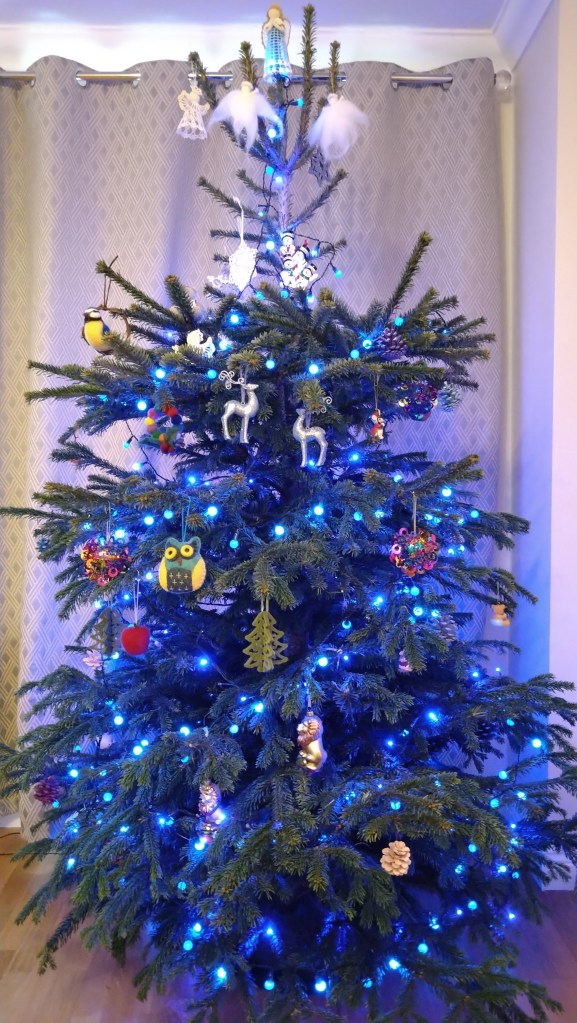
    Fast forward to 2020, and I am sitting in front of my Christmas tree in my home in South Kildare writing this blog entry. I have just finished lecturing my first module in the Philosophy of Adult Education with the Maynooth University, Department of Adult and Community Education (DACE) Higher Diploma in Further Education (HDFE), and I’m looking forward to reading students’ essays. The philosophy of adult education is very close to my heart: it gave me a framework to understanding my own life and helped me to find my life-path.  

    When I arrived in Ireland, I had Masters in Philology, (the study of the history of language) but living in the direct provision system without the right to work or engage in education left me deskilled, with low self-esteem, and no confidence. It took eight years for me to “upgrade” my education credentials in Ireland to the same level as I had when I arrived. I worked hard learning to name my  world with Freire, and pushing the boundaries and transgressing together with Bell Hooks.

    There were times during this time when I was falling apart, and my world was collapsing from the pain that transformative learning entails (Taylor & Cranton, 2013, p.40). It was also very physically, mentally and financially demanding. Over those years I have come to realise that our life experiences are like funnels that squeeze us into understanding the world in a particular way. They shape who we are, our relation to the world, and to those who share the world with us.

    Learning with others and from others while reflecting on experience is the learning and teaching that resonates with me deeply. The Pandemic created a huge opportunity for learning – it’s even scary to think how in a few months we got used to this word! A situation that had never been known to us in our lifetime.

    What can we learn from each other in this time? Can we learn what isolation does to us? What can we learn from those on the margin? Can we walk in their shoes this Christmas? Is the pandemic a humanizing experience for all of us, or is it a traumatic experience that will leave us all broken? Can we learn compassion? Time will answer those questions.

    This Christmas is going to be a tough time for everyone, but especially for those who lost their loved ones. It is going to be tough for those who are self-isolating or cannot meet each other due to travel restrictions abroad. This Christmas, although sad and lonely, I am grateful that I can feel at home in Ireland. All my thoughts are with those who don’t have a place to call home, and cannot protect themselves from COVID19 due to crowded conditions in refugee camps all over the world. That amounts to almost eighty million people worldwide (Figures at a Glance – UNHCR). My thoughts are with those who are right in the heart of this country still living in direct provision – in 20 years long lockdown (Khambule, 2020). The Pandemic has already proven to us how unstable our lives and the world are. In the light of this learning, it is important to remember that everybody is a potential refugee.

    I am looking at my Christmas tree decorated with painted pinecones, stars, angels, and felted wreaths; all sorts of decorations given to me by friends when I was still living in direct provision. The kindness and warm wishes they arrived with will always stay with me. So, every year, I decorate my tree with the memories of the deep gratitude I have to people who have been there for me over the years.

    At the end of 2020 I invite you to share your well-wishes. Take a few minutes to reflect on the year that we are leaving behind and write down three wishes for yourself for the coming year. Select one of the wishes and wish it to someone else: your loved ones, or neighbours, or to strangers on the streets, or those less fortunate – gifting your wish from your heart to theirs. Let’s make the world a warmer place with love and well-wishes.

    Щасливого Різдва! / Happy Christmas! / Nollaig Shona Duit!

    References:

    Taylor, Edward, & Patricia Cranton (2013) A theory in progress? Issues in transformative learning theory. European Journal for Research on the Education and Learning of Adults 4(1):35-47. DOI: 10.3384/rela.2000-7426.rela5000

    UNHCR Ireland (2020) Figures at a Glance. https://www.unhcr.org/en-ie/figures-at-a-glance.html#:~:text=How%20many%20refugees%20are%20there,under%20the%20age%20of%2018

    Zoryana Pshyk holds Masters in Philology from Chernivtsi National University, Ukraine, a Higher Diploma in Further Education and a Masters in Adult and Community Education from Maynooth University. Zoryana is an adult educator with a specific interest in Freirean approach. She is a core part of the Community Education team, Kildare and Wicklow Education and Training Board (KWETB), and a facilitator with Partners Training for Transformation. Zoryana is a current representative of Newbridge Asylum Seekers Support Group (NASSG) on the Kildare Public Participation Network (PPN), as well as a chairperson of the Kildare Integration Network (KIN). She is an active participant in local community development with the emphasis on Social Inclusion and a board member of the County Kildare Leader Partnership.

  • Welcome to our blog!

    An introductory post from Mary Ryan, Head of Department, Adult and Community Education, Maynooth University.

    When Michael and Bernie asked me to write a blog, the phrase that immediately came into my mind was ‘Hello and Goodbye’. Interesting – why that phrase and why now? When I google it, I find the words to a song – ‘Hello and Goodbye ‘sung by Jill Ireland. I have no memory of ever hearing the song, I look up the lyrics.

    “Some have a lifetime, some just a day
    Love isn’t something you measure that way
    Nothing’s ever forever, forever’s a lie
    All we have is between ‘Hello’ and ‘Goodbye”

    March 12th 2020 – suddenly and shockingly we say goodbye to face to face contact with our students, colleagues, and many of our families and friends. Overnight we transition to remote teaching delivery and struggle to find new ways of saying hello and maintaining relationships. It reminds me of being in the Gaeltacht – total immersion in an unfamiliar language, perpetually anxious.

    Suddenly broadband emerges as the significant criterion for inclusion and exclusion. The reflexive dialogue at the heart of adult learning was compromised by remote delivery as the focus was on connectivity and staying connected. I found it very difficult to adjust to working with learning groups online, how to get a feel of the group dynamic and emotional temperature. My pedagogical model of group facilitation, crafted over 30 years, seemed no longer appropriate to remote learning. I am forced to be more structured and directive, there is less opportunity for members to engage spontaneously with each other. At times it feels we are forced to revert to the banking model of education despite our deep commitment to a more collaborative and participatory Freirean approach.   

    We search for ways to stay connected and support each other – daily remote coffee breaks where we anxiously explore possibilities for more participatory approaches to remote delivery. We stay in remote touch with students, offering opportunities to make sense and meaning of their ongoing experiences of COVID. We offer a weekly mindful session remotely. We encourage students to include their experiences and reflections of living with COVID in their research and assignments.

    All that is familiar is disrupted but together we do our collective best to support students to complete their studies. It was a privilege to read assignments and research which explored themes in adult development such as loss, the meaning of life, life choices and collective responsibility for a just and equal world.

    We have no collective opportunity to say goodbye. We miss the rituals that celebrate the ending of a course, that acknowledge the unique contribution of each member in creating a learning community. Endings provide an opportunity to celebrate achievements, acknowledge the learning and insights, take leave of valued colleagues and friends, and internalise the rich learning experiences and relationships. Endings can also encourage us to name what has not been achieved, acknowledge loss and sadness and in the process begin again, engage in new learning and relationships.

    Amid completing courses, despite COVID restrictions  we focus on gathering new students remotely, “Though we live in a world that dreams of ending, that always seems about to give in, something that will not acknowledge conclusion, insists that we forever begin’’ Brendan Kennelly – ‘Begin Again’.

    September 2020, first semester – no tea and coffee – social distancing, yellow X’s marked on the floor and face masks the norm – a new unfamiliar beginning. And yet some of it is familiar, we move chairs, find flasks, set up tables and ensure despite all the restrictions that we create a welcoming learning environment. We encourage learners to share their experiences, talk with each other, make sense of the last few months, and explore possibilities.

    One of the narratives in COVID is that we are all in this together. However, COVID has been experienced very differently by individuals, groups, and communities. Some of us have been lucky to maintain our incomes and health, others have lost loved ones and their livelihoods.   Many on the margins and who are disadvantaged have been most negatively impacted, especially so in regions and countries impacted by global climate crisis, war, inequality, human rights, and political instability. 

    Living with COVID is disruptive and anxiety provoking, it can impact on our thinking, relating, and feeling.  It can be a relief to believe that those in power can provide the answers. Yet in adult education, we believe we are responsible for our individual and collective actions. We need to be able to reflect on our experiences with others, ensure that all stories are heard and learn from this knowledge to create a more just and equal world.

    And what about love – relationship and care are at the heart of adult education.  Freire reminds of the need for ‘courage to love (which, far from being accommodation to an unjust world, is rather the transformation of that world on behalf of the increasing liberation of people) (Pedagogy of the Oppressed, 1972, p. 144) and “because love is an act of courage, not of fear, love is a commitment to others. No matter where the oppressed are found, the act of love is commitment to their cause–the cause of liberation.”

    During all this uncertainty and anxiety, I know the value of being connected and in relationship. I know the power in people meeting together, reflecting on our experiences and creating knowledge.  Freire reminds us that to be human is to engage in ‘relationships with others and with the world … knowledge is built up in the relationships between human beings and the world’ (Education the Practice of Freedom, 1974, p. 3).

    In this year of Covid, I am struck by the kindness of many people – there is a deeper appreciation of the fragility of life, and that we live creatively with uncertainty.  

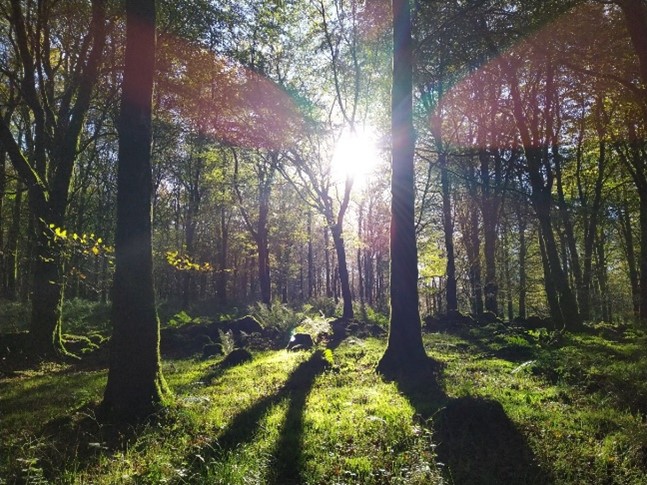
    Mullaghmeen Wood in November 2020.

    Naomi Shihab Nye reminds us that

    Before you know kindness as the deepest thing inside, you must know sorrow as the other deepest thing.

    You must wake up with sorrow,

    You must speak to it till your voice

    Catches the thread of all sorrows

    And you see the size of the cloth’.

    As Christmas approaches, I am reminded of the importance of hope, of light and new birth. This time will pass, it is important to consider any learning that we can take into the future. Issues of care, health, housing, life work balance, human flourishing and climate change are now to the forefront.  

    More than ever I am reminded of the significance of hello, goodbye, love, and the preciousness of time. COVID may provide us with opportunities for new learning and insight if we take the time to reflect on our experiences with others and apply the knowledge in creating a more equal and just world.