Tag: learning

  • Supporting Underrepresented Groups in Education and Disability Advocacy.

    TtT (Turn to Teaching) and

    ILMI ( Independent Living Movement Ireland )
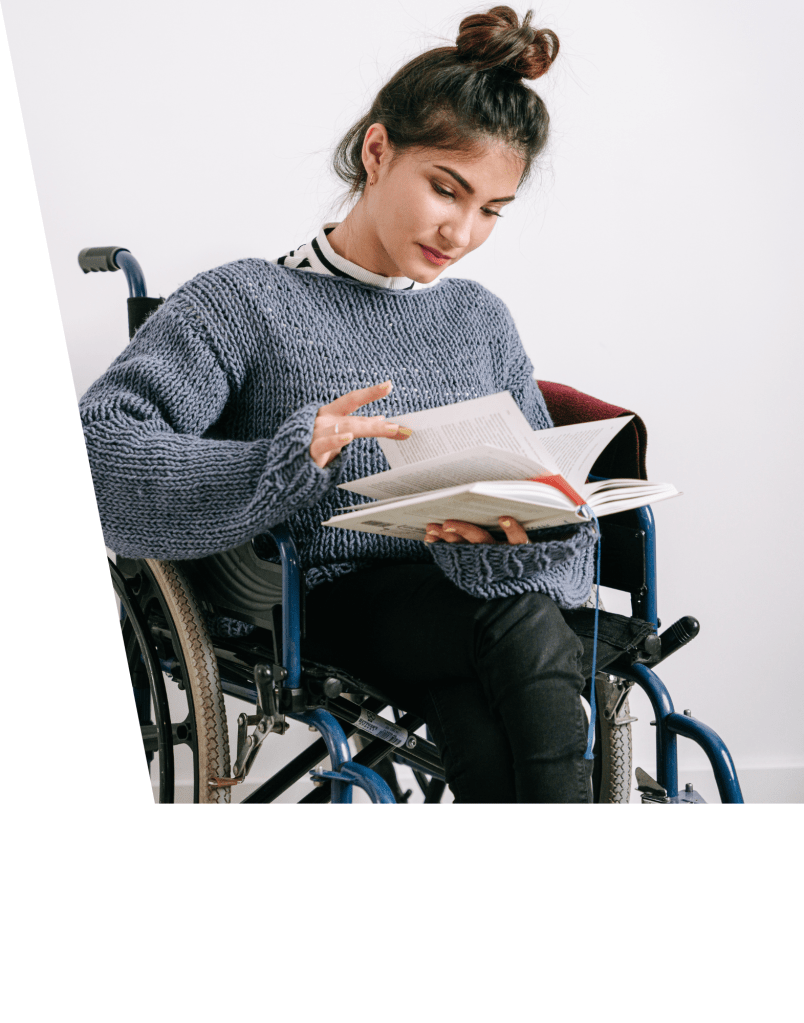
    The Turn to Teaching Level 6 Foundation Certificate is a one year, university course for people who have an interest in primary teaching as a career path, but because of family, life, social and/or personal reasons were not able to pursue their dream through traditional education routes. In particular, the course is for students from particular groups that are currently under-represented in teaching. These groups include but are not restricted to- Irish Travellers, mature students, students from diverse ethnicities, disabled[1] students, migrants, lone parents etc.[2] Turn to Teaching aims to promote diversity in the teaching profession through a series of social justice orientated initiatives which widen participation.
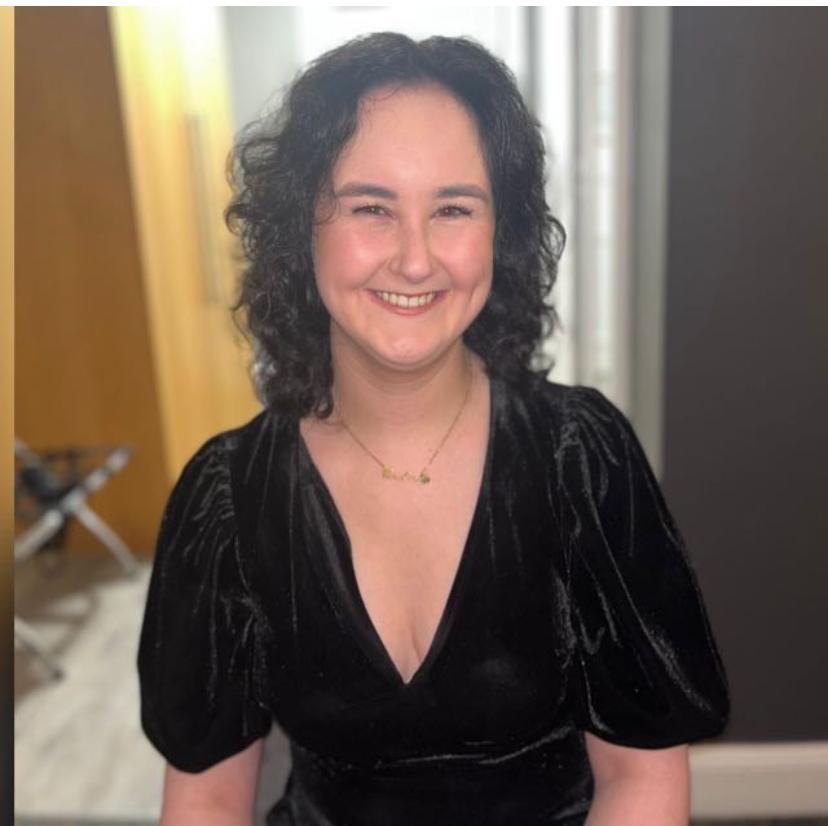
    Paula Soraghan

    Paula Soraghan is a community development worker for ILMI , Independent Living Movement Ireland. She came to visit the 2024-2025 TtT group in their ‘Think about Teaching’ module to talk about the work she does with ILMI and to learn from the students about the one-year course they are part of.

    Paula describes herself as a proud disabled woman who is very passionate about intersectionality. She is a daughter, sister, aunty and friend, graduate and much more.

    She introduced us to ILMI,  explaining that it is a DPO- a Disabled Person’s Organisation. Unlike disability service providers, DPO’s are led by disabled people, for disabled people all members are disabled people, the Board of Directors are all disabled people, and most of the staff team are disabled people. As an organisation, ILMI is unique and radical; it is cross-impairment, meaning it is open to all disabled people over the age of sixteen and it is underpinned by the values of the United Nations Convention on the Rights of Persons with Disabilities and the social model of disability.

    As a national, campaigning organisation, ILMI focuses on addressing injustices and inequalities faced by disabled people. It approaches these issues with a problem-solving attitude and puts the emphasis on a collective approach rather than advocating for the individual. With this approach, an individual becomes part of a collective, and as Paula says, there is strength and efficacy in numbers. ILMI focuses on rights not charity. They maintain the motto, Nothing About Us, Without Us.’ 

    Paula explained to us that both historically and in current times, society pathologizes disabled people. The disability industry gains from segregating people with different impairment labels; there is a hierarchy of impairment which sets people up against each other. This separatist structure keeps people powerless to address the current systems and structures in place. The stigmas around disability, the narratives which tell us that disabled people should be pitied and cared for, feed into far-right agendas where anyone of difference is to be ostracised and afforded less rights. By coming together, disabled people can address multiple issues with one united voice. These spaces aim to create a new narrative where difference is shown to be a force for progressive change, enriching and creating possibilities for everyone.

    ILMI  aim to influence policy and development through strategic activism, lobbying for change at local and national level, in the  Oireachtas and at a county level. Paula Soraghan and Nicola Meacle work on the VOICE (Virtual Online Inclusive Communities for Empowerment) project. VOICE is funded by the Department of Rural & Community Development through the Community Development Programme. VOICE is establishing local DPOs in Wexford, Waterford, Carlow, Kilkenny, Cork, Kerry and Tipperary. Colm Whooley also works on the VOICE project as a Life Coach.

    The communities are ‘based on digital networking, peer mentoring support and activism with disabled people in the south of Ireland’.[3] VOICE aims to educate, support and mentor disabled people to develop local representative groups who can impact local mainstream services and promote authentic inclusion in society. VOICE intends to collaborate with each attendee in the online space  to develop Personal Action Plans which will identify and develop goals towards improving overall health and wellbeing while reducing isolation of individuals. As Paula explains , a universal design approach makes society good for everyone, not just for disabled people. By addressing issues of access, environment, and opportunity for disabled people, alternate options are made available to everyone.

    Alternate routes into mainstream institutions create possibilities for traditionally excluded people.

    Paula points to the  TtT Turn to Teaching course in Maynooth University as one such barrier breaking route for education at higher level. Like ILMI,  the TtT aims to create access for students to career pathways which have been previously closed to them through mainstream routes.

    Many of the young future teachers on TtT identify their motivation for wanting to become teachers as stemming from never seeing their peers in primary school teaching roles. Maggie tells us that she wants to be a teacher to inspire other chair users in school to be whatever they want to be. Another shares that she feels her experience of primary school might have been much richer and inclusive had she witnessed a woman of her faith teaching in her primary school. Race, gender, ethnicity, background, and being a disabled person all need representation as teachers. Change starts in primary schools. Building nuance and creating role models for others brings hope and possibility for young students. But it also creates communities and societies which break boundaries and imagine new and better ways for us to live and work together. Paula says, ‘ think big and start somewhere.’

     ILMI and TtT are doing just this.

    For more information on the Independent Living Movement Ireland and the Turn to Teaching Course Maynooth University go to:

    https://ilmi.ie/ilmi-voice-project/

    https://www.maynoothuniversity.ie/turntoteaching.
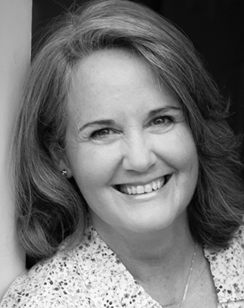

    Author: Alice Bennett is a PhD student and recipient of a John Hume Scholarship. Her research explores art pedagogy for the rehabilitation of subjugated and extra rational knowing while extending epistemologies for healthier learning environments. She has worked in the area of community development and education for over thirty years in South Africa, Zimbabwe and Ireland. Alice currently works with the Turn to Teaching Team in the Adult and Community Education Department, Maynooth

    [1] ILMI use the term ‘disabled people’ instead of ‘people with disabilities’. This is because they see disability as a social and political issue, rather than a personal and medical one.

    [2] https://www.maynoothuniversity.ie/turntoteaching

    [3] https://ilmi.ie/ilmi-voice-project/

  • In Review: An LGBTQI+ Inclusive Classroom – In conversation with Jamie Kenny, TUTOR Ambassador

    Author: Sinead Matson

    The power of conversation should never be underestimated. It can change attitudes, thinking, policies, research, and practice. We wanted to create conversational spaces for change through the TUTOR Ambassador webinar series, the first of which was hosted by Maynooth University. The webinar,  An LGBTQI+ Inclusive Classroom: In conversation with Jamie Kenny TUTOR Ambassador, was held in early December. TUTOR is an Erasmus + project about inclusive education in second level and Further Education and Training of which Maynooth University is a partner. Jamie Kenny is the executive director for Dublin Pride and the first Irish TUTOR ambassador. He hosted a fireside chat with Angela Rickard, Course Leader for the year one Professional Master of Education (PME) in Maynooth University Education Department; Carrie Archer, Professional Learning and Development Coordinator for City of Dublin ETB and adjunct assistant professor in the National College of Ireland; Andrew Maloney, deputy principal in Firhouse Educate Together Secondary School; and Eoin Houlihan, second level teacher and guidance counsellor also at Firhouse Educate Together Secondary School, and lecturer on the PME programme in Maynooth University.

    Carrie led the discussion on how a classroom can be LGBTQI+ inclusive without directly changing or adding content that is not already an existing part of the curriculum or learning outcomes – an argument she has frequently experienced in her work. She pointed out that even in business, childcare, beauty therapy, and hair dressing courses in FET, spaces for LGBTQI+ conversations already exist – you just have to look for them. Eoin agreed and added that in second level those spaces do already exist within the curriculum; for example mentioning the scientists and inventors from the LGBTQI+ community in science lessons when introducing students to a concept, theory, or experiment contextualises and makes visible LGBTQI+ for students. The same approach applies for English, Music, Geography, History, Art…really any other subject on the curriculum. When it is threaded through the curriculum and the day-to-day experience for students in the classroom it has the potential to become a more authentic way of inclusion and representation.

    The conversation turned to the lived experiences of LGBTQI+ staff leading the advancement of greater representation and inclusion in schools and education settings which places those staff in demanding and potentially vulnerable and fatiguing positions. They described a fear experienced by many potential allies in education; a fear of getting it wrong, of causing offence, or of hurting someone. This fear can sometimes stifle or even silence the conversation. However, the burden of leading the conversations must not always be held by LGBTQI+ staff themselves.  Andrew really highlighted the need for teachers to know that it  backed up by law and equally importantly made explicit by leadership:

    “I think it’s important to back teachers up, particularly teachers who are in teacher education, to understand that actually you have a legal basis to discuss this in your classroom… And particularly from school leaders, they need to hear that openly because if they don’t hear it openly, it’s not good enough just to be implicit about it because it happens to be enshrined in law.”

    This struck a chord with me. In all the years I have worked with children I have never had a ‘child protection day’, or a ‘child protection week’ – it is enshrined in law therefore it is weaved into everything we do. If it is a legal requirement, is it part of the daily landscape of education?

    Angela spoke of the appetite for inclusive conversations and spaces amongst the students in the initial teacher education programme in Maynooth University, and her experiences of visiting many second level schools across the country that are flying progress flags and taking part in BeLonG To’s safe and supportive schools training. This, she surmises, is hopeful and is having a very positive effect, making spaces for those conversations to continue amongst leadership, allies, and the LGBTQI+ community within schools  and local communities. It is also providing opportunities for allies and leadership to lead the conversation rather than relying on LGBTQI+ identifying staff.

    This conversation facilitated by Jamie in his position of TUTOR ambassador for Ireland has already  caused real change. It has helped to inform the discussion we, as the TUTOR project researchers, have and the decisions we make when we will put together training and resources in the TUTOR programme.  Attendees, who included teachers, tutors, leadership, and students engaged in initial teacher education have already spoken to us about the learnings they have taken and will put into practice. If you missed the conversation, but would like the opportunity to listen, please click this link and take an hour out of your time to listen to the real, practical knowledge and lived experiences that were shared with us. 

    Author Bio:

    Sinéad Matson is a post-doctoral researcher with the Department of Adult and Community Education at Maynooth University. She has worked in all levels of education for over 20 years. Sinead’s research areas include social justice and equality in education, critical education, and decolonizing research methodologies. Sinead currently works on the TUTOR project which is an Erasmus+ funded transnational project aimed at improving inclusive education.

  • Adult and Community Education with Turn to Teaching: how we do things….

    Adult and Community Education with Turn to Teaching: how we do things….

    Written by:  Declan Markey, Co-Coordinator of Turn To Teaching

    Adult and community education is about the development of skills, human relationships and the engagement of people in understanding the wider social forces that impact both locally and globally (Lynn Tett in Radical Learning for Liberation 2007:73  )

    I used to love a good (random) house party in my hedonistic days. There was something about getting together with a group of people you didn’t know and learning about their lives, if only for a short while. I loved the sense that we all had a common cause to have a good time and keep the night going  – let’s face it the rest of the week could be fairly mundane.  But most of all it was the thrill of not knowing what might happen. They were my three ingredients for a good house party – good people, a common cause and an element of the unknown. It makes me laugh that they are the three  main reasons why I get a thrill from Adult Education. They  motivate me every time I’m with a group.

    The Turn to Teaching (TtT) programme is one of those groups – a one-year college access/preparation course for students from diverse backgrounds or communities who are under-represented in higher education. It’s aimed at young adults and mature students who want to be primary school teachers but didn’t get the necessary points or have the required criteria to apply.  What’s really pro-active about TtT is that once the students acquire a set grade, they are guaranteed a place in one of Maynooth’s primary teaching education programmes. The steps are clear – “you do this, and you will go there”. That’s a BIG, BRIGHT carrot on the end of a short stick for anyone who needs a different way to achieve their dream of becoming a primary school teacher. You could say TtT is it’s very own “yellow brick road” where dreams come true. Only this road is made of orange carrots with each step being another motivating force and supportive step to help people on their way.

    One of the most challenging parts is the recruitment process. We only have 16 places. All applicants complete a personal statement explaining why they want to be a teacher and every year we receive between 80 and 100 applications who meet the criteria for entry. One hundred minus 16 means a lot of disappointed applicants and every year, it is abundantly clear to the TtT team that our schools are missing out on some of the most amazing people who want to be primary school teachers but can’t because of the entrance criteria. But unfortunately, due to the lack of places many of the applicants will embark on different journeys that will take them away from their dreams of being a teacher.

    Turn to Teaching is, what we call, a “widening participation initiative” – that means the people who are selected are coming from groups or communities who, on average, don’t usually become primary school teachers; Travellers, people with disabilities, people from working class backgrounds, minority ethnic groups and more. We are widening/increasing the participation of people from these groups in primary teacher education. Being a widening participation programme we realise that for those that don’t get accepted– once again the education system has let them down. This plays heavy on our minds and is the main reason why we make sure to reach out to all applicants, especially those who are not offered a place, and stay linked in with them as they try to navigate different ways of continuing their education. Sometimes, we are the first people to talk about PLC courses or to provide clear information about grants or to explain how a full time course doesn’t always mean 9am to 5pm every day. Many of us in the third level sector know all of this as if it was common sense but this information about going to college is a language and form of cultural capital all of its own. For many of the people for whom widening participation initiatives are aimed at, a conversation with someone who cares about their future – at the time when they are thinking about their future – and how college/university can play a part in that future – is the ultimate form of student support. And this is the point at which the relationship starts for TtT and the many people we engage with.

    VIPs

    Because so many TtT students are from groups or communities who we don’t see enough of on university campuses, it may be fair to say that the “imposter syndrome” can hover around like an unwanted guest at a house party; somebody who nobody invited, nobody can get to leave, and….there is a sense that they might cause havoc at any minute. It’s a very real feeling for many students that find their way to university through widening participation projects. But this is the very reason why “how we do things” in adult education – building relationships, learning about each other (students and staff), understanding our strengths and our challenges, all play a vital part in how we pave the yellow brick road of chasing dreams. We’re not throwing out the ‘imposter syndrome’ guest, we actually want them to stay. But in staying we want to understand how they were invited to the party in the first place, and what is making them stay.

    Turn to Teaching, like all of the programmes in the Department of Adult and Community Education, is about building relationships first and foremost, of the group of learners and the course they are on. For many students their previous educational experience maybe has not been as positive as they would have wanted it to be or, for some, it may have been an entirely negative experience. Through our adult education processes (how we do things) this previous experience (whether positive or negative) now becomes a strength, now becomes something to learn from and use to help shape the TtT student into the educator/teacher they want to become. Afterall….

    In a sense Turn to Teaching turns something our students may have perceived to be their weakness into their strength. And we do this through learning about ourselves, our fellow students, the wider university and the education system by critically reflecting on our lived experiences as they are connected to all of those things.

    Our hope is that the relationships we build with any of the Turn to Teaching applicants or students will continue for as long as it’s required, even if that requires going to some house party with an unwelcome “imposter syndrome” who eventually passes-out in the corner and we all forget they are even there.

    The Turn to Teaching Team would like to dedicate this blog to our friend and TtT student Catherine Gavin, who tragically passed away this year after a short illness. Catherine was on her journey towards achieving her dream of becoming a primary school teacher and will forever be in our hearts.

    Photo by Aleksandr Popov on Unsplash