Tag: education

  • Supporting Underrepresented Groups in Education and Disability Advocacy.

    TtT (Turn to Teaching) and

    ILMI ( Independent Living Movement Ireland )

    The Turn to Teaching Level 6 Foundation Certificate is a one year, university course for people who have an interest in primary teaching as a career path, but because of family, life, social and/or personal reasons were not able to pursue their dream through traditional education routes. In particular, the course is for students from particular groups that are currently under-represented in teaching. These groups include but are not restricted to- Irish Travellers, mature students, students from diverse ethnicities, disabled[1] students, migrants, lone parents etc.[2] Turn to Teaching aims to promote diversity in the teaching profession through a series of social justice orientated initiatives which widen participation.

    Paula Soraghan

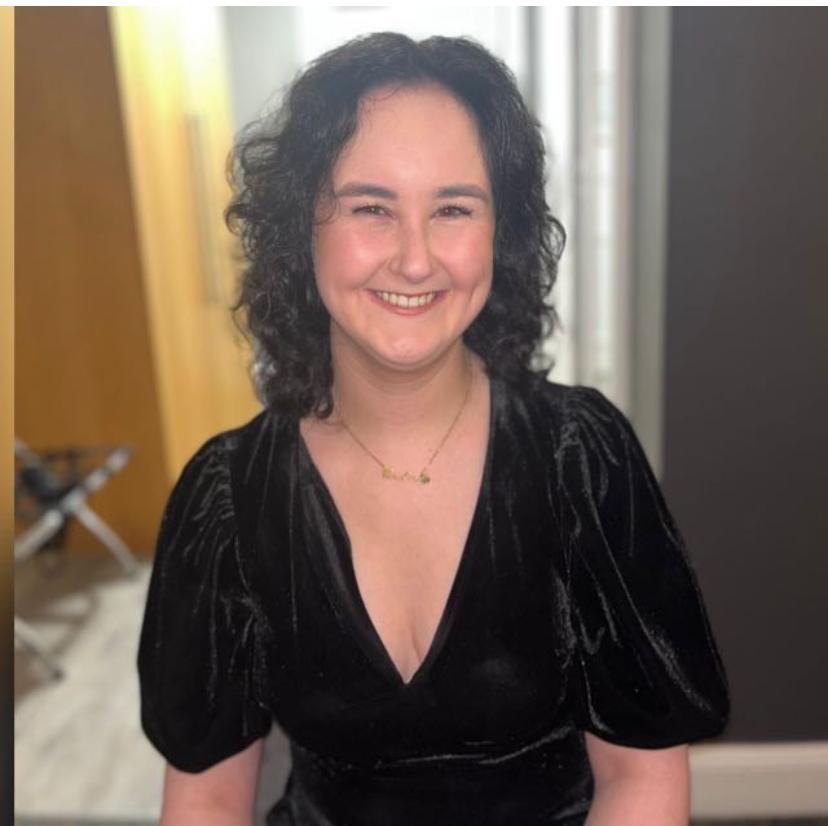
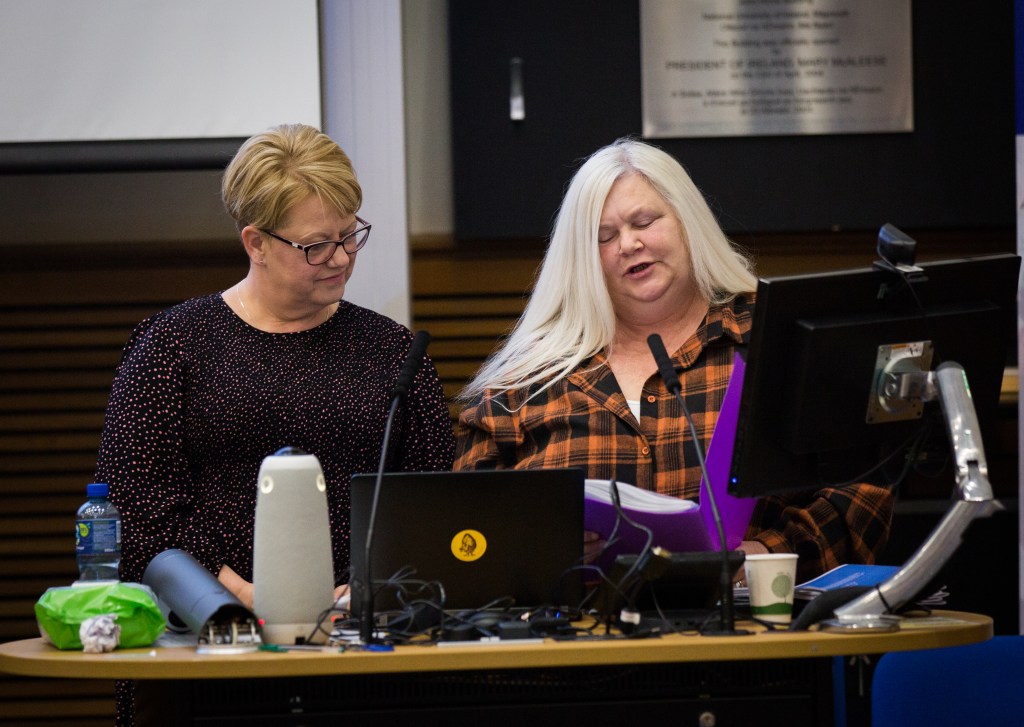
    Paula Soraghan is a community development worker for ILMI , Independent Living Movement Ireland. She came to visit the 2024-2025 TtT group in their ‘Think about Teaching’ module to talk about the work she does with ILMI and to learn from the students about the one-year course they are part of.

    Paula describes herself as a proud disabled woman who is very passionate about intersectionality. She is a daughter, sister, aunty and friend, graduate and much more.

    She introduced us to ILMI,  explaining that it is a DPO- a Disabled Person’s Organisation. Unlike disability service providers, DPO’s are led by disabled people, for disabled people all members are disabled people, the Board of Directors are all disabled people, and most of the staff team are disabled people. As an organisation, ILMI is unique and radical; it is cross-impairment, meaning it is open to all disabled people over the age of sixteen and it is underpinned by the values of the United Nations Convention on the Rights of Persons with Disabilities and the social model of disability.

    As a national, campaigning organisation, ILMI focuses on addressing injustices and inequalities faced by disabled people. It approaches these issues with a problem-solving attitude and puts the emphasis on a collective approach rather than advocating for the individual. With this approach, an individual becomes part of a collective, and as Paula says, there is strength and efficacy in numbers. ILMI focuses on rights not charity. They maintain the motto, Nothing About Us, Without Us.’ 

    Paula explained to us that both historically and in current times, society pathologizes disabled people. The disability industry gains from segregating people with different impairment labels; there is a hierarchy of impairment which sets people up against each other. This separatist structure keeps people powerless to address the current systems and structures in place. The stigmas around disability, the narratives which tell us that disabled people should be pitied and cared for, feed into far-right agendas where anyone of difference is to be ostracised and afforded less rights. By coming together, disabled people can address multiple issues with one united voice. These spaces aim to create a new narrative where difference is shown to be a force for progressive change, enriching and creating possibilities for everyone.

    ILMI  aim to influence policy and development through strategic activism, lobbying for change at local and national level, in the  Oireachtas and at a county level. Paula Soraghan and Nicola Meacle work on the VOICE (Virtual Online Inclusive Communities for Empowerment) project. VOICE is funded by the Department of Rural & Community Development through the Community Development Programme. VOICE is establishing local DPOs in Wexford, Waterford, Carlow, Kilkenny, Cork, Kerry and Tipperary. Colm Whooley also works on the VOICE project as a Life Coach.

    The communities are ‘based on digital networking, peer mentoring support and activism with disabled people in the south of Ireland’.[3] VOICE aims to educate, support and mentor disabled people to develop local representative groups who can impact local mainstream services and promote authentic inclusion in society. VOICE intends to collaborate with each attendee in the online space  to develop Personal Action Plans which will identify and develop goals towards improving overall health and wellbeing while reducing isolation of individuals. As Paula explains , a universal design approach makes society good for everyone, not just for disabled people. By addressing issues of access, environment, and opportunity for disabled people, alternate options are made available to everyone.

    Alternate routes into mainstream institutions create possibilities for traditionally excluded people.

    Paula points to the  TtT Turn to Teaching course in Maynooth University as one such barrier breaking route for education at higher level. Like ILMI,  the TtT aims to create access for students to career pathways which have been previously closed to them through mainstream routes.

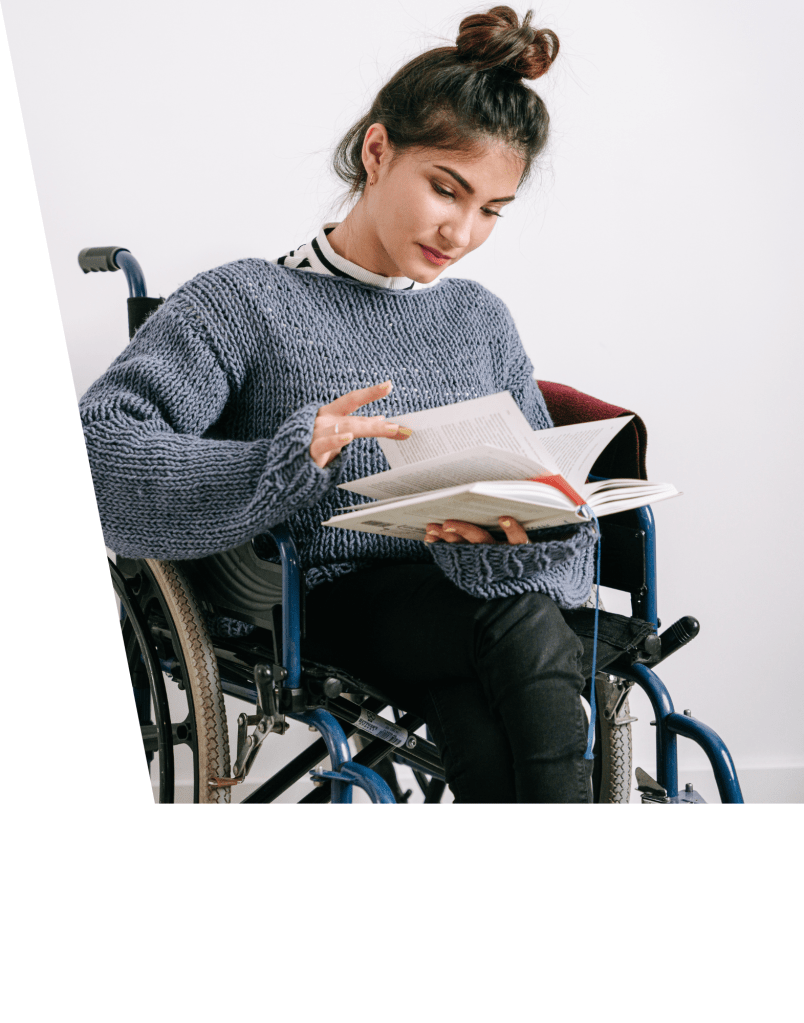
    Many of the young future teachers on TtT identify their motivation for wanting to become teachers as stemming from never seeing their peers in primary school teaching roles. Maggie tells us that she wants to be a teacher to inspire other chair users in school to be whatever they want to be. Another shares that she feels her experience of primary school might have been much richer and inclusive had she witnessed a woman of her faith teaching in her primary school. Race, gender, ethnicity, background, and being a disabled person all need representation as teachers. Change starts in primary schools. Building nuance and creating role models for others brings hope and possibility for young students. But it also creates communities and societies which break boundaries and imagine new and better ways for us to live and work together. Paula says, ‘ think big and start somewhere.’

     ILMI and TtT are doing just this.

    For more information on the Independent Living Movement Ireland and the Turn to Teaching Course Maynooth University go to:

    https://ilmi.ie/ilmi-voice-project/

    https://www.maynoothuniversity.ie/turntoteaching.


    Author: Alice Bennett is a PhD student and recipient of a John Hume Scholarship. Her research explores art pedagogy for the rehabilitation of subjugated and extra rational knowing while extending epistemologies for healthier learning environments. She has worked in the area of community development and education for over thirty years in South Africa, Zimbabwe and Ireland. Alice currently works with the Turn to Teaching Team in the Adult and Community Education Department, Maynooth

    [1] ILMI use the term ‘disabled people’ instead of ‘people with disabilities’. This is because they see disability as a social and political issue, rather than a personal and medical one.

    [2] https://www.maynoothuniversity.ie/turntoteaching

    [3] https://ilmi.ie/ilmi-voice-project/

  • What’s Going on Today in Palestine is Not New

    Blog Authors: Anne Ryan and Tony Walsh

    I’m from the sound of tanks

    I’m from a hot place

    I grew up with the suffering and cruelty of occupation that still plagues my daily life

    I’m from an unjust world

    I really want to make peace with myself (first) then with others and with the world,

    But every time I try to do that I fail. I don’t know why, but maybe that’s my bad luck

    I grew up with the tears of my mom that make me very sad

    One day I walked up and saw a very strong man building the bad wall. I didn’t know what to do, cry or be happy

    Then my father told me that I had to accept that idea

    because we can’t do anything

    Rana Sameeh Gabbash[1]


    [1]  From the ‘Book of Poems’ Summer School Program, Al-Quds University Community Action Centre, (c2008)

    While this poem encapsulates the overt and covert violence of the Palestine we encountered more than a decade ago it also speaks to what we see nightly on our televisions these days.

    Between 2008-12 the Department of Adult and Community Education, Maynooth University was involved in an EU funded project in partnership with 4 Palestinian Universities – Al-Quds, Bethlehem, Birzeit, and the Islamic University of Gaza[2]. The project known as LLIPS, focused on identifying existing lifelong learning provisions on the part of our partner universities with a view to enhancing it to even better meet the needs of Palestinian communities in the West Bank and Gaza.

    During the project we were fortunate to meet and work with many academics in the partner universities. We also met with members of community groups and local NGOs – all engaged with different sectors of the population. We learned a great deal about life in the country; the most striking reality being that – every day – Palestinians lived in an environment where they faced issues of social, economic, political and educational marginalization. They lived in a society where their very way of being, their culture and history were silenced and subverted by the hegemony of the Israeli state. We were particularly struck by the restrictions imposed upon colleagues in our partner universities and by the complex strategies in which they had to engage in order to maintain their programmes. One such example was movement. At a local level for example it was difficult for Al-Quds University in Jerusalem to maintain contact with its Adult Education Centres.  The problem was the Wall. The main campus was outside the wall and the Centres were inside.  Crossing the Wall was no easy task. At a national level movement was also difficult. The LLIPS project found it impossible to bring all the partner universities together within Palestine because those from Gaza could not travel to the West Bank and visa versa. Instead, we all met in Jordan. Many Palestinians spoke of how restrictions on movement effect their everyday lives. They also regretted the negative impacts these have on other staff, on their students and indeed on their own families and friends. They had lost contact with many of the latter over the years.

    As the LLIPS project progressed we were increasingly aware of the subtle, as well as the overt issues of power which constructed the identity and lived reality of those we encountered.

    We found that the nature of the oppression and resistance across Palestine was multi-layered. Although we saw the Wall, the settlements choking the little towns and villages, the checkpoints, the guns, and the multiplicity of minor indignities casually doled out, as outsiders we could barely begin to imagine what it felt like to live there and what it took to sustain one’s self, one’s family and one’s sense of identity and nationhood in the face of unmitigated hostility.

    The emotional and psychic toll on the individuals working there, as well as the community members was very evident.  Even back then the need for support, solidarity, respite and resilience-building was clear. How much more the needs must be now and will be in the future.

    One picture remains strongly, symbolically evocative.

    We were being driven from Jerusalem to Jericho- the iconic path the ‘Good Samaritan’ of old had traversed. We were to lead a seminar for academic colleagues there. A black cassocked priest expertly drove, negotiating the multi-laned motorway. A seeming anomaly speaking of wealth and modernity, it wound its way seamlessly through ancient, barren hills, through an arid, desert landscape. Only the occasional Beduin, hazardously perched upon a donkey and following a small flock of sheep or goats up precarious hillsides broke the dun-coloured monotony. And then I noticed that here and there the dusty countryside was dotted with black tree trunks. Evidence of earlier habitation, perhaps of olive-farms?

    ‘Was this land cultivated not so long ago, Father’ I asked our driver.

    The reply was swift. “Yes there were lots of Palestinian olive farms here. Olive tress can cope with the most arid conditions. And the trees provided shade and vegetation. They’d been there – like the farmers – for generations. Since Jesus’ time. But the Israeli Government confiscated the farms and chopped the trees. They said they were a threat to security. Hammas fighters could hide among the foliage and threaten the army….or settlers.’

    The lifeless trunks bore silent witness to dispossession…and more. 


    [1]  From the ‘Book of Poems’ Summer School Program, Al-Quds University Community Action Centre, (c2008)

    [2] The project was entitled Lifelong Learning in Palestine (LLIPs). The Maynooth University Team were Josephine Finn, Bernie Grummell, Tony Walsh, Shauna Busto-Gilligan and Anne Ryan

    Anne Ryan is Emeritus Professor at Maynooth University.  She was chair of the Department of Adult and Community Education from 2005 to 2018. Anne has worked in developing countries that experience extreme poverty (such as Bangladesh and Central Africa) and those that are war-torn (such as Afghanistan) and she has worked with disadvantaged communities in Australia and Ireland.  These experiences convince her of the potential of adult and community education to empower communities to respond to the critical challenges facing twenty-first century societies in ways that ensure their voice is heard by decision-makers. 

    See previous blog by Anne Transformative Engagement Network: working together to create a sustainable future

    Tony Walsh was, until recent retirement from Maynooth University, lecturer and sometime Head of the Department of Adult and Community Education; he continues as Director of the Centre for the Study of Irish Protestantism and is a Fellow of the Young Centre for Anabaptist and Pietist Studies at Elizabethtown College, Pennsylvania,.  A licensed systemic constructivist psychotherapist he is engaged in writing, consultancy and research inquiry engagements in the US, the UK, Palestine and Ireland (including Northern Ireland). Current research emphases include i) the experience and culture of the Irish Protestant minority; ii) narrative study of the Old German Baptist Brethren, (an Amish-like Plain church in the US); iii) the role of reflexivity in radical adult education iv) narrative and autoethnograpic inquiry.

  • Lessons from Palestine

    Authors: Anne Ryan and Tony Walsh

    Suddenly the images of the bombed ruins of a Gaza shop front, perhaps a café, flashed across the news screens. Rags of ruined blinds fluttered in the breeze.

    Instantly I was back in a narrow, busy laneway in old Jerusalem and a sidewalk café fifteen years ago. We[1] were visiting Jerusalem as part of an educational research project. Blissfully relaxing in the sun’s heat and watching, watching as the multi-coloured crush of people in the narrow medieval street streamed by. Dark clothed and somber, Hasidic men bent purposefully towards prayer; camera toting tourists eyed them curiously as they wandered, talking, looking. Groups of Palestinian women laughing, chatting, baskets full of produce came from the market. Bright eyed kids racing in and out; swift arrows of colour between the adult crowds. Handcarts and motor bikes threaded a hazardous way down the street. A bizarre stream of Western pilgrims appeared toting a large cross, responding to a loud rosary.  The midday call to prayer resounded from a nearby minaret mingling with their words. Each group seemed insulated, bounded in their own reality. The smells of roasting coffee beans, strong mint tea and frying meat next door mingled – sensory overload, as pungent aromas and noise, noise, noise enveloped us.

    A group of Israeli soldiers stopped at the corner. They propped their machine guns against the wall and they surveyed the crowds – and us. One addressed his peers in loud New York tones.  They were young and jumpy …and very, very near.   Suddenly there was an explosive bang close-by. The soldiers grabbed their guns. The streaming crowds froze. Fear chilled our faces, congealed our limbs. And moments of time passed slowly by…. That time it was only a back-fire. Minutes later life returned to normal; the crowds streamed swiftly on their way.

    We have often recalled that day packed as it was with so much to marvel at and so much to fear.  We have often wondered what bearing these experiences coupled with current events in Palestine and global conflicts in general should have on how we approach education?

    We have been writing about and researching education for many decades.  Essentially, we believe that education’s main purpose is to help learners to understand their world, so that they are empowered to transform what is oppressive rather than accept it or adapt to it[2].  This includes understanding why conflict exists and what might be reasonable and appropriate responses to that conflict. We also believe that mainstream education often leaves learners ill equipped to either understand or address big global challenges such as war.

    We believe that if education focused on understanding how power operates in society – and between societies – it would enable a far more fluent appreciation of the complex nature of human experience and particularly of conflict.  It would raise awareness of how individuals, groups, nations become positioned in relation to each other. And would emphasize how conflict – and most particularly conflict interventions – require an understanding of these positions. 

    It seems to us that education that interrogates power is ever more needed in a world where disinformation and misinformation are increasingly evident and where what is ‘true’, what is ‘good’, what is ‘right’ are far from clear cut.

    Even as we watch the awful events unfold in Palestine our thoughts often return to that day at the café in Jerusalem where we observed something of the overt nature of power.  It was explicitly expressed in the actions and demeanour of the soldiers. They had the guns.  Their power, although apparently placidly accepted by those going about their daily lives, was nevertheless fragile. The response to the ‘back-fire’ that could have been a gun shot or a bomb blast spoke of an awareness of the potential of resistance and challenge to the existing order that the soldiers were protecting.

    Power is of course not always so easily observed. Mostly it is hidden, occluded within the everyday. We believe that a vital task of education is to reveal those occluded dynamics of power, marginalisation and oppression – those ‘on-going repetitive citations of the known order, citations that offer some a viable life and at the same time deny it to others’ (Davies 2008, 173)[3].  Without an emphasis on the interrogation of power education becomes mere compliance ‘a process of transferring the values and practices which are embedded in a specific culture and are particularly associated with the assumptions, values and maintenance of the power elites of that society.’[4]


    [1] The ‘we’ refers to Tony Walsh and Anne Ryan who in partnership with the administrative and academic staff in the University of Bethlehem explored the challenges and opportunities inherent in diversity.

    [2] This is essentially a Freirean philosophical position

    [3] Davies, B. (2008) ‘The Ethics of Responsibility.’ In Phelan, A. and Sumsion, J. (Eds), Critical Readings in Teacher Education. Rotterdam: Sense Publishers.

    [4] Ryan, A. and Walsh, T. (2018) Reflexivity and Critical Pedagogy. Leiden: Brill p1

    Anne Ryan is Emeritus Professor at Maynooth University.  She was chair of the Department of Adult and Community Education from 2005 to 2018. Anne has worked in developing countries that experience extreme poverty (such as Bangladesh and Central Africa) and those that are war-torn (such as Afghanistan) and she has worked with disadvantaged communities in Australia and Ireland.  These experiences convince her of the potential of adult and community education to empower communities to respond to the critical challenges facing twenty-first century societies in ways that ensure their voice is heard by decision-makers. 

    Tony Walsh was, until recent retirement from Maynooth University, lecturer and sometime Head of the Department of Adult and Community Education; he continues as Director of the Centre for the Study of Irish Protestantism and is a Fellow of the Young Centre for Anabaptist and Pietist Studies at Elizabethtown College, Pennsylvania,.  A licensed systemic constructivist psychotherapist he is engaged in writing, consultancy and research inquiry engagements in the US, the UK, Palestine and Ireland (including Northern Ireland). Current research emphases include i) the experience and culture of the Irish Protestant minority; ii) narrative study of the Old German Baptist Brethren, (an Amish-like Plain church in the US); iii) the role of reflexivity in radical adult education iv) narrative and autoethnograpic inquiry.

  • In Review: An LGBTQI+ Inclusive Classroom – In conversation with Jamie Kenny, TUTOR Ambassador

    Author: Sinead Matson

    The power of conversation should never be underestimated. It can change attitudes, thinking, policies, research, and practice. We wanted to create conversational spaces for change through the TUTOR Ambassador webinar series, the first of which was hosted by Maynooth University. The webinar,  An LGBTQI+ Inclusive Classroom: In conversation with Jamie Kenny TUTOR Ambassador, was held in early December. TUTOR is an Erasmus + project about inclusive education in second level and Further Education and Training of which Maynooth University is a partner. Jamie Kenny is the executive director for Dublin Pride and the first Irish TUTOR ambassador. He hosted a fireside chat with Angela Rickard, Course Leader for the year one Professional Master of Education (PME) in Maynooth University Education Department; Carrie Archer, Professional Learning and Development Coordinator for City of Dublin ETB and adjunct assistant professor in the National College of Ireland; Andrew Maloney, deputy principal in Firhouse Educate Together Secondary School; and Eoin Houlihan, second level teacher and guidance counsellor also at Firhouse Educate Together Secondary School, and lecturer on the PME programme in Maynooth University.

    Carrie led the discussion on how a classroom can be LGBTQI+ inclusive without directly changing or adding content that is not already an existing part of the curriculum or learning outcomes – an argument she has frequently experienced in her work. She pointed out that even in business, childcare, beauty therapy, and hair dressing courses in FET, spaces for LGBTQI+ conversations already exist – you just have to look for them. Eoin agreed and added that in second level those spaces do already exist within the curriculum; for example mentioning the scientists and inventors from the LGBTQI+ community in science lessons when introducing students to a concept, theory, or experiment contextualises and makes visible LGBTQI+ for students. The same approach applies for English, Music, Geography, History, Art…really any other subject on the curriculum. When it is threaded through the curriculum and the day-to-day experience for students in the classroom it has the potential to become a more authentic way of inclusion and representation.

    The conversation turned to the lived experiences of LGBTQI+ staff leading the advancement of greater representation and inclusion in schools and education settings which places those staff in demanding and potentially vulnerable and fatiguing positions. They described a fear experienced by many potential allies in education; a fear of getting it wrong, of causing offence, or of hurting someone. This fear can sometimes stifle or even silence the conversation. However, the burden of leading the conversations must not always be held by LGBTQI+ staff themselves.  Andrew really highlighted the need for teachers to know that it  backed up by law and equally importantly made explicit by leadership:

    “I think it’s important to back teachers up, particularly teachers who are in teacher education, to understand that actually you have a legal basis to discuss this in your classroom… And particularly from school leaders, they need to hear that openly because if they don’t hear it openly, it’s not good enough just to be implicit about it because it happens to be enshrined in law.”

    This struck a chord with me. In all the years I have worked with children I have never had a ‘child protection day’, or a ‘child protection week’ – it is enshrined in law therefore it is weaved into everything we do. If it is a legal requirement, is it part of the daily landscape of education?

    Angela spoke of the appetite for inclusive conversations and spaces amongst the students in the initial teacher education programme in Maynooth University, and her experiences of visiting many second level schools across the country that are flying progress flags and taking part in BeLonG To’s safe and supportive schools training. This, she surmises, is hopeful and is having a very positive effect, making spaces for those conversations to continue amongst leadership, allies, and the LGBTQI+ community within schools  and local communities. It is also providing opportunities for allies and leadership to lead the conversation rather than relying on LGBTQI+ identifying staff.

    This conversation facilitated by Jamie in his position of TUTOR ambassador for Ireland has already  caused real change. It has helped to inform the discussion we, as the TUTOR project researchers, have and the decisions we make when we will put together training and resources in the TUTOR programme.  Attendees, who included teachers, tutors, leadership, and students engaged in initial teacher education have already spoken to us about the learnings they have taken and will put into practice. If you missed the conversation, but would like the opportunity to listen, please click this link and take an hour out of your time to listen to the real, practical knowledge and lived experiences that were shared with us. 

    Author Bio:

    Sinéad Matson is a post-doctoral researcher with the Department of Adult and Community Education at Maynooth University. She has worked in all levels of education for over 20 years. Sinead’s research areas include social justice and equality in education, critical education, and decolonizing research methodologies. Sinead currently works on the TUTOR project which is an Erasmus+ funded transnational project aimed at improving inclusive education.

  • Adult and Community Education with Turn to Teaching: how we do things….

    Adult and Community Education with Turn to Teaching: how we do things….

    Written by:  Declan Markey, Co-Coordinator of Turn To Teaching

    Adult and community education is about the development of skills, human relationships and the engagement of people in understanding the wider social forces that impact both locally and globally (Lynn Tett in Radical Learning for Liberation 2007:73  )

    I used to love a good (random) house party in my hedonistic days. There was something about getting together with a group of people you didn’t know and learning about their lives, if only for a short while. I loved the sense that we all had a common cause to have a good time and keep the night going  – let’s face it the rest of the week could be fairly mundane.  But most of all it was the thrill of not knowing what might happen. They were my three ingredients for a good house party – good people, a common cause and an element of the unknown. It makes me laugh that they are the three  main reasons why I get a thrill from Adult Education. They  motivate me every time I’m with a group.

    The Turn to Teaching (TtT) programme is one of those groups – a one-year college access/preparation course for students from diverse backgrounds or communities who are under-represented in higher education. It’s aimed at young adults and mature students who want to be primary school teachers but didn’t get the necessary points or have the required criteria to apply.  What’s really pro-active about TtT is that once the students acquire a set grade, they are guaranteed a place in one of Maynooth’s primary teaching education programmes. The steps are clear – “you do this, and you will go there”. That’s a BIG, BRIGHT carrot on the end of a short stick for anyone who needs a different way to achieve their dream of becoming a primary school teacher. You could say TtT is it’s very own “yellow brick road” where dreams come true. Only this road is made of orange carrots with each step being another motivating force and supportive step to help people on their way.

    One of the most challenging parts is the recruitment process. We only have 16 places. All applicants complete a personal statement explaining why they want to be a teacher and every year we receive between 80 and 100 applications who meet the criteria for entry. One hundred minus 16 means a lot of disappointed applicants and every year, it is abundantly clear to the TtT team that our schools are missing out on some of the most amazing people who want to be primary school teachers but can’t because of the entrance criteria. But unfortunately, due to the lack of places many of the applicants will embark on different journeys that will take them away from their dreams of being a teacher.

    Turn to Teaching is, what we call, a “widening participation initiative” – that means the people who are selected are coming from groups or communities who, on average, don’t usually become primary school teachers; Travellers, people with disabilities, people from working class backgrounds, minority ethnic groups and more. We are widening/increasing the participation of people from these groups in primary teacher education. Being a widening participation programme we realise that for those that don’t get accepted– once again the education system has let them down. This plays heavy on our minds and is the main reason why we make sure to reach out to all applicants, especially those who are not offered a place, and stay linked in with them as they try to navigate different ways of continuing their education. Sometimes, we are the first people to talk about PLC courses or to provide clear information about grants or to explain how a full time course doesn’t always mean 9am to 5pm every day. Many of us in the third level sector know all of this as if it was common sense but this information about going to college is a language and form of cultural capital all of its own. For many of the people for whom widening participation initiatives are aimed at, a conversation with someone who cares about their future – at the time when they are thinking about their future – and how college/university can play a part in that future – is the ultimate form of student support. And this is the point at which the relationship starts for TtT and the many people we engage with.

    VIPs

    Because so many TtT students are from groups or communities who we don’t see enough of on university campuses, it may be fair to say that the “imposter syndrome” can hover around like an unwanted guest at a house party; somebody who nobody invited, nobody can get to leave, and….there is a sense that they might cause havoc at any minute. It’s a very real feeling for many students that find their way to university through widening participation projects. But this is the very reason why “how we do things” in adult education – building relationships, learning about each other (students and staff), understanding our strengths and our challenges, all play a vital part in how we pave the yellow brick road of chasing dreams. We’re not throwing out the ‘imposter syndrome’ guest, we actually want them to stay. But in staying we want to understand how they were invited to the party in the first place, and what is making them stay.

    Turn to Teaching, like all of the programmes in the Department of Adult and Community Education, is about building relationships first and foremost, of the group of learners and the course they are on. For many students their previous educational experience maybe has not been as positive as they would have wanted it to be or, for some, it may have been an entirely negative experience. Through our adult education processes (how we do things) this previous experience (whether positive or negative) now becomes a strength, now becomes something to learn from and use to help shape the TtT student into the educator/teacher they want to become. Afterall….

    In a sense Turn to Teaching turns something our students may have perceived to be their weakness into their strength. And we do this through learning about ourselves, our fellow students, the wider university and the education system by critically reflecting on our lived experiences as they are connected to all of those things.

    Our hope is that the relationships we build with any of the Turn to Teaching applicants or students will continue for as long as it’s required, even if that requires going to some house party with an unwelcome “imposter syndrome” who eventually passes-out in the corner and we all forget they are even there.

    The Turn to Teaching Team would like to dedicate this blog to our friend and TtT student Catherine Gavin, who tragically passed away this year after a short illness. Catherine was on her journey towards achieving her dream of becoming a primary school teacher and will forever be in our hearts.

    Photo by Aleksandr Popov on Unsplash

  • Growing Space

    Growing Space

    Recovery, Education and Capability

    This was the first seminar to be held in Maynooth University since 2019, and I could certainly identify with and echo the words of Dr Derek Barter, that this event was an antidote to the fear we have been feeling over the last 2 years. The sense that some fragment of normalcy was returning was evident, the atmosphere outside the lecture hall beforehand was buzzing with relaxed chat. I must say it was nice to be at an event where the main topic was not Covid, no, today belonged to recovery. This ALL Institute and the Dept of Adult and Community Education (DACE), joint Addiction Studies/Psychology seminar did not disappoint as Dr Barter introduced Dr Mark Richardson from Growing Space.

    The story that unfolded as Mark began his presentation was one of true humanity, inclusion, caring and respect. Dr Richardson was joined by co-worker Nicola Vaile, and two participants from Growing Space, Michele and Marette. It was obvious from the beginning that the relationship between all four people was very special, you could feel the deep connection between them. Marks passion for what he does, and for what he has helped create in Growing Space was evident in his presentation. It flowed from him naturally because he deeply believes in it. Growing Space has been providing a space in Wales since 1992, in a place called Nant Bran (such a lovely name), where they continue to approach mental health issues through transformational education, community engagement, situationist practice, and emancipatory participation. All of this in the hope that those who suffer mental health issues might find that spark that ignites their journey of recovery. In Mark Richardson’s own words, “education is the bedrock of recovery”.

    Dr Richardson continued as he explained, in detail, the support they provide at Growing Space for the community. All the time connecting the theories and practices to the real-life experiences of Michele and Marette. This is not a medical, symptom management approach to mental health, although the medical approach is also important, as Dr Mary Ryan (Head of Dept of Adult and Community Education) alluded to. I found it refreshing to hear someone speak about people who can sometimes be forgotten about within society because of mental health issues and the stigma that surrounds it. One of the first things Mark done when he arrived at Growing Space was to paint the old building bright yellow, so as to let people know we are here and this is what we do, no more hiding. A simple but powerful statement, if we refuse to acknowledge or speak about serious social issues and the structures that support these beliefs, we give them the power to oppress. One of the first questions Mark asks anyone who comes to Growing Space is, what can you do, what do you want to do? Instead of, what’s wrong with you? Growing Space joins a person’s recovery journey and supports them by focusing on a person’s strengths. Mark goes on to tell us that Growing Space is there to “inspire learning”, and to “help people find their own recovery”.  

    Dr Richardson kept referring back to both Michele and Marette’s stories throughout his presentation, so as to give the audience a sense of their mental health issues, their pathways to recovery and their experiences within Growing Space. I for one found this approach very inclusive, a clever way of keeping both Michele and Marette involved in the presentation, as there were some serious anxiety issues, in particular with Marette, as we were to find out later. Somehow they found the strength to stand up in front of a room full of strangers and tell their very personal stories. Upon reflection I can see that it was only because of the relationship that Mark Richardson and his team have with the participants at Growing Space, that Marette and Michele had the confidence to share with us their experiences.

    Michele’s story was harrowing to hear at times, and by the end of it I had tears in my eyes, and I certainly wasn’t the only one. What Michele endured throughout her childhood was nothing short of horrific, at one point she did say, matter-of-factly, that she blamed her mother for her mental illness. When Michele first came to Growing Space she had literacy issues, but here Michele was, more than a stone’s throw away from home, standing in a very large lecture hall reading from her life story which she wrote herself – here was the power of adult education. This is what can happen when the barriers of stigma, language, and ignorance are removed, and replaced with humanity, cooperation, openness and exploration. The support from Nicola during the time Michele spent at the podium was visible, solid as a rock. The round of applause Michele received when she finished was emotional to say the least, it was in appreciation for her honesty and vulnerability; it’s true when Brene Brown says, there is power in vulnerability . It was not only for Michele’s honesty that such appreciation was shown, but the fact that she came through what she did, not unscathed by any means, but still standing none the less, how dare anyone stigmatise, exclude, or at the very least not strive to understand a powerful soul like Michele, is beyond me.

    Left to right Derek Barter (Maynooth), Michele, Marette, Nic, Mark

    When Marette made her way to the podium, the moral support of Nicola was ever present. Two very different stories in ways, but ultimately having similar outcomes, ill mental health. What did come through in Marette’s story was how important Growing Space and building a trusting relationship with Mark was in her journey of recovery. From speaking with Mark later in the day I can say that some of the obstacles that Marette has overcome is astonishing. I can only speculate that the occasion become too much for Marette during her talk and she couldn’t finish what she had written; without missing a beat in jumped Nicola to make sure that what Marette had written was heard. I can only liken it to a secret service agent jumping in front of a bullet for her president, marvellous. It was in this moment that I looked from Marette to Mark to Nicola, and what I saw will stay with me for a long time to come. What I saw was love, the type of love you see between a parent and a child or between siblings. They felt and acted with Marette in the moment, and I only hope that when they had time to reflect that they looked for the lesson in the experience.

    I really enjoyed the couple of hours I spent in the company of Mark, Nicola, Michele and Marette. It was a privilege to hear their stories and I hope I have done them justice in this piece. There is so much more to Dr Mark Richardson’s work and Growing Space. I was glad to have the chance to talk with Mark afterwards, and I asked him how he would approach stigma within people who were in recovery from addiction. His reply was, change the language you use. Now, I have to say, I was expecting more but, what I wasn’t expecting was that I would be still thinking about his answer a week later. I have been engaged in those five words ever since and thinking of different ways to put them into action. Mark didn’t give me the answer I was looking for, he joined me on my journey to finding the answer for myself. Thank you Mark.

    Glen.

    Glen Patrick Smith began his journey through Maynooth University in 2018, when he completed the certificate in Addictions Studies. From there he progressed on to the part-time evening degree in Community Studies, which he will complete in the summer of 2023. Returning to education, in particular the Adult and Community Education Department in Maynooth, has been the most important decision of his life thus far. It has given him a confidence to express himself, and it has afforded him opportunities he never though possible. As a result of his studies and the passion it has instilled in him for adult and community education, Glen has recently been employed by the local Family Resource Centre in Newbridge as a family support/community development worker. Glen intends to continue his studies in the near future.