Author: DACE Maynooth

  • DIGITAL ENTREPRENEURSHIP FOR WOMEN (DEW)

    DEW is an operational solution to the challenges faced by existing and potential female entrepreneurs in a post-pandemic world. DEW aligns itself with key Erasmus+ priorities including: 

    • Inclusion and diversity in education and training
    • Digital transformation
    • Adapting Further Education and Training (FET) to labour market and female entrepreneurship needs
    • Increase flexibility of opportunities in FET

    DEW brings a gender perspective to the issue of digital entrepreneurship and the barriers facing female entrepreneurs. It creates a European-wide Community of Practice on the issue and combines the learning and results into a format that can enhance and strengthen new policy initiatives in the area of female entrepreneurship.

    The Department of Adult and Community Education, Maynooth university, are partners in the DEW project, along with Tara Farrell, CEO Longford Women’s Link, Brendan Mulry, Irish Rural Link. The consortium partners hosted a webinar on 20th June 18 with entrepreneurs and emerging entrepreneurs from across the country in attendance.

    The aim of the Webinar was to introduce the participants to the DEW project website and Training Materials. The website represents a repository of the project’s outputs, results, news and contacts, and is the OER platform for entrepreneurs to access DEW resources and training materials. Tara Farrell, CEO Longford Women’s link and Chair of Irish Rural link, welcomed participants and provided an overview of the DEW project, she outlined several of the training modules.

    • Digital skills for entrepreneurship
    • Managing a digital team
    • Financial literacy
    • Business Literacy
    • Leadership and Communication

    Tara then provided focused input on the Leadership and Communications Module. Brendan Mulry from Irish Rural Link presented the navigation of the website and signposted the various training materials and resources, highlighting the case studies and good practice guidelines.

    Margaret Nugent from the Department of Adult and Community education, gathered participants feedback about the usability of the various functions and explored the relevance of training materials for a wide variety of purposes. Participants provided very comprehensive and in-depth feedback on a range of topics.

    Summary of Feedback:

    ‘The notion of an elevator pitch could be explained in greater detail, an audio visual example would be helpful, and expand that to the other sections, tie it into practical examples’

    ‘Great job on the templates’

    ‘‘The mission statement could be linked to strategy’

    The cross referencing is excellent’

    ‘It is great, there is huge potential in it’

    ‘Prompts and reminders, keep a person on track, keep a person on goal’

    ‘‘Terminology and phraseology is important, consideration of literacy is very important’

    What QQI could it be pitched at, would you say level 4?’

    ‘The courses are great for rolling it out with a small group’

    ‘Compliance and cyber security is a consideration, it needs to be user friendly and there is a legal responsibility. Consideration should be given to privacy policies, cookie pop ups, transparency, who is at the background, is there access to shared data, if so by whom’

    ‘It is a nice experience online, very good’

    ‘Easy accessible assessment’

    ‘Is there a way of linking it to Linked in profile?’

    ‘Some guidelines on how to deliver the training in diverse settings would be helpful’

    Some comments in the  chat function regarding the training content feedback:

    ‘Does the training include anything on creating a products page with a shopping cart? And how people can buy products from you? I know this is an advanced topic, so maybe another topic on how to choose a company who can create a website for you.’

    ‘I think that a contact page is a ‘must’. I don’t trust a site unless they have a contact page, which includes a real address.’ 

    ‘The menu item ‘Assessment’ is unclear as to what it contains. Assessment to me is an exam.‘

    ‘The PowerPoint Presentation is so good , easy and accessible for my groups and looking forward to using and sharing it.’

    ‘I think a lot more visual content would be beneficial, video instruction as well as examples of well-designed websites, social media posts etc.’

    ‘I love the certificate at the end of the module. Nice touch’. 

    ‘The presentation on YouTube was a little fast, on some slides there wasn’t enough time to read all the content. ‘

    ‘I would also include hands-on practical activities and tasks’

    ‘I agree with the comments around practical.  One of the best courses I did involved creating a resource pack with each module that was for future use in business.  I was using the HR stuff for years’

    ‘Looks like a useful relevant online module, maybe an overall statement of how long the module will take to complete, and maybe include some textbooks in the references, and some online podcasts (Ted Talks?)’

    ‘The plain English & UDL resources from AHEAD are worth a look and could be referenced in each module and for teaching purposes’  

    ‘It’s a really interesting concept that I would like to explore further before I could give any constructive feedback. It could be suitable for our AES provision so I’d like to bring the concept back to the team’

    ‘A very interesting resource and a much-needed area to focus on in increasing the number of women entrepreneurs.  Well done.’

    ‘Brilliant session. Great also to know this will be online for the next 2 years’

    ‘Good session , very interesting and informative – great feedback’ 

    ‘Thank you for the opportunity, excellent experience and very informative.’

    ‘An excellent T&L resource and not bogged down in assessment which is great!’   

    ‘I will share this resource with colleagues and explore with them’

    ‘Interesting and informative. Thank you’ ‘It’s a fantastic resource and a great starting point for potential entrepreneurs. Thank you. I will certainly be revisiting the site.’

    In summary the webinar was very well attended by a diverse mix of people, including  educators, programme designers and validators, entrepreneurs, potential entrepreneurs business managers and trainers and community education practitioners. The overall response to the website design and the testing and validation process was positive. Participants took time to fully engage with the course material and the links and resources. They provided nuanced analysis of the various features of the website and the content of the courses. They offered detailed recommendations on how the content could be enhanced for greater accessibility and usage

    DEW project lead, Tara Farrell thanked everyone for their engagement, and encouraged everyone to keep in touch with the project, and to join the European DEW community on the website.

    ‘The DEW project has been a very welcome addition to the range of online programmes available to female entrepreneurs, particularly in a post-Covid landscape. We are delighted to see the range of interest in this initiative and look forward to disseminating the results on a wide scale throughout the sector.’

    Tara Farrell
    CEO
    Longford Women’s Link

    Further details:

    Contact: Margaret Nugent- margaret.nugent@mu.ie

    Website: https://www.dewproject.eu/

    Facebook page: https://www.facebook.com/DEW-Project-106768855234561 

    DEW Consortium Partners:

    Dr. Margaret Nugent is an academic and researcher with the Department of Adult and Community Education. Her professional experience and research interests extends to international peace building, conflict intervention, reconciliation in post conflict contexts and inclusive education. She specialises in qualitative, engaged and participatory research methodologies, and is an experienced practitioner and innovator in developing peacebuilding pedagogies. Margaret has delivered a very extensive portfolio of consultancy work with the adult, rural and community development sector, within further and higher education.

  • Lifelong Learning and the Older Learner (and Teacher).

    In memory of the late Anne Roundtree.

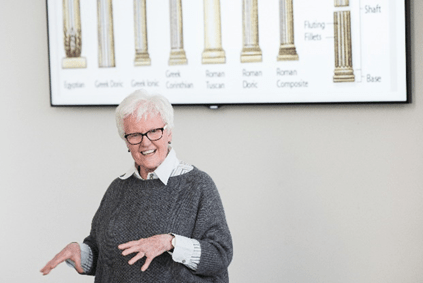
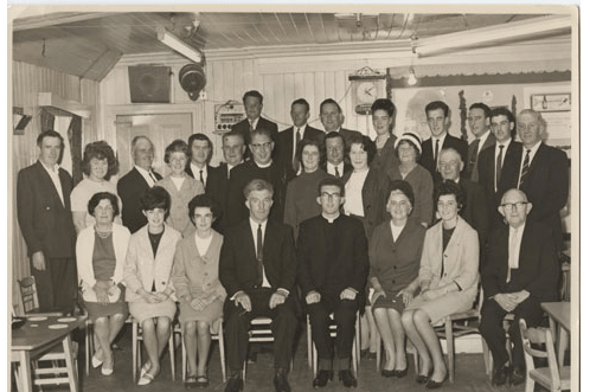
    Anne Roundtree in full flow.

    I would just to like to pay my respects on behalf of the Department of Adult and Community Education to the late Anne Roundtree. Anne along with her long time friend and teaching partner Margaret Sweetman introduced so many adults to a new life as mature students in the Return to Learning certificate programme that they delivered for over twenty years. Their care with this unique cohort of students has been a lesson to us all and one that I as a lecturer on that programme am happy to continue.

    Margaret Sweetman.

    There is a widely held belief that you can’t teach an old dog new tricks and while it might be true in terms of training it is palpably not true for education. You train dogs, you educate people. Education = liberation. This was brought home to me recently in a Return to Learning course where a 76 year old student Áine Grace recounted that since beginning this course in university she has felt seen for the first time since she left the workforce. It has been liberating for this woman who no longer ‘feels like I’m in god’s waiting room’ to feel validated at this stage of her life. ‘Belonging’ and ‘mattering’ two words that resonate with adult learners, and the university is a place where these can be enacted if we can really give time to think about Lifelong Learning in its wider sense.

    The current understanding of Lifelong Learning has become conflated with work related skills and employment opportunities. It’s part of a wider ‘education to service the economy’ discourse. This way of thinking fails to take into account adult students at all life stages who return to learning for any number of reasons that have nothing to do with employability or future skills. The Maynooth University Return to Learning certificate and the ComMUniversity provide ample evidence of people who attend programmes for a variety of reasons, some explicitly career focused and some social and recreational.  Adults and especially older adults are a vast untapped and unsupported population whose motivation to engage with Higher Education has as much to do with coming to terms with the vicissitudes of life such as grief, loss, bereavement, aging, loneliness and isolation, encroaching disability, etc., as it has to do with job prospects. Of course many people enrol in courses for the qualification and that is a useful outcome. However a lot of people find there is also the unexpected benefit of studying in university in that it offers Community. Here in the classroom among our peers our desire to be seen and heard and to be part of something greater than ourselves can be satisfied.

    From mid August to late September every year the media is full of stories about teenagers and exam results, getting their preferred college course or not, leaving home or not, finding accommodation or not and the world of education seems a territory completely occupied by the young. When I listened to Áine in the classroom or witnessed the ovation that Phil Devitt received by her fellow graduates when she was conferred with her BA in Community Studies at the age of 86 I can’t help but think of the thousands of people who have worked all of their lives, paid their taxes, sacrificed so much for their families and Irish society and by doing so help create a wealthy country in the relatively short one hundred years since independence. Adult students have much to reflect on and much wisdom to share. Áine gave a great talk at this year’s ComMUniversity Celebration of Learning Day in June about her experiences coming to university in later life as a student on the Return to Learning certificate course. Take a look at Áine’s talk HERE and you will see the transformative impact that her time in Maynooth has had on her and her plans for the future.

    For the generations of older learners who didn’t get the chance to study in university in their youth it’s about time they got something back. Along with the free bus pass and the free TV licence, free funded education for our senior citizens, in a way that is compatible with their life style (part-time, off campus) is an idea whose time has come. As a society and a Higher Education sector we have so much to learn from them.

    Tony Weekes Economics and Cathal Coleman Politics ComMUniversity.

    Dr Derek Barter is a lecturer and the Continuing Education Co-Ordinator in the Dept. of Adult and Community Education (DACE) Maynooth University and Director of the Communiversity. In his post as Academic Co-ordinator of Continuing Education in the Department of Adult and Community Education in Maynooth University his main aim is to facilitate the entry into higher education of mature students who may or may not be first time entrants to university and foster a culture of lifelong learning for personal, community and professional development. This includes the night-time/part-time degree for adults the BA Local Studies/BA Community Studies. Dr Barter works with different statutory, voluntary and especially community organisations in order fulfil the university’s strategic goal for Community Engagement and Widening Participation. Initiatives, such as the Communiversity, which brings higher education out of the campus in a partnership arrangement between MU, LEADER Partnership Companies and Local Public Libraries.

  • As universities return to normal, spare a thought for the ‘Covid-graduates’ who missed so much.

    As universities return to normal, spare a thought for the ‘Covid-graduates’ who missed so much.

    In this month’s blog, Anna MacNeill reflects on the impact of the Covid19 pandemic on university students

    The COVID-19 pandemic tore a hole through the fabric of our lives in March 2020 when I was just over halfway through the second year of my three-year undergraduate degree. For most of us, the initial reaction was to rejoice at the idea of a small break believing the university would be closed for perhaps two weeks. For me, I was never back on university campus until I graduated in September 2021, a year and a half later. In other words, I completed the entire second half of my degree on my laptop, sitting on the floor in my bedroom. It has taken me a long time to even begin to process just how much of the educational experience I was robbed of.

    The classroom structure is a sacred space for free-flowing ingenuity and imaginative thought. Often, there are few arenas in our lifetime which offer such freedom of thought and expression as we learn through the contributions and experiences of others, and offer that same thing in return. Any well-intentioned and unrestricted classroom environment will be led by educational methodologies that encourage participation and creativity and that foster a democratic space where learning is continuous and collaborative. It’s the best way to learn anything, until that fateful day in March 2020. All my memorable moments of learning and creative expression I experienced in college happened in small classrooms, not in lecture halls. It’s the most powerful mode of study. Then, it was taken from us.

    Completely contrasted with this collaborative space I speak of, is the year and a half I, and many others, spent removed from this learning environment. Whilst it was repeatedly touted that the online Teams and Zoom spaces were an easy and convenient replacement, the experience was in no way comparable to that of an in-person class. Classrooms around campus were swapped for the spaces where people slept every night, and the houses where, for some people, childcare and housework were added pressures.

    As my home became the container for the second half of my degree, my days would center around seeing tiny, pixelated images of people on a laptop screen with fellow students confined to their own domestic spaces, obscured through a camera lens. I tried to remember the name of others in my class and couldn’t, thrown into this sea of digital boxes, the capacity to build friendships became near impossible.

    It’s hard to quantify what is lost when the real life inter-personal connection between peers in a learning environment is denied – the communication that exists in a group of people who are all in a room for the same reason and out of the same interests. The interactions we built through eye-contact, body language and the way in which conversation ebbs and flows was lost when we are forced to communicate through the awkward and muffled lens of a webcam. Confined in our tiny boxes on a screen, we were divided.

    To rub salt in the wound of this monotonous experience, some lecturers appeared to set the same expectations and level of participation that they would expect from an in-person class. This didn’t work for me rather I sat there, day after day, as group leaders urged a quiet class of people to speak up and be involved. And while I understand the difficulty of this position for the educator, how you can expect people to feel supported to contribute to what is supposed to be a group experience, when in actuality they are alone, often in their bedroom or juggling other responsibilities they enjoyed escaping from as part of their college experience.  

    The pandemic is now mostly behind us, universities are back to normal and students, young and old, have returned to face-to-face learning. But is it worth remembering the thousands who didn’t get to finish their journey on campus. I got to graduate in person, with no guests invited and with no campus reception. Others graduated online and within the same four walls where they finished their studies. I know that our loss is not comparable to the much greater losses others experienced because of Covid19. But they were not insignificant either. As universities are again buzzing with activity, spare a thought for those of us whose ultimate experience was very different.

    Anna MacNeill

    Photo by Gabriel Benois on Unsplash

  • Being a part of Turn To Teaching

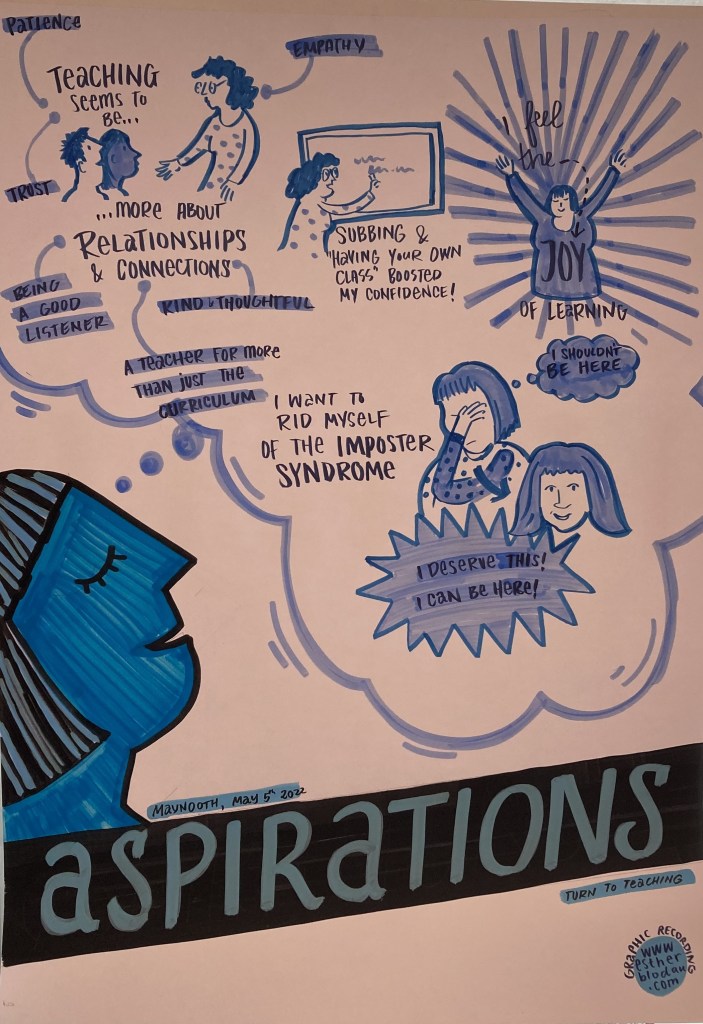
    Turn to Teaching runs the Think About Teaching course which is a year-long Foundation Course for Initial Teacher Education. The course aims to diversify the Irish classroom by fostering a culture among students from groups currently under-represented in teaching to consider the teaching profession as a desirable and achievable career option. The year-long course will support students academically, personally and socially; providing a pathway to the Bachelor of Education in Primary Education and the Professional Master of Education (Primary) in the Froebel department.

    The TTT Team.

    I was a part of the very first year of Turn to Teaching (TTT), looking back to that time, I was in a job I hated and dreading going to everyday and just really feeling low! I was at a time in my life that I felt like if I don’t try get back into college now, then it’ll never happen for me. 

    I had always wanted to be a primary school teacher but for many reasons it was not the path I chose straight out of leaving school, however it was always in the back of my mind that being a primary school teacher was my dream job. Hearing about the TTT program was amazing! I firmly believe in the saying ‘everything happens for a reason’ because just as I was about to begin my search on how I could go about starting my teaching journey, this course opened up. Getting onto the course has been one of my best achievements to date!

    The course itself was a great experience and I got to meet so many amazing people and friends. I learned a lot about myself in my year in TTT and the type of learner I am but also the type of teacher I want to be and the influence I would like to have on children and people around me. The course is so diverse and you meet so many people from all walks of life that you learn from. You hear of experiences that people have had in our education system, some positive, some negative but it all pushes you broader and makes you want to do better for those who have had bad experiences. 

    Through reflecting while participating on the TTT program, I became and continue to be an advocate for Delivering Equality of Opportunity in Schools (DEIS) and am so passionate about getting people from DEIS backgrounds to realise their potential and that barriers can be broken! This course allows people like myself, (someone from a DEIS background) or people who are not the ‘typical teacher’ to enter the workforce, which benefits our education system greatly. My cohort of peers on the course are, or are in the process of becoming some of the best primary school teachers in the teaching profession! To think that without this course it may not have been possible (for myself included) is shocking as we bring so much creativity, diversity and enthusiasm to the profession. The children of our future would be missing out on unbelievable teachers if this course was not created, as we would be slipping through the cracks of our education system and our potential would never be highlighted. 

    This course has changed my life for the better and I owe so much of my successes to it. I would not be a fully qualified primary school teacher , living out my dream job in my dream school without this course and I will be forever grateful for the opportunities it has given me – Meghan Shannon.

  • What has Adult Education got to do with Social Justice?

    Maynooth University Social Justice Week : 6th-10th of March

    In the last few weeks I visited distant relations in Leeds, England. On the visit we spoke about their life journey leaving a west of Ireland county in the late 1930s as teenagers and arriving in Leeds where an older sibling or a friend of the family had arrived a few months or years earlier. They spoke of the Irish networks for work, socialisation and accommodation. They told me of the strenuous work in factories, in construction as navvy’s, on farms and in hard physical service work. They worked to establish themselves and their families after they had sent money home and/or saved to bring a younger sibling to Leeds (See https://www.untoldstories.co.uk/).

    Now in their 60s, 70s and 80s they have grown families and, in their view, have had a hard but a livable life. Some of their friends are passed on from old age, accidents, excessive drinking and smoking, or poor health due to over-work in poor conditions. Staying in Ireland was not an option for them though many, not all, came back regularly to visit. Progressing in education was not an option either and most dropped out of an oppressive school system that, to them, was not going to give them a much-needed family income.

    Source: https://www.untoldstories.co.uk/

    I learned about the very big textile, printing and steel factories in Leeds, the poor working conditions, and the struggles to get by through the war years. With so many new workers coming to Leeds there were very big house-building programmes giving more employment and self-employment opportunities. Walking through many areas of Leeds these dense terraced housing estates are in poor condition and towers of high rise flats are dotted around reminding me of Ballymun, Dublin. I also saw leafy suburbs, but there were few in the city area I was in.

    As I walked and listened, I thought about my career as an educator that is now going through a seismic transition. I thought “What is the purpose of adult and community education today?”

    There is no such thing as a neutral educational process according to Paulo Freire in Pedagogy of the Oppressed (1972). Freire posits that education is either an instrument to integrate younger generations into the logic of the present system bringing about conformity, or it is the “practice of freedom” where people deal critically and creatively with reality and their participation in societal transformation. I’ve been re-reading Tom Lovett’s 1975 book titled Adult Education, Community Development and the Working Class. Lovett says “Adult Education as it developed in Great Britain has always had a strong sense of social purpose” and so it has been in Ireland with its benefit presented in the history of adult education among women’s, youth, and community groups, and most ably presented in the government policy white paper Learning for Life (2000).

    However, I am fearful that we are following the English experience where, as Alan Tuckett in the Rise and Fall of Life-Wide Learning for Adults in England (2017) states, adult education has mapped and deprecated “… the .. narrowing of public investment to an increasingly utilitarian focus on qualifications for labour market participation with the rise of Treasury (finance ministry) influence on adult learning policy from 2003.”

    Source: https://en.wikipedia.org/wiki/Armley

    If we are to respect social justice, a ‘Social Justice Week’ is not good enough. Social justice must be the heartbeat of all social and democratic conversation, research, innovation and enterprise. Yet so much of our mainstream education does not explicitly have social justice central to its content, league tables, points race and cramming for exams. Adult education, particularly community-based adult education is among the last and is strongest repository of socially aware education for justice practice. How are we to address peace, democracy, equality, inclusivity, liberation from poverty, and tackling global challenges such as biodiversity breakdown and climate change without the form of adult education that Freire, and Lovett evidenced?

    That visit to my relations in Leeds, stimulated my soul.

    Michael Kenny teaches and researches in Maynooth University’s Department of Adult and Community Education, was course director of the Post-Graduate Higher Diploma in Further Education (HDFE), with Dr. Camilla Fitzsimons, and the Programme Design and Validation (PCPDV) Certificate, and continues as principal investigator (PI) on a number of European research projects. He has recently retired from full time employment.

    All views are those of the author only.

  • TUTOR PROJECT

    Teachers Upskilling aiming at a holistic inclusivity in learning. 

    TUTOR is a 3 year European Union funded Teacher Academy project. The Department of Adult and Community Education, Maynooth University is a lead partner in TUTOR

    Ensuring inclusion in education has been a strong motivator for the Department of Adult and Community since its inception and over several decades. The Department is focused upon holistic, dialogical and pedagogical accompaniment of marginalised communities. It does this by co creating spaces for traditionally excluded voices to be heard,  and on ensuring a standard of excellence is achieved in qualitative, engaged and participatory research. The department’s philosophy of education, initial teacher education and continuous professional development is leading and influencing pedagogy and practice within adult, community and further education and training settings. That philosophy is strategically aligned with, and supportive of, the aims and objectives of the TUTOR project, and with the TUTOR consortium partnership.  The TUTOR project, alongside all of the international research projects the department partners with, encourages wider impact of inclusive education across the teaching profession at a European level.

    Key messages of the TUTOR Project 

    Summary of the TUTOR Project  

    TUTOR aims to create partnerships between teacher education and training providers to set up Teacher Academies developing a European and international outlook on inclusion in teacher education.  These Academies will embrace inclusivity in education and contribute to achieving the objectives of the European Education Area. In particular, the project will address the need for educators to develop their capacities to understand, analyse and develop strategic responses to the diversity in their classroom and to promote a more inclusive learning environment. TUTOR project intends to foster a more inclusive environment in education, that is open to students from migrant, LGBTQI+, and socioeconomically disadvantaged backgrounds, with a particular focus on safeguarding the elements of tolerance, acceptance, and inclusion.

    The TUTOR objectives 

    To contribute to the improvement of teacher education policies and practices in Europe by creating networks and communities that bring together providers of secondary teacher education and providers of continuing professional development, and other relevant actors (such as ministries) and stakeholders to develop a Train the Trainers approach, focused on inclusivity in learning, 

    • To define a forward-looking strategy upskilling strategy for secondary school teachers, 
    • To enhance the European dimension and internationalization of teacher education through innovative and practical collaboration and by sharing experiences for the further development of teacher education in Europe, 
    • To foster holistic inclusivity in the learning environment, covering all its aspects such as tolerance, non-discrimination, flexibility, etc, 
    • To assess current and future skill mismatches in the targeted (teaching) profession, 
    • To disseminate widely all project products & maintain them in future communications. 

    Who is the TUTOR project for?  

    It is for teachers, students and policy makers who have an interest in inclusive education 

    • Educators/Teachers/ Trainers from the four participating countries of Greece, Ireland, Austria and Turkey 

    Reasons for engagement:  

    1. To update inclusivity skills of secondary education teachers in inclusive education.  
    1. To raise awareness with regards to the inclusivity needs of students being discriminated because they are part of the LGBTQI+ community, have migrant background and they face socioeconomic difficulties.  

    The TUTOR Consortium will 

    1) conduct desk and field research on the inclusivity skills needs of teachers, exploring both the desired status of inclusive education and the actual status within the partner countries, and at European level. 

    2) design a training program to match country-specific needs  

    3) promote and provide access to TUTOR e-learning platform – access to training materials and a network of professionals within their sector.  

    4) support teachers to develop skills to enable a more inclusive teaching experience for students from LGBTQI+ community, migrant backgrounds, and socioeconomically disadvantage to ensure that they are being equally treated.   

    5) work with policy-makers including ministries, local & regional authorities, EU bodies, (and other officials with the ability to influence policies) to make changes at a European and national level regarding transitions to a more inclusive teaching environment. 

    What has the TUTOR project achieved so far? 

    We commenced in June 2022 with a meeting of all partners in Athens, Greece, where the consortium partners developed an overall strategy including an assessment methodology, a Project Management Handbook and Financial Plan, a Dissemination Plan and a project website. Desk research was undertaken across the four countries and at EU level. Partners produced country specific literature reviews on inclusive education, and an overarching Transnational Literature Review.  

    The Department of Adult and Community Education, Maynooth University is the lead partner for Work Package 2 (WP2) Definition of a forward looking upskilling strategy for teachers. Partners have conducted focus group meetings with teachers and stakeholders in Ireland, Austria, Turkey and Greece. 

    What is currently happening in TUTOR? 

    TUTOR’s Transnational  Partner Meeting (TPM) is being hosted by the Department of Adult and Community Education, Maynooth University on 1st and 2nd February 2023, where we welcome partners from Greece, Turkey, Austria and Belgium. All partners are advocates for and are specialists in inclusive education. We will discuss the implications of the key findings of desk and field research to date and plan our strategy for defining a future looking upskilling strategy for teachers across Europe. For further information,  

    The TUTOR website is http://tutor-project.eu/ 

    The TUTOR Facebook: TUTOR Facebook 

    What’s next? 

    Large scale research activity and needs analysis on upskilling of teachers on inclusive education for students from LGBTQI+, migrants, ethnic minorities, and socio economically disadvantaged contexts. 

    TUTOR partners are exploring National-level and EU-level research on the current skills levels of secondary education and VET (Vocational Education and Training) teachers on inclusivity. As part of that process we will be conducting surveys and interviews with 800 teachers, engaging with 500 stakeholders and policy makers. We are developing a professional network of teachers, and developing opportunities for training and mobilities for teachers across the consortium partnership. 

    Contact bernie.grummell@mu.ie and margaret.nugent@mu.ie for further information and if you would like to find out more and become involved in the project. 

    TUTOR partner consortium 

    P1. AKMI ANONIMI EKPAIDEFTIKI ETAIRIA (AKMI), Greece  

    P2. School of Pedagogical & Technological Education (ASPAITE), Greece  

    P3. Symplexis, Greece 

    P4. EVTA, Belgium  

    P5. EVBB, Belgium 

    P6. Maynooth University, Ireland 

    P7. BPI OJAB, Austria 

    P8. Die Berater, Austria 

    P9. National Education Directorate of Serik District, Turkey

    P10. SERGED Teaching Academy, Turkey 

    P11. IGLYO, Belgium 


    Dr. Margaret Nugent is an academic and researcher with the Department of Adult and Community Education. Her professional experience and research interests extends to international peace building, conflict intervention, reconciliation in post conflict contexts and inclusive education. She specialises in qualitative, engaged and participatory research methodologies, and is an experienced practitioner and innovator in developing peacebuilding pedagogies. Margaret has delivered a very extensive portfolio of consultancy work with the adult, rural and community development sector, within further and higher education.

    Bernie Grummell is Associate Professor in the Department  of Adult and Community Education. She is co director of the Centre for Research in Adult Learning and Education and is the lead researcher for the TUTOR project in Maynooth University.

  • CREATE2Evaluate: Enhancing evaluation practice of Adult Education policies and programmes at regional and local levels 

    CREATE2Evaluate: Enhancing evaluation practice of Adult Education policies and programmes at regional and local levels 

    Between 2017 and 2019 an ERASMUS+ ‘Competitive Regions and Employability of Adults through Education’ (CREATE) project aimed to enhance performance and efficiency in adult education by addressing the gap between EU/national strategies and local/regional implementation at adult education policy level. CREATE identified a lack of policy tools and resources to evaluate the impact of adult education (AE) interventions, policies, and initiatives across Europe. This gap was particularly acute within regions tasked with AE policy formulation and implementation to progress towards the EU pan-European target of 15% AE participation. A second project, the CREATE2Evaluate project, was supported by ERASMUS+ from 2020 to 2022 to progress these findings. 

    The Create2Evaluate project and Partners 

    The Create 2 evaluate project is a transnational and multi-agency collaboration seeking to enhance the efficacy and valorisation of adult education at policy and governance levels. The primary aim of the project was identifying reliable tools for adult education evaluation at various layers of governance. The project has eight organisational partners from seven countries (Belgium, Germany, Ireland, Italy, Poland, Romania, and Spain) committed to identifying and operationalising these tools.  

    Click here for more information on the Eight collaborative partners 

    The first meeting of the partners, hosted by the German partner lead AEWB, took place online via teams on the 12th and 13th of November 2020. The project ‘Kick-Off Meeting’ discussed the overall project implementation of the defining timelines, respective duties and activities that will take place in the following months. 

    A snapshot of the first Create2Evaluate partners meeting 

    IO2-Report: Mapping the Impact, Validation and Evaluation of AE Policies 

    The eight partners researched and mapped their current adult education policy landscape regarding evaluation, assessment, and monitoring. Primary and secondary research was undertaken. Twenty-seven stakeholders in the field of adult education were interviewed and a key stakeholder survey was disseminated to provide thirty-six additional responses.  The project partners mapped and identified tools, methods, and resources employed to evaluate adult education programmes and initiatives throughout their regions. A mapping press release went live on the 03-03-2021. 

    Stakeholder collaborative conversations in action at Maynooth University. 

    Mapping Outcomes 

    Mapping and research enabled the CREATE2Evaluate partners to identify the lack of a centralised systemic evaluation framework, common definitions and standards. Feedback indicated that current evaluation policy is primary focused on quantitative outputs and student specific learning outcomes, and inconsistencies were apparent among targeted groups and in non-formal evaluation provision. Additionally, it was evidenced that although copious and significant qualitative evaluation is conducted across adult education centres, this data remains relatively difficult to access due to a lack of centralised systematic overarching analysis and learner protection requirements. Thus, it is very challenging for policy makers to assess the effectiveness of their adult education policies. To view result of the consolidation of findings stemming from the mapping at country and EU level performed by partners click here (full IO2 report) 

     The CREATE2 Evaluate Toolbox:  

    In response to the IO2 findings the partners collaboratively collected and developed helpful tools for the evaluation of adult education at various layers of governance. The CREATE 2 Evaluate ToolBox was conceived to ensure that local and regional policy makers from across Europe will be able to use the policy tools to better plan, design, implement and monitor AE policies with a clear vision of sustainability of public funding in AE. The selection of tools takes into account different purposes of evaluation (e.g., process, persuasive, symbolic, instrumental) as well as their place in the policy cycle. The tools are free, easily accessible and multilingual. The toolbox invites users to adopt the tools to their work realities with ease.  

    The Toolbox is structured in six different areas, each with specific resources and references that sustain local policy makers in better strategizing the alignment, consistence and coherence of local lifelong learning plans to EU horizons. There are a total of 42 tools; 4 best practice recommendations; 5 networks/ Forums; 4 networks/platforms, and a collection of policy documents and strategies are available. The toolbox was officially released on the 26-09-2022. 

    Overview of the Toolbox sections and tools 


    Click each area to view the distinctive tools and resources 

    1.  Consistency of the objectives and outcomes  

    2.  Programme creation at the policy/public administration level 

    3.Inclusivity of AE policies and availability of AE programmes 

    4. AE trainings and programmes delivery 

    5. Value added stemming from the participation in AE 

    6. Continuity of programme evaluation and use of its results to improve AE policies 

    To view the full toolbox and additional resources click ToolBox

    CREATE2Evaluate implementation Package and Green Paper 

    The CREATE2Evaluate implementation Package and Green Paper are the final two components of the CREATE2Evaluate project. These two deliverables were consolidated, and the press release went live on the 19-10-22.  

    The CREATE2Evaluate implementation Package consists of a training suite for the policy making target groups. It is provided as a guide, with step-by-step procedures on the use and implementation of the tools to evaluate policy interventions in the domain of AE. The Training Suite includes user-friendly and flexible training resources for policy makers. Included are guidelines on the policy evaluation tools, scenario setting and profiling tools and a users’ manual and Introduction CREATE2Evaluate ToolBox 

    The CREATE2Evaluate Green Paper advances the debate and stimulates the discussion on policy formulation, implementation, and evaluation of adult education. It provides incite into the challenges and drivers that contributed to the project and the final output of the CREATE2Evaluate Toolbox.. Additionally, it considers the marginalisation of adult education and considers the context in which policy is developed and implemented in adult education, thus enhancing the awareness of the issues evident across the EU adult education landscape. Importantly it offers a critical analysis of the current landscape of adult education from the perspective of the stakeholders and considers the position of the learners. The CREATE2Evaluate resources and CREATE2Evaluate Green Paper should stimulate policy dialogue and exchange on how to advance adult education for socio-economic development and integration.  

    All CREATE2Evaluate results are available in multilingual versions, free and without restrictions through the dedicated open educational resource (OER) platform. To know more about the project, the organisations involved and all resources available, please feel free to consult the Open Education Resource Platform of Create2Evaluate: www.create2evaluate.eu 

    Michael Kenny is a lecturer in the Department of Adult and Community Education. He is co-director of the Higher Diploma in Further Education (HDFE), and the director of the post graduate Certificate in Programme Design and Validation (PCPDV). He is currently the Principal Investigator (PI) on 6 Erasmus+ Projects, including the CREATE2Evaluate project.  

    Margaret Nugent is an associate academic, researcher and lecturer with Department of Adult and Community Education. Margaret is research associate on the Diversity and several European projects. She is a specialist in engaged methodologies, conflict intervention and peace pedagogies. 

  • Mindfulness as self-care in professional practice

    Mindfulness as self-care in professional practice

    Each year during the summer months I have a practice of going on a silent retreat. When I tell people that I am heading away to sit and do nothing for 7 days as part of my annual leave – no writing, no reading, no talking – I get some wry looks indeed. But I also get some interested looks, and indeed some looks that I interpret as envious. It seems that the endless hurry that characterizes many people’s lives, the constant demand of work, social media, the on-duty and high alert nature of the social world, can wear out our resources without our full knowledge or consent.  

    Not that a retreat is an easy thing to do. For my part I experience the removal of stimulation and demand as a challenge for sure. There is a true sense of disorientation when you don’t have phone, e mails, internet, constant distraction, or indeed the affirmation that often comes from work. Who am I if I don’t have those things in my psychic space?  

    But, despite, or perhaps because of, the challenge, I keep going back.  It seems to me that the single most important resource that I draw on in my work as an adult educator, the thing that sustains me in my pedagogical life as well as my psychological life, is the practice I have had for over three decades of taking time each day to sit and to be, to allow for a short time the world to be the world and me to be me. In this space I detach from constant doing and come in to the realm of being. Doing this every day, supported by my annual retreat, together with a like-minded community of practitioners, seems to have the impact of refreshing, renewing and resourcing the core part of me that I draw on in my pedagogical life. 

    I work in the Department of Adult and Community Education in Maynooth University in the contexts of both adult education and adult guidance counselling. I see these as rewarding and demanding vocational choices. We work to animate change in individual lives and in the wider society, enacting and embodying a commitment to values of equality and justice.  In our work lives we find ourselves in the midst of group participants’ challenging experiences and stories, and we extend our hearts and minds to support the people we work with, often at a cost to ourselves that our institutions don’t recognize, reward or support. There is a sense in which self-care can seem like another demand on our time and energy, another task on top of the stresses of our work, another. 

    Mindfulness practice offers me something important that resources me in the face of the requirements of the neo-liberal world: it offers a set of formal and informal practices that can teach me how to ground myself in the present moment with curiosity and openness and to relate to myself and to my own experience with kindness and compassion (Kabat-Zinn 2005, 2013). This can nurture a freedom to be with whatever is, in a way that offers supports in the midst of the challenges and demands of daily living. Mindful practice can support us to be present to ourselves at one and the same time that we are present to others, and to the myriad demands on our time, attention and care throughout our days.   

    It also offers something in addition, a philosophy of living that is congruent with my values as an adult educator. Though mindfulness has been correctly critiqued for its susceptibility to neo liberal discourse, at its best it brings with it a radical critique of power, greed and narcissism. It emphasizes holistic connection: between body, mind and emotion, between self and other, between the human community and the environment we are embedded in, and on which we depend for well-being (Kabat-Zinn, 2005, 2018; Bristow et al 2022). There is nothing like a retreat from the daily compulsive consumption – of news, of goods, of resources – to alert you to the core difference between what is needed and nourishing, and what is compulsively consumed at the expense of well-being. 

    As another academic year begins, I have a practice of asking myself a core question that I take from Joanna Macy’s work on hope: what would I most like to do to contribute to healing our world? Or as the subtitle of her book asks: how do I face the mess without going crazy (Macy & Johnstone, 2012)?  A retreat is a good place to address this challenge and the answer emerges easily: I will continue to resource myself with a daily mindfulness practice, strengthen my learning about the contemplative origins of mindfulness and continue to teach the practices I have learned to others.  

    David is hosting a CPD opportunity over 8 weeks on Zoom for adult educators and adult guidance counsellors who would like to learn about Mindfulness and develop their own contemplative practice. If you would like to further details, please see flyer at the end of this blog post, or contact: Ann Smith at Ann.smith@mu.ie  

    Bristow, J., Bell, R., Wamsler, C. (2022). Reconnection: Meeting the Climate Crisis Inside Out. Research and policy report. The Mindfulness Initiative and LUCSUS. www.themindfulnessinitiative.org/reconnection 

    Kabat-Zinn, J. (2005). Coming to our senses: Healing ourselves and the World through mindfulness.  Piatkus. 

    Kabat-Zinn, J. (2013). Full catastrophe living, revised edition: How to cope with stress, pain and illness using mindfulness meditation (Revised ed.). Piatkus. 

    Kabat-Zinn, J. (2018) The Healing Power of Mindfulness: A New Way of Being. Hachette. 

    Macy, J. and Johnstone, C. (2012) Active Hope: How to face the mess without going crazy. New World Library.  

  • The Adult Education Teachers Organisation (AETO) – the 5 Ws

    The Adult Education Teachers Organisation (AETO) – the 5 Ws

    Adult Education is the study of how we learn and develop as adults to collaborate in the creation of a just, equitable and sustainable society'. In the provision of education for adults who may not have been well served by the formal education system, adult education tutors provide a valuable service. The Department of Adult and Community Education at Maynooth University works closely with many professionals in adult education including with adult education tutors. The Department promotes a view of education which recognises the importance of learning which promotes justice and equality in society. The AETO shares these values and can support our department in promoting these values in education spaces in which their members work and to promote adult education in broader society

    Who is in the AETO?

    The AETO is a National Organisation of teachers in diverse roles in adult education. Adult Education involves teachers who work in Community Education, Literacy, English for Speakers of Other Languages (ESOL) and other sectors. Membership of the AETO is open to any teacher working with adults in Ireland, be they working with an ETB or for an organisation funded by an ETB. There are about 3,000 adult education teachers nationally and the AETO has been able to engage 300 adult education teachers in its group so far. We expect that many more teachers will join as we raise our profile nationally. 

    A committee has been set up to further the work of the organisation. The Chair of the Association is James O’Keeffe who works in CDETB, the treasurer is Lorcan McNamee from MSLETB, Sinéad Hyland from CDETB is the secretary of the organisation and Avril Tierney from CDETB is the PRO.

    The organisation can be contacted by email at aeto2021@gmail.com

    What are the aims of the AETO?

    The AETO has various goals, all of which aim to improve the working lives of members and to help maintain a focus on learner centred education which will improve access, transfer and progression in the provision of adult education.

    We believe that respect for adult learners involves respect for their teachers. The AETO provides a valuable network for teachers in adult education by providing support for them and in turn for the learners with whom they work.

    Apart from those who have participated in adult education, there seems to be little public awareness of the work of Adult Education teachers. The AETO would like to inform the public of the work and practice of Adult Education Teachers and the life improvements that they help to bring about for students.  
    The AETO would like the importance of our sector to be visible to the public and to the government. Our contribution to education for adults who are vulnerable and marginalised is specialised and of great value to the communities in which we work. We want to achieve working conditions that are merited by this contribution including:

    • a public service contract
    • recognition of prior service and a pay scale
    • recognition of teaching and other qualifications
    • terms and conditions that reflect these qualifications, service experience and status as teaching staff
    • a career path with progression pathways for teachers

    We believe that this will encourage others to join us in the important work that we do and that will make our work sustainable.

    Why?

    Adult Education Teachers work in diverse roles and, so far, have had few opportunities to network. This national organisation provides a space for teachers to get to know and support one another and to share best practice in terms of their teaching.

    There has been a realisation of late of the power of adult education and lifelong learning to address many of the issues that Ireland faces and to equip its population with the skills to survive and prosper in an ever-changing environment. Adult education teachers work with adults to develop skills which enable better communication. resilience and critical skills. 

    The AETO recognises that, in the future, there will be a greater need for committed adult education tutors, to offer learning to adults who wish to re-engage or start out with their education. Many of the actions from the Learning for Life: The White Paper on Adult Education from July 2000 have not yet been put in place regarding adult education teachers. Since then, strategies have been published by various bodies including SOLAS (Future FET: Transforming Learning), Department of Further and Higher Education, Research Innovation and Science (Adult Literacy for Life- A 10 year strategy for literacy, numeracy and digital literacy) and Education and Training Boards Ireland (ETBI Strategy Statement 2022-2024) that depend on adult education teachers to deliver learning for adults to achieve the goals set out.

    As a response to the fragmentation of the sector there is a need to engage colleagues who work in different areas. What is common to all adult education teachers is working with participants with various motivations, some of whom are returning to education having had negative experiences of education in the past. As such, their needs for support are complex. Adult education tutors are ready to provide those supports, allowing learners to develop whole person skills, as well as skills that can lead to work or further study.

    Where?

    There is representation on the group from all 16 ETBs.  There are also local groups based in ETBs who contribute to the national group and who organise locally.

    Much of the communication is on the AETO WhatsApp group but we have had meetings face to face as well as online.

    How?

    The AETO aims to unite adult education teachers in a safe and communicative space where we agree on actions together and can act as the voice for Adult Education Teachers in Ireland.

    We are in contact with our members and are engaging in different ways to with Adult Education Teachers so we can ensure that we are representing the wishes of the group.

    Without adult education teachers there is no adult education.

    Sinéad Hyland is a Tutor and Researcher with Maynooth University Department of Adult and Community Education and City of Dublin Education and Training Board. Sinéad has worked on many projects in adult education and in her work on the Return to Learning Programme in MU has focussed on helping adults to make transitions to higher education.

  • DIVERSITY

    DIVERSITY

    Including Migrants through Organisational Development and Programme Planning in Adult Education

    Ireland is no stranger to waves of migration, spanning 5,000 years, from the first documented migrants arriving on the shores of the North Mayo Ceide Fields to the recent wave of Ukranian refugees. Following the second world war in 1946, Operation Shamrock, in the Glencree Centre for Peace and Reconciliation, (then an Army barracks) supported 500 traumatised children arriving from war torn Germany who were then hosted by families in country Wicklow and beyond. We welcomed migrants from Vietnam in the 1970’s and in the early 2000s refugees and asylum seekers from the continent of Africa arrived in numbers previously unforeseen, the impact of the Direct Provision system has yet to be fully appreciated or resolved.

    Internal displacement has also been a recurring them on the island of Ireland. Displacement of western farming communities occurred through the Land Commission from its establishment in 1881 throughout the 1900s, as well as displacement of communities fleeing conflict across the border in the 1970s.  Describing the impact of displacement in The ‘Emerald Curtain’, it is estimated that 11,000 people were internally displaced as a result of partition of the island. RTE Archives documented the arrival of displaced people from Belfast to Gormanstown Army barracks in the 1970’s.  Fifty years later, we are considering using the same army buildings in Gormanstown to host Ukranian refugees, that were  used to host families fleeing the troubles in Northern Ireland. Global flows of migration continue to be topical issues for us.

    Europe is currently experiencing the greatest number of economic and conflict migrants since the second world war. Modern society knows of internal displacement and external migration from African countries for some years but set it aside as a problem to be dealt with by the European Union. Few of us have had to actively deal with the issue until migrants began to arrive in significant numbers from war-torn Syria and economically and ecologically depressed North Africa.

    As the numbers grew, emergency responses were adopted. Dedicated budgets were set aside, and willing educators were allocated to migrant groups primarily to teach English and assist them in their integration process. In many cases, “adult education for migrants” was subdivided into “adult education for refugees” and “adult education for other migrants”. Thus, migrants are considered as a “special” target group of adult education, with specifically tailored solutions. This approach may be appropriate in emergency response to a sudden migrant inflow, but long term it leaves migrants outside the mainstream adult education provision and contributes to isolation and ghettoization.

    Now every statutory adult learning provider is required to meet the needs of the newly arrived migrants and refugees to a greater or lesser extent. We now realise what we have been doing  is not an adequate or sustainable response.

    DIVERSITY Partners Meeting

    The Erasmus + funded DIVERSITY project seeks to facilitate a policy and practice shift across Europe from focusing on migrants as distinct group requiring preparation for integration into the society around them, to including migrants in adult learning providers’ regular programs as equals.  The adult education ethos, principles and practices can actively and directly fosters diversity and inclusion in society.

    Diversity project logo composted of multipled blue, navy and pink rings
    EU flag logo with text: Co-funded by the Erasmus + Programme of the European Union

    The Diversity Project-Including Migrants through Organisational Development and Programme Planning in Adult Education, emerged from the desire of European Adult Education providers to welcome refugees, and provide needs based appropriate adult education. It aims to support adult education management, programme planning and executive staff to assess their current practices for implicit barriers and to develop appropriate modes of inclusion for migrants in adult education.

    The DIVERSITY Project is situated within the context of European emergency response mechanisms. It is focused primarily on supporting Adult Education managers, planners and providers to embrace and include migrants through organisational development and programme planning in Adult Education spaces. DIVERSITY project partners have developed several resources including country gap analysis reports, a training curriculum designed to address the specific requirements for this organisational shift and a policy recommendations and action plan report. To achieve good policy recommendations that reflect the needs of diverse migrant and refugee groups of adult learners, consultation with member organisations and representative groups is vital. Such an approach will ensure that policy is grounded in practice and is cognisant of experiential knowledge. The engagement of adult education actors in the Diversity Project to date suggests that having a genuine interest in people, their culture, traditions and language is important to facilitate inclusion. It is also important for adult education  organisations, staff and students to be aware of the semantics, the wording and labelling of people as ‘other’ creates barriers to integration and inclusion and can create miscommunication.

    While most adult education providers would agree that a diverse learning community is a desirable goal, most are also less clear on how to create this respectful, caring, supportive, appreciative, mutually beneficial reality. Changing organisations is notoriously difficult and while agreement on the overall vision is crucial, identifying manageable, specific steps to take in the workplace can eventually make a bigger difference.  We have developed resources which we hope will be of use to adult education providers.

    The Diversity Gap Analysis Report consolidates the current state of play in migrant related AE provision in each partner country and across Europe. The report profiles the readiness of adult education systems in Europe to develop more sustainable approaches towards managing diversity. It provides a review of relevant policy and practice documents along with interviews, surveys and focus groups involving managers, planners and learners (both migrants and non-migrants) as immediate target groups.

    Cover of the diversity gap analysis report
    Click on the image to open the report

    The Diversity Curriculum is aimed at management, programme planning and executive staff with the modular curriculum allows providers to a) assess their current practices for implicit barriers to migrant participation, and to b) develop appropriate avenues of evolution to realise their full potential. The curriculum modules can be turned into tailor-made trainings.

    Cover of the diversity curriculum
    Click on the image to open the curriculum

    The modules follow the mix-and-match approach – participants can pick only one, a couple or complete all of them, depending on their organisations’ needs. This offers the greatest possible degree of applicability. This curriculum is not a self-study course; it serves as the basis upon which trainers will build their trainings. The curriculum is available for free on https://www.aewb-nds.de/themen/eu-programme/diversity/and comes in five languages.

    The Diversity Policy Recommendations and Action Plan recognises that the inclusion of migrants into the wider planning strategies of adult education requires European policymakers to align their regional AE strategies. Adult education providers are important stakeholders in facilitating these changes. Therefore the Diversity project prepared a set of policy recommendations aiming at enhancing inclusion in Adult Education.

    Cover of the diversity policy recommendations and action plan
    Click on the image to open the action plan

    Michael Kenny is a lecturer in the Department  of Adult and Community Education. He is co director of the Higher Diploma in Further Education (HDFE), and the director of the post graduate Certificate in Programme Design and Validation (PCPDV). Michael is interested in formal and non-formal education in voluntary rural and urban organisations.  He is currently the Principal Investigator on 6 Erasmus+ Projects, including the Diversity project. 

    Margaret Nugent is an associate academic,  researcher and lecturer with Department  of Adult and Community Education. Margaret is research associate on the Diversity and several European projects. She is a specialist in engaged methodologies, conflict intervention and peace pedagogies.