My mother heard about this course and told me about it. My brother, sister, and parents attended different colleges and universities. I wanted to attend university, so I applied for this course. I had an interview and told them that I wanted to study media studies. One day, I received a letter in my mailbox, and I opened it. I was accepted into Maynooth University. I felt over the moon and couldn’t believe I had been accepted—this was my dream come true.
What is the ILI?
It means Inclusive Learning Initiative. Five people with intellectual disabilities joined the first group of the ILI. We all studied different courses in Maynooth. This course was fully inclusive.
What I studied and why
I wanted to study media studies. I studied the history of media, creating a documentary, script writing, editing, and presenting for radio and television.
What parts of college did I enjoy?
I enjoyed being there. Inclusion is a feeling I’ve experienced through making friends and creating memories. It was difficult at the beginning, but then I focused on my module. Lecturers got used to me and the way I work. I am a visual learner. I also met people who really cared and wanted me to succeed. I enjoyed Kairos and working with the lights. I enjoyed doing voice-overs. I interviewed Shay Healy.
How did I show my learning?
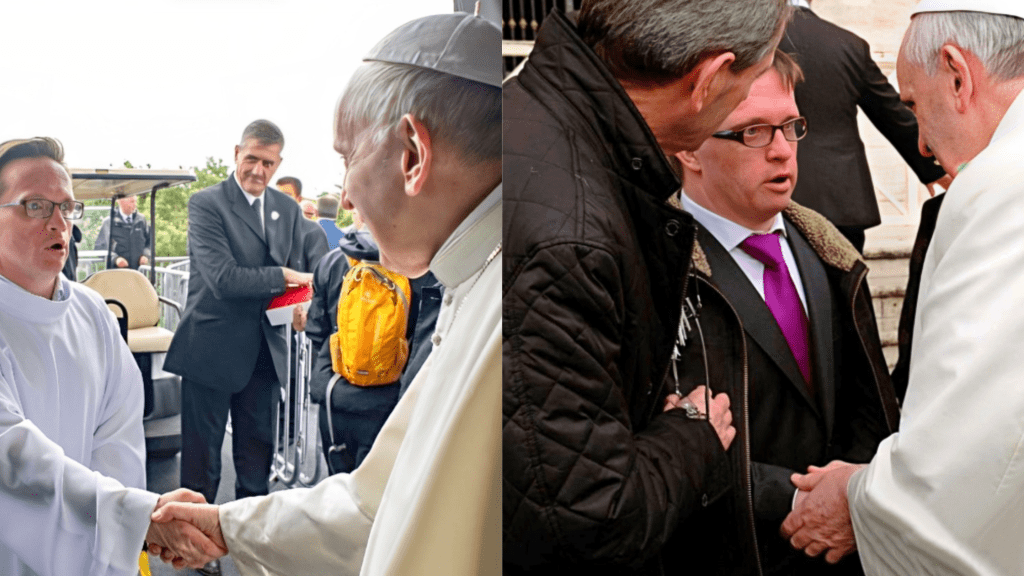
I created a show reel by compiling all my assignments. I made a documentary about my journey through college, titled Don’t Tell me, Show me. I am a visual learner who prefers structure and uses a portfolio of work. I also express myself through writing, poetry, and music. I received support from the ILI facilitator. As the lecturers got to know me, they became more open to different teaching and assessment methods. My assignments were practical; I interviewed Shay Healy, compared two wildlife programmes and shared my opinion, and conducted interviews in Rome during my work placement. All of this was assessed, including a report from Vatican Radio about my placement. I felt very honoured and humbled to meet Pope Francis, and I was very happy to see him.
What does inclusive education mean to me?
It means fostering natural and existing supports by learning from all the lecturers and students. Inclusive means I am involved in all modules. I want people to see me for who I am while living with Down syndrome.
The power that objects create?
I love music; it is very powerful. Two songs truly resonated with me. One is ‘This is me’ from The Greatest Showman. I like the line – but I won’t let them break me down, I know that there’s a place for us, for we are glorious.
The last song I will mention is ‘The Climb’ by Miley Cyrus. It reminds me of getting through college assignments and life in general.
There’s always gonna be another mountain
I’m always gonna want to make it move
Always gonna be an uphill battle
Sometimes I’m gonna have to lose
Ain’t about how fast I get there
Ain’t about what’s waiting on the other side
It’s the climb.
My advice to students!
The advice I can give to students is to enjoy their time with friends. Make use of the support available. Be creative in what you do and be honest with yourself.
My advice to universities
My advice for universities is to support students and guide them by recognising their potential.
What is important and why?
The most important thing is to follow your heart in everything you do. Focus on your studies and recognise your potential.
What kind of supports is important for students?
Patient and kind lecturers are essential. Support from family, friends, and other students is vital in helping the student achieve his potential.
Life is what you make it by Michael Gannon
Life is what you make it
Grab a hold and shake it
Hold on tight and take it
Don’t be afraid and fake it
You may think I’m a dreamer
More likely I’m a schemer
You may think I’m a sinner
But in truth I’m a winner
I do my best
Never mind the rest
My life is blessed
I’ll stand the test
So life is what you make it
Don’t lose your nerve
And break it
Michael’s Biography
Michael Gannon has a wide range of interests, including drama, dance, writing, fitness, and travel. Michael has never let his disability hold him back from his ambitions. He was a student at the National University of Ireland, Maynooth, for three years, studying media studies. His philosophy in life is that anything is possible and that you should never give up on your dreams.
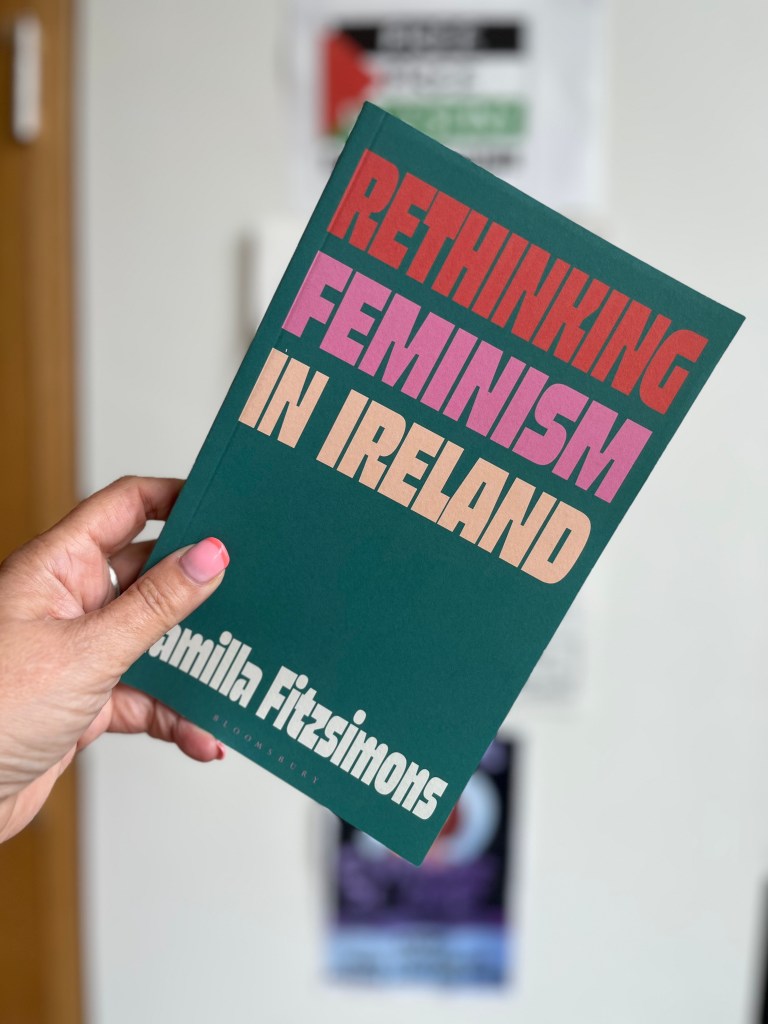
Last Friday, the 27th June, my fourth book Rethinking Feminism in Ireland was published. This one has been a labour of love and, perhaps with all my books, a case of me seeking to write what I think the students that I meet and the people that I share activist interests with would benefit from reading. In other words, I wrote this book because I couldn’t’ find anything to recommend that would complement the conversations I found myself in when talking about feminism in Ireland.
What I particularly like about this book is how I brought the words of some important activists in Ireland to the fore. I interviewed people across the spectrum of politics including Brid Smith the former TD for People before Profit and Senator Lynn Ruanne. Lynn is a former community worker who does amazing work in, as she puts it, ‘equality proofing’ as many laws as she can when they cross her desk. She’s not the only community worker who features. Rita Fagan took the time to sit down with me and share stories of feminism from the vantage point of St Michael’s estate Family Resource Centre and Amel Yacef also shared insights from activism that spans a range of communities and equality-based causes. I also talked to trade unionists, including Therese Caherty, people who were active in Ireland’s pro-abortion movement like the formidable Sinéad Kennedy and Orla O’Connor from the National Women’s Council of Ireland. And thanks to Mary McDermott of Safe Ireland who also took time out to share her insights with me. You’ll have to read the book to find out who else features, but the good news is that it is freely available, right here thanks to my wonderful publishers Bloomsbury Press but especially Olive Dellow.
So, what am I asking people to ‘rethink’? I contend that there are two souls of feminism – something I also write about here. The first and often most dominant is neoliberal feminism which is an extension of liberal feminism in that it focuses on empowerment and equality of participation in an otherwise largely unchanged world. The second, and the one that I argue for is radical, or anti-capitalist feminism. I object to neoliberal feminism’s hyper emphasis on individual success within today’s capitalist logic and argue instead for a version of feminism that recognizes our ability to control our lives is extremely limited. Our gender identity helps set these parameters, but so does our social class, perceived ability, sexual orientation, ethnicity, exposure to poverty, and our proximity to the catastrophic impacts of climate change, none of which are mutually exclusive.
My thinking has been influenced my many amazing writers and activists who have come before me. As Sara Ahmed puts it, I am a Feminist Killjoy and proudly so even when it can make me unpopular. Given the current expansion of settler colonialism, I must also acknowledge the work of Rafia Zakharia and her book Against White Feminism within which she speaks so clearly about the current practice of using feminism as the justification for imperialism. I draw from others too across the spectrum of socialism (including Marnie Holborow’s excellent Homes in Crisis Capitalism), critical education and radical feminism and spread these ideas across seven chapters – The trouble with feminism, Feminism and electoral politics, Feminism, work and trade unions, Feminism and trams liberation, Confronting gender-based violence, Reframing reproductive rights, and Doing feminism.
And if you like my writing, why not also check out my blogs where I write about a range of topics across trans liberation, electoral politics and feminism, but also Love Island and Taylor Swift!
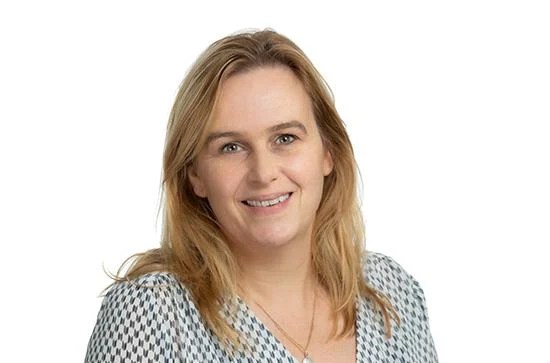
Camilla Fitzsimons is a Professor of Adult and Community Education and the current Head of Department here in the Department of Adult and Community Education at Maynooth. This is Camilla’s fourth book – you can read a full list of her publications here
Last Friday, the 27th June, my fourth book Rethinking Feminism in Ireland was published. This one has been a labour of love and, perhaps with all my books, a case of me seeking to write what I think the students that I meet and the people that I share activist interests with would benefit from reading. In other words, I wrote this book because I couldn’t’ find anything to recommend that would complement the conversations I found myself in when talking about feminism in Ireland.
What I particularly like about this book is how I brought the words of some important activists in Ireland to the fore. I interviewed people across the spectrum of politics including Brid Smith the former TD for People before Profit and Senator Lynn Ruanne. Lynn is a former community worker who does amazing work in, as she puts it, ‘equality proofing’ as many laws as she can when they cross her desk. She’s not the only community worker who features. Rita Fagan took the time to sit down with me and share stories of feminism from the vantage point of St Michael’s estate Family Resource Centre and Amel Yacef also shared insights from activism that spans a range of communities and equality-based causes. I also talked to trade unionists, including Therese Caherty, people who were active in Ireland’s pro-abortion movement like the formidable Sinéad Kennedy and Orla O’Connor from the National Women’s Council of Ireland. And thanks to Mary McDermott of Safe Ireland who also took time out to share her insights with me. You’ll have to read the book to find out who else features, but the good news is that it is freely available, right here thanks to my wonderful publishers Bloomsbury Press but especially Olive Dellow.
So, what am I asking people to ‘rethink’? I contend that there are two souls of feminism – something I also write about here. The first and often most dominant is neoliberal feminism which is an extension of liberal feminism in that it focuses on empowerment and equality of participation in an otherwise largely unchanged world. The second, and the one that I argue for is radical, or anti-capitalist feminism. I object to neoliberal feminism’s hyper emphasis on individual success within today’s capitalist logic and argue instead for a version of feminism that recognizes our ability to control our lives is extremely limited. Our gender identity helps set these parameters, but so does our social class, perceived ability, sexual orientation, ethnicity, exposure to poverty, and our proximity to the catastrophic impacts of climate change, none of which are mutually exclusive.
My thinking has been influenced my many amazing writers and activists who have come before me. As Sara Ahmed puts it, I am a Feminist Killjoy and proudly so even when it can make me unpopular. Given the current expansion of settler colonialism, I must also acknowledge the work of Rafia Zakharia and her book Against White Feminism within which she speaks so clearly about the current practice of using feminism as the justification for imperialism. I draw from others too across the spectrum of socialism (including Marnie Holborow’s excellent Homes in Crisis Capitalism), critical education and radical feminism and spread these ideas across seven chapters – The trouble with feminism, Feminism and electoral politics, Feminism, work and trade unions, Feminism and trams liberation, Confronting gender-based violence, Reframing reproductive rights, and Doing feminism.
And if you like my writing, why not also check out my blogs where I write about a range of topics across trans liberation, electoral politics and feminism, but also Love Island and Taylor Swift!
Camilla Fitzsimons is a Professor of Adult and Community Education and the current Head of Department here in the Department of Adult and Community Education at Maynooth. This is Camilla’s fourth book – you can read a full list of her publications here
The Turn to Teaching Level 6 Foundation Certificate is a one year, university course for people who have an interest in primary teaching as a career path, but because of family, life, social and/or personal reasons were not able to pursue their dream through traditional education routes. In particular, the course is for students from particular groups that are currently under-represented in teaching. These groups include but are not restricted to- Irish Travellers, mature students, students from diverse ethnicities, disabled[1] students, migrants, lone parents etc.[2] Turn to Teaching aims to promote diversity in the teaching profession through a series of social justice orientated initiatives which widen participation.
Paula Soraghan
Paula Soraghan is a community development worker for ILMI , Independent Living Movement Ireland. She came to visit the 2024-2025 TtT group in their ‘Think about Teaching’ module to talk about the work she does with ILMI and to learn from the students about the one-year course they are part of.
Paula describes herself as a proud disabled woman who is very passionate about intersectionality. She is a daughter, sister, aunty and friend, graduate and much more.
She introduced us to ILMI, explaining that it is a DPO- a Disabled Person’s Organisation. Unlike disability service providers, DPO’s are led by disabled people, for disabled people all members are disabled people, the Board of Directors are all disabled people, and most of the staff team are disabled people. As an organisation, ILMI is unique and radical; it is cross-impairment, meaning it is open to all disabled people over the age of sixteen and it is underpinned by the values of the United Nations Convention on the Rights of Persons with Disabilities and the social model of disability.
As a national, campaigning organisation, ILMI focuses on addressing injustices and inequalities faced by disabled people. It approaches these issues with a problem-solving attitude and puts the emphasis on a collective approach rather than advocating for the individual. With this approach, an individual becomes part of a collective, and as Paula says, there is strength and efficacy in numbers. ILMI focuses on rights not charity. They maintain the motto, Nothing About Us, Without Us.’
Paula explained to us that both historically and in current times, society pathologizes disabled people. The disability industry gains from segregating people with different impairment labels; there is a hierarchy of impairment which sets people up against each other. This separatist structure keeps people powerless to address the current systems and structures in place. The stigmas around disability, the narratives which tell us that disabled people should be pitied and cared for, feed into far-right agendas where anyone of difference is to be ostracised and afforded less rights. By coming together, disabled people can address multiple issues with one united voice. These spaces aim to create a new narrative where difference is shown to be a force for progressive change, enriching and creating possibilities for everyone.
ILMI aim to influence policy and development through strategic activism, lobbying for change at local and national level, in the Oireachtas and at a county level. Paula Soraghan and Nicola Meacle work on the VOICE (Virtual Online Inclusive Communities for Empowerment) project. VOICE is funded by the Department of Rural & Community Development through the Community Development Programme. VOICE is establishing local DPOs in Wexford, Waterford, Carlow, Kilkenny, Cork, Kerry and Tipperary. Colm Whooley also works on the VOICE project as a Life Coach.
The communities are ‘based on digital networking, peer mentoring support and activism with disabled people in the south of Ireland’.[3] VOICE aims to educate, support and mentor disabled people to develop local representative groups who can impact local mainstream services and promote authentic inclusion in society. VOICE intends to collaborate with each attendee in the online space to develop Personal Action Plans which will identify and develop goals towards improving overall health and wellbeing while reducing isolation of individuals. As Paula explains , a universal design approach makes society good for everyone, not just for disabled people. By addressing issues of access, environment, and opportunity for disabled people, alternate options are made available to everyone.
Alternate routes into mainstream institutions create possibilities for traditionally excluded people.
Paula points to the TtT Turn to Teaching course in Maynooth University as one such barrier breaking route for education at higher level. Like ILMI, the TtT aims to create access for students to career pathways which have been previously closed to them through mainstream routes.
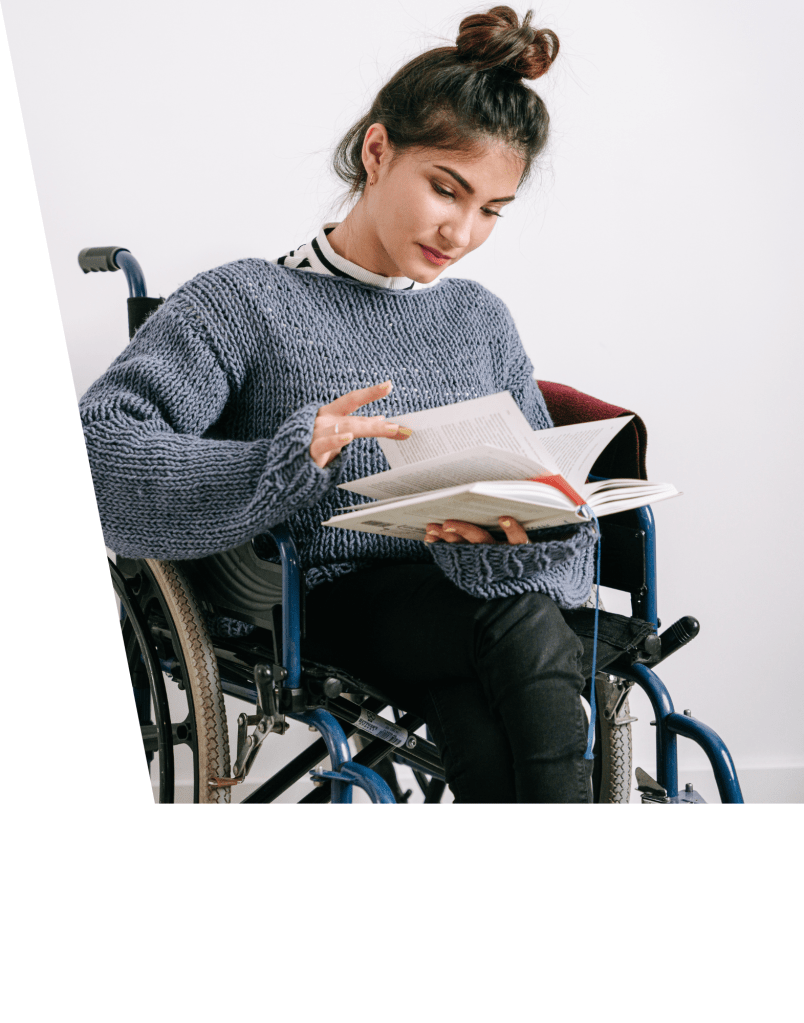
Many of the young future teachers on TtT identify their motivation for wanting to become teachers as stemming from never seeing their peers in primary school teaching roles. Maggie tells us that she wants to be a teacher to inspire other chair users in school to be whatever they want to be. Another shares that she feels her experience of primary school might have been much richer and inclusive had she witnessed a woman of her faith teaching in her primary school. Race, gender, ethnicity, background, and being a disabled person all need representation as teachers. Change starts in primary schools. Building nuance and creating role models for others brings hope and possibility for young students. But it also creates communities and societies which break boundaries and imagine new and better ways for us to live and work together. Paula says, ‘ think big and start somewhere.’
ILMI and TtT are doing just this.
For more information on the Independent Living Movement Ireland and the Turn to Teaching Course Maynooth University go to:
Author: Alice Bennett is a PhD student and recipient of a John Hume Scholarship. Her research explores art pedagogy for the rehabilitation of subjugated and extra rational knowing while extending epistemologies for healthier learning environments. She has worked in the area of community development and education for over thirty years in South Africa, Zimbabwe and Ireland. Alice currently works with the Turn to Teaching Team in the Adult and Community Education Department, Maynooth
[1] ILMI use the term ‘disabled people’ instead of ‘people with disabilities’. This is because they see disability as a social and political issue, rather than a personal and medical one.
As we head into the summer month and get a small reprieve from the year’s workload, it gives us an opportunity to catch up on events or information we may have missed out on during a busy academic year.
The TUTOR project’s second webinar from the Facebook Live series, “Empowering every student: reimagining inclusive education” is one to put on your watch list.
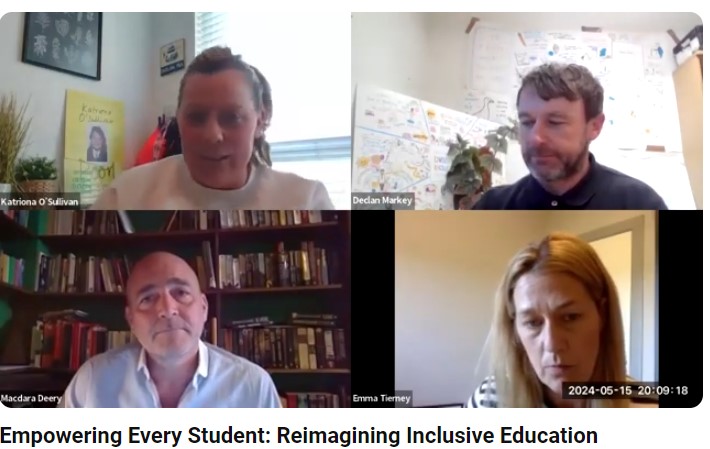
Fronted by TUTOR Project Ireland’s second ambassador, Macdara Deery, a post-primary teacher from Gallen Community School in Co. Offaly, Empowering Every Student focused on inclusive education with a particular lens on social class and the experiences of socio-economic disadvantage on a community, school, and its students.
The panel held a wide range of experience and depth, from FET, initial teacher education, alternative pathways, and personal experience and testimony.
Emma Tierney, undertaking her post-graduate diploma in Further Education and training in Maynooth University offered really perceptive and nuanced glimpses into the disconnect that may occur from training to practice because of systemic barriers such as having the ability to challenge the dominate ways of doing, that exist, and have always existed, when you enter a new setting as a FET tutor in training, a newly trained FET tutor, or indeed as a student. She also drew attention to the lived experiences of students with intersecting identities and how they are experiencing their education with a lack of autonomy over their own learning journey. Emma used an example of a student she had during her teaching practice who held asylum seeker status, and how without any warning “was uprooted and displaced midway through the academic year and his course taken and put down in a different part of the country … completely uprooted.” This example really shone a light on the lack of power students may face and how the systems around them upheld and reenforced that lack of autonomy – it brings to light how as educators, we really need to examine all aspects of our students’ lives, not just what happens in the classroom.
Katriona O’Sullivan, Digital Skills Senior Lecturer in Maynooth University, and author of bestselling autobiography Poor, really challenged educators: teachers and tutors to change the narrative for the students in their classroom. A particularly important and powerful moment in the webinar, was Katriona’s reminder:
“we don’t need to change poor people, lads, we’re grand. We’re amazing. We need to change the people who are already in education. Like, loads of people are saying this in the chat, which is amazing, principals are saying it, and inclusive education isn’t about educating the people necessarily, it’s [about] changing the system … the teachers need to be educated, policy makers need to be educated, the people in education need to be educated about what inequality is, and what it looks like, and what disadvantage is, in the space of our of our universities or our schools.”
I personally found this to be such a powerful reminder because we can tend to get bogged down in practice and lay everything at the door of educators when in reality we need to spend more time challenging and changing the system, speaking to initial teacher trainers, policy makers and so on about the realities of inequalities and show them what inclusive education really looks like.
Our final panel member, Declan Markey, is a lecturer in the Adult and Community Education department in Maynooth University, and co-coordinator of the Turn to Teaching programme. Declan, like Emma and Katriona, challenged the system and its barriers, but also went back to what Emma was discussing about the training-practice gap and pointed out the importance of doing the work as well as learning the skills and tools. He emphasises the importance of engaging in anti-bias type auditing on ourselves and our practices, and really reflecting, acknowledging, and unpacking all of the learned assumptions, stereotypes, and biases we consciously and unconsciously hold from our cultural and lived experiences:
“ you know the concept of inclusive education and you know we know Universal Design for Learning (UDL) – you equip people with a skill set and they can do some training oh yeah I can do inclusive education if they haven’t had a shift in their mindset that actually believes and you know in you know every student and learner that’s in front of them and stuff or you know and we all have assumptions and prejudices and stuff but if you can’t critically reflect on that and acknowledge you know your own kind of cultural background and your cultural assumptions and get past them and actually you know well then it doesn’t you know inclusive education isn’t really going kind make any difference in terms of the space that you’re in.”
Truly, this is an important webinar that very honestly, and provocatively, shines a light on the real conversations we need to be having in education – particularly when it comes to inequalities and creating truly inclusive education environments. If you missed the wonderful, radical webinar, grab yourself a cuppa and click here to watch.
Sinead Matson is a postdoctoral researcher working on the Erasmus+ funded TUTOR project for inclusive education in FET and Second Level schools. See https://tutor-project.eu/ for more details.
[1] From the ‘Book of Poems’ Summer School Program, Al-Quds University Community Action Centre, (c2008)
While this poem encapsulates the overt and covert violence of the Palestine we encountered more than a decade ago it also speaks to what we see nightly on our televisions these days.
Between 2008-12 the Department of Adult and Community Education, Maynooth University was involved in an EU funded project in partnership with 4 Palestinian Universities – Al-Quds, Bethlehem, Birzeit, and the Islamic University of Gaza[2]. The project known as LLIPS, focused on identifying existing lifelong learning provisions on the part of our partner universities with a view to enhancing it to even better meet the needs of Palestinian communities in the West Bank and Gaza.
During the project we were fortunate to meet and work with many academics in the partner universities. We also met with members of community groups and local NGOs – all engaged with different sectors of the population. We learned a great deal about life in the country; the most striking reality being that – every day – Palestinians lived in an environment where they faced issues of social, economic, political and educational marginalization. They lived in a society where their very way of being, their culture and history were silenced and subverted by the hegemony of the Israeli state. We were particularly struck by the restrictions imposed upon colleagues in our partner universities and by the complex strategies in which they had to engage in order to maintain their programmes. One such example was movement. At a local level for example it was difficult for Al-Quds University in Jerusalem to maintain contact with its Adult Education Centres. The problem was the Wall. The main campus was outside the wall and the Centres were inside. Crossing the Wall was no easy task. At a national level movement was also difficult. The LLIPS project found it impossible to bring all the partner universities together within Palestine because those from Gaza could not travel to the West Bank and visa versa. Instead, we all met in Jordan. Many Palestinians spoke of how restrictions on movement effect their everyday lives. They also regretted the negative impacts these have on other staff, on their students and indeed on their own families and friends. They had lost contact with many of the latter over the years.
As the LLIPS project progressed we were increasingly aware of the subtle, as well as the overt issues of power which constructed the identity and lived reality of those we encountered.
We found that the nature of the oppression and resistance across Palestine was multi-layered. Although we saw the Wall, the settlements choking the little towns and villages, the checkpoints, the guns, and the multiplicity of minor indignities casually doled out, as outsiders we could barely begin to imagine what it felt like to live there and what it took to sustain one’s self, one’s family and one’s sense of identity and nationhood in the face of unmitigated hostility.
The emotional and psychic toll on the individuals working there, as well as the community members was very evident. Even back then the need for support, solidarity, respite and resilience-building was clear. How much more the needs must be now and will be in the future.
One picture remains strongly, symbolically evocative.
We were being driven from Jerusalem to Jericho- the iconic path the ‘Good Samaritan’ of old had traversed. We were to lead a seminar for academic colleagues there. A black cassocked priest expertly drove, negotiating the multi-laned motorway. A seeming anomaly speaking of wealth and modernity, it wound its way seamlessly through ancient, barren hills, through an arid, desert landscape. Only the occasional Beduin, hazardously perched upon a donkey and following a small flock of sheep or goats up precarious hillsides broke the dun-coloured monotony. And then I noticed that here and there the dusty countryside was dotted with black tree trunks. Evidence of earlier habitation, perhaps of olive-farms?
‘Was this land cultivated not so long ago, Father’ I asked our driver.
The reply was swift. “Yes there were lots of Palestinian olive farms here. Olive tress can cope with the most arid conditions. And the trees provided shade and vegetation. They’d been there – like the farmers – for generations. Since Jesus’ time. But the Israeli Government confiscated the farms and chopped the trees. They said they were a threat to security. Hammas fighters could hide among the foliage and threaten the army….or settlers.’
The lifeless trunks bore silent witness to dispossession…and more.
[1] From the ‘Book of Poems’ Summer School Program, Al-Quds University Community Action Centre, (c2008)
[2] The project was entitled Lifelong Learning in Palestine (LLIPs). The Maynooth University Team were Josephine Finn, Bernie Grummell, Tony Walsh, Shauna Busto-Gilligan and Anne Ryan
Anne RyanTony Walsh
Anne Ryan is Emeritus Professor at Maynooth University. She was chair of the Department of Adult and Community Education from 2005 to 2018. Anne has worked in developing countries that experience extreme poverty (such as Bangladesh and Central Africa) and those that are war-torn (such as Afghanistan) and she has worked with disadvantaged communities in Australia and Ireland. These experiences convince her of the potential of adult and community education to empower communities to respond to the critical challenges facing twenty-first century societies in ways that ensure their voice is heard by decision-makers.
Tony Walsh was, until recent retirement from Maynooth University, lecturer and sometime Head of the Department of Adult and Community Education; he continues as Director of the Centre for the Study of Irish Protestantism and is a Fellow of the Young Centre for Anabaptist and Pietist Studies at Elizabethtown College, Pennsylvania,. A licensed systemic constructivist psychotherapist he is engaged in writing, consultancy and research inquiry engagements in the US, the UK, Palestine and Ireland (including Northern Ireland). Current research emphases include i) the experience and culture of the Irish Protestant minority; ii) narrative study of the Old German Baptist Brethren, (an Amish-like Plain church in the US); iii) the role of reflexivity in radical adult education iv) narrative and autoethnograpic inquiry.
Suddenly the images of the bombed ruins of a Gaza shop front, perhaps a café, flashed across the news screens. Rags of ruined blinds fluttered in the breeze.
Instantly I was back in a narrow, busy laneway in old Jerusalem and a sidewalk café fifteen years ago. We[1] were visiting Jerusalem as part of an educational research project. Blissfully relaxing in the sun’s heat and watching, watching as the multi-coloured crush of people in the narrow medieval street streamed by. Dark clothed and somber, Hasidic men bent purposefully towards prayer; camera toting tourists eyed them curiously as they wandered, talking, looking. Groups of Palestinian women laughing, chatting, baskets full of produce came from the market. Bright eyed kids racing in and out; swift arrows of colour between the adult crowds. Handcarts and motor bikes threaded a hazardous way down the street. A bizarre stream of Western pilgrims appeared toting a large cross, responding to a loud rosary. The midday call to prayer resounded from a nearby minaret mingling with their words. Each group seemed insulated, bounded in their own reality. The smells of roasting coffee beans, strong mint tea and frying meat next door mingled – sensory overload, as pungent aromas and noise, noise, noise enveloped us.
A group of Israeli soldiers stopped at the corner. They propped their machine guns against the wall and they surveyed the crowds – and us. One addressed his peers in loud New York tones. They were young and jumpy …and very, very near. Suddenly there was an explosive bang close-by. The soldiers grabbed their guns. The streaming crowds froze. Fear chilled our faces, congealed our limbs. And moments of time passed slowly by…. That time it was only a back-fire. Minutes later life returned to normal; the crowds streamed swiftly on their way.
We have often recalled that day packed as it was with so much to marvel at and so much to fear. We have often wondered what bearing these experiences coupled with current events in Palestine and global conflicts in general should have on how we approach education?
We have been writing about and researching education for many decades. Essentially, we believe that education’s main purpose is to help learners to understand their world, so that they are empowered to transform what is oppressive rather than accept it or adapt to it[2]. This includes understanding why conflict exists and what might be reasonable and appropriate responses to that conflict. We also believe that mainstream education often leaves learners ill equipped to either understand or address big global challenges such as war.
We believe that if education focused on understanding how power operates in society – and between societies – it would enable a far more fluent appreciation of the complex nature of human experience and particularly of conflict. It would raise awareness of how individuals, groups, nations become positioned in relation to each other. And would emphasize how conflict – and most particularly conflict interventions – require an understanding of these positions.
It seems to us that education that interrogates power is ever more needed in a world where disinformation and misinformation are increasingly evident and where what is ‘true’, what is ‘good’, what is ‘right’ are far from clear cut.
Even as we watch the awful events unfold in Palestine our thoughts often return to that day at the café in Jerusalem where we observed something of the overt nature of power. It was explicitly expressed in the actions and demeanour of the soldiers. They had the guns. Their power, although apparently placidly accepted by those going about their daily lives, was nevertheless fragile. The response to the ‘back-fire’ that could have been a gun shot or a bomb blast spoke of an awareness of the potential of resistance and challenge to the existing order that the soldiers were protecting.
Power is of course not always so easily observed. Mostly it is hidden, occluded within the everyday. We believe that a vital task of education is to reveal those occluded dynamics of power, marginalisation and oppression – those ‘on-going repetitive citations of the known order, citations that offer some a viable life and at the same time deny it to others’ (Davies 2008, 173)[3]. Without an emphasis on the interrogation of power education becomes mere compliance ‘a process of transferring the values and practices which are embedded in a specific culture and are particularly associated with the assumptions, values and maintenance of the power elites of that society.’[4]
[1] The ‘we’ refers to Tony Walsh and Anne Ryan who in partnership with the administrative and academic staff in the University of Bethlehem explored the challenges and opportunities inherent in diversity.
[2] This is essentially a Freirean philosophical position
[3] Davies, B. (2008) ‘The Ethics of Responsibility.’ In Phelan, A. and Sumsion, J. (Eds), Critical Readings in Teacher Education. Rotterdam: Sense Publishers.
Anne Ryan is Emeritus Professor at Maynooth University. She was chair of the Department of Adult and Community Education from 2005 to 2018. Anne has worked in developing countries that experience extreme poverty (such as Bangladesh and Central Africa) and those that are war-torn (such as Afghanistan) and she has worked with disadvantaged communities in Australia and Ireland. These experiences convince her of the potential of adult and community education to empower communities to respond to the critical challenges facing twenty-first century societies in ways that ensure their voice is heard by decision-makers.
Tony Walsh was, until recent retirement from Maynooth University, lecturer and sometime Head of the Department of Adult and Community Education; he continues as Director of the Centre for the Study of Irish Protestantism and is a Fellow of the Young Centre for Anabaptist and Pietist Studies at Elizabethtown College, Pennsylvania,. A licensed systemic constructivist psychotherapist he is engaged in writing, consultancy and research inquiry engagements in the US, the UK, Palestine and Ireland (including Northern Ireland). Current research emphases include i) the experience and culture of the Irish Protestant minority; ii) narrative study of the Old German Baptist Brethren, (an Amish-like Plain church in the US); iii) the role of reflexivity in radical adult education iv) narrative and autoethnograpic inquiry.
Sometimes it feels like the world is on fire and it can be difficult not to feel despondent when the news is full of images of extremism, hate and rising far-right activity. So how can community education be a source of hope for a socially just world within this current climate? This is one of the questions I wished to explore as part of my PhD research. I hope this blog will be a source of inspiration for all those working towards these goals.
It’s worth noting first of all that community education in Ireland has had a lot to contend with over the past fifteen years. Along with the restructuring of the adult education landscape with the formation of Solas, the ETBs and QQI, it was significantly impacted by austerity measures following the economic crash of 2008. This led to the dismantling of the Community Development Programme and sharp, disproportionate cuts to the Community and Voluntary sector, which forms the backbone of state funded community education provision. Back in the year 2000, a radical model of community education had been espoused by the Government in their policy document Learning for Life: White Paper on Adult Education. Consciousness-raising and community building were named among the priority areas in this paper for all adult education provision. However, all the restructuring brought with it a new policy focus for adult and community education, one which prioritised individual rather than collective outcomes, and adult education was positioned primarily as an economic tool rather than a social good.
In many ways this context is relevant in seeking to understand the national and global rise of the far-right and the role of community education in these times of social unrest. In our current climate, consciousness-raising is an important tool in understanding power dynamics and how stoking divisions between groups, rather than looking upwards at the real causes of poverty, is a tactic used to gain support by the far-right. Legitimate grievances are being exploited by agitators who whip up moral panic and scapegoat migrants and other minorities, blaming them for political failures that have led to such grievances. The vacuum created by cuts in the community development and education space has not helped matters. Many practitioners wish to be responsive but have a lot on their plates juggling multiple funding streams, data collection processes, and the loss of sectoral knowledge as people retire, move to less precarious employment, or simply get burnt out.
My PhD, which I have been carrying out under the supervision of Dr. Camilla Fitzsimons, aims, through the use of focus groups and a national survey, to explore the experience of community educators in these times of social unrest. It has emerged that far-right rhetoric and activity, targeting migrants and other minorities, is penetrating community education spaces. While this is a worrying development, it is also clear that there is an appetite for the strengthening of alliances to work collectively towards inclusive solutions based on community solidarity rather than misdirected anger and divisions. This blog draws on some of the qualitative data captured through the focus groups and the open-ended survey questions. It proposes that community education can nurture relationships between people from diverse backgrounds and build trust and solidarity within and among communities. Where issues and grievances arise in areas of housing, unemployment or health services for example, they can be teased out within community education spaces through the use of dialogue, finding common ground, and identifying collective, inclusive and democratic responses.
Research findings:
It is evident that community educators are experiencing more divisive rhetoric and open expressions of hostility, and that they are finding themselves navigating the tensions arising within this environment. One practitioner states the following, pointing to the impact of social media:
We always had to deal with an odd person making racist or homophobic comments. Now it is coming from people who weren’t engaging in this before. It is as if seeing this stuff online or hearing it more is giving people permission to say it, or else creating anger in them that they didn’t feel before.
Others, while acknowledging that the expression of racism and far-right views is not something new to contend with, point to a worrying sea change:
Through my work, down through the years, I have encountered many people with what we now term ‘far right’ views. However, in the past, their views simply felt ‘different’ to mine. At the moment, there is a sense of that difference being inherently ‘against’. There is an angry undercurrent which is worrying.
As the following quotes illustrate, people are experiencing the challenges of facing misinformation in their work:
[In] my work with refugees I often have to tackle the misinformation and hatred spread by right wing ideology. e.g. ‘why can’t we look after our own first’ narrative.
Participants and staff of the organisation (who live in the city) have heard and spread misinformation originating from far-right sources. They have joined marches without truly understanding the politics of the individuals they are walking with. There have been positives from conversations started, but a far-right influence has been clear in the area generally.
Online learning can pose a particular challenge. Another survey respondent shared the following story:
People I identify as holding far right views have joined various online workshops that I run. We have a statement of values that everyone is required to read and agree with in order to register. Despite this, a small number (3 or 4) joined a recent workshop. They start very reasonably and joined in with the general thrust of what was being discussed. Then they started to conflate social issues of housing and crime with too many migrants in the country (Ireland is full / we need to look after our own first). This required deft handling by the tutor (me!) to bring the topic under discussion back on track, after pointing out the inaccuracies in what they were saying, and they didn’t push it.
Others pointed to increasing polarisation within community education itself:
Adult students who were once happy to mix with students from other countries are now more suspicious of them and less likely to want to interact with them in class.
Fear
A prominent theme to emerge in the research was the prevalence of fear with some saying that they were feeling the impact of anti-migrant protests in the local area:
Protests in the city have stoked people’s fears.
Some respondents feared for groups of people they are working with:
I would have met the residents of [named accommodation centre] recently. The [anti-migrant protests] there were beyond upsetting for these people. I also meet many migrants who are in fear (…) and feeling blamed for the social issues in this country e.g. housing.
The research also uncovered a fear among community educators of speaking out against far-right rhetoric or, as one respondent put it, “fear of hosting culture specific events, fear of being targeted for being ‘helpful’ and encouraging intercultural events on the premises”.
Another shared the following:
My safety has to come first and foremost. There are times when I really strongly feel I should challenge it yet do not feel safe to do so.
Community educators from underrepresented groups, those often targeted by the far-right, shared their feeling of vulnerability:
…as a migrant and someone who belongs to an ethnic minority it has been incredibly difficult when communities I have worked in are being fed misinformation. I have felt scared to interact with my own community as well as communities I would have previously worked with.
One of those organising courses also expressed fears for such people:
(…) our tutor pool has diversified a little bit and we are getting people in who have (…) different cultural backgrounds, and it’s brilliant. But, I’m also conscious that we’re sending those tutors out (…) in to a community that has been kind of torn apart by that conflict, and then I have to think about that tutor’s safety in that environment.
The role of community organisations in calming local fears was highlighted with one respondent sharing:
The arrival of 120 young men to this city centre hotel raised some fears but were allayed by the action of this organisation through meeting and greeting (of IPAs), linkage to services etc and reflecting this in local media.
Another points out the importance of dialogue within community education as a tool to allow for the airing of grievances:
People have legitimate fears and concerns and they need to be listened to or those people feel their opinions don’t matter and that creates more of a divide.
Capacity:
It was evident from the research that many practitioners felt there was a need for more training and support for community education practitioners if they are to be responsive to challenging dynamics when they arose within groups. One survey respondent shared the following:
It is difficult to refute wild claims (i.e. through fact-checking) because the far-right encourages people to believe that all information from official sources is wrong. Conspiracy theories thrive on making people feel that they have the inside story, while their tutor in the education centre is naive!
Even very experienced practitioners highlighted the type of challenges that can be encountered, with one stating the following:
It’s never straight forward, like I remember working with a tutor, and (…) I would have a lot of background and information around anti-racism. And I did one session with a class and it backfired so horrendously (…). It just went the wrong way and they became, I could actually see it, they became more entrenched in a particular viewpoint.
Continuous training and upskilling was seen as essential if educators are to be equipped to embed dialogic practices in their work:
Time for conversation is required, where discussion and debate is facilitated and fears are expressed in a healthy way on both sides of arguments. This is a skill and practice which requires nurturing, in my opinion.
Resources of hope:
A worrying trend to emerge was linked to the sense of isolation that some community educators feel.
I expect many practitioners feel they are sole workers in this regard and perhaps don’t feel part of a community of practice.
It’s important therefore to look at where we can find resources of hope and opportunities for building alliances and strengthening community education through collective action.
For one thing, a values-led approach to community education, which focuses on what we support, and what kind of world we wish to see, rather than what we’re against, was promoted by many educators. This approach is supported by the Hope and Courage Collective, an organisation committed to strengthening communities in the face of rising far-right extremism, who develop useful resources around this.
We can also look to the power of the arts in promoting our common humanity. This inspiring story shared by one responded is something from which we can draw hope:
In March the organisation I worked for put on a play in Dublin city (…) focused on the things that bind us. The group included a young man from Eritrea and a young woman from Ukraine. On the way to the theatre, we walked past a far-right demonstration with approx 150 attendees outside store street garda station. The Community Drama about solidarity stood in opposition to far-right misinformation that night. The play was written, directed and performed by the group.
Another focus group participant, working in the area of addiction recovery, spoke about how community education can nurture empathy, rather than division, between marginalised groups:
(…) they understand what it is to be stigmatised, victimised and excluded so you can bring in some degree of (…) empathy (…) the like with like.
This empathetic engagement can be nurtured also through the means of storytelling:
Sharing stories and insights (including intersectional insights) and giving accurate information about the community is one of the ways in which we hope to build solidarity.
While many educators feel a pressure to diffuse tensions when the arise, or to have all the counter arguments at hand, an approach which facilitates dialogue can be more effective and empowering for groups. The experience of this respondent highlights the importance of having faith in the knowledge, experience and capacity among learners within groups:
I’ve heard what I would regard as bigoted and discriminatory opinions expressed by a handful of individuals but in most cases these are countered or challenged by other learners.
While it can seem at times like hate and racism are overshadowing positive forces in the world, it is useful to remember that, as one respondent stated it’s ‘usually it’s a very few expressing anti-minority sentiments’. This is true also of social media which amplifies negative stories. Recent research carried out by the Hope and Courage Collective indicates however that, while the voice of the far-right may at times be loud and overbearing, it is actually representative only of a minority of the population. Community education can therefore be a powerful force for amplifying voices committed to social justice, particularly if nurtured through the building of networks and creating spaces for shared learning and collective action.
Author: Suzanne Kyle
Suzanne Kyle is a PhD student in Maynooth University and a recipient of the John & Pat Hume Doctoral Scholarship. Her PhD research examines the factors which enable community education practitioners to embed inclusive, democratic and social justice focused values in their work at a time of rising far-right extremism. She has worked in the area of community development and education for over twenty years at local, regional and national levels.
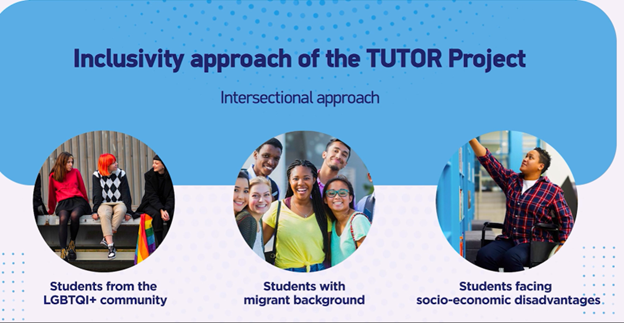
The power of conversation should never be underestimated. It can change attitudes, thinking, policies, research, and practice. We wanted to create conversational spaces for change through the TUTOR Ambassador webinar series, the first of which was hosted by Maynooth University. The webinar, An LGBTQI+ Inclusive Classroom: In conversation with Jamie Kenny TUTOR Ambassador, was held in early December. TUTOR is an Erasmus + project about inclusive education in second level and Further Education and Training of which Maynooth University is a partner. Jamie Kenny is the executive director for Dublin Pride and the first Irish TUTOR ambassador. He hosted a fireside chat with Angela Rickard, Course Leader for the year one Professional Master of Education (PME) in Maynooth University Education Department; Carrie Archer, Professional Learning and Development Coordinator for City of Dublin ETB and adjunct assistant professor in the National College of Ireland; Andrew Maloney, deputy principal in Firhouse Educate Together Secondary School; and Eoin Houlihan, second level teacher and guidance counsellor also at Firhouse Educate Together Secondary School, and lecturer on the PME programme in Maynooth University.
Carrie led the discussion on how a classroom can be LGBTQI+ inclusive without directly changing or adding content that is not already an existing part of the curriculum or learning outcomes – an argument she has frequently experienced in her work. She pointed out that even in business, childcare, beauty therapy, and hair dressing courses in FET, spaces for LGBTQI+ conversations already exist – you just have to look for them. Eoin agreed and added that in second level those spaces do already exist within the curriculum; for example mentioning the scientists and inventors from the LGBTQI+ community in science lessons when introducing students to a concept, theory, or experiment contextualises and makes visible LGBTQI+ for students. The same approach applies for English, Music, Geography, History, Art…really any other subject on the curriculum. When it is threaded through the curriculum and the day-to-day experience for students in the classroom it has the potential to become a more authentic way of inclusion and representation.
The conversation turned to the lived experiences of LGBTQI+ staff leading the advancement of greater representation and inclusion in schools and education settings which places those staff in demanding and potentially vulnerable and fatiguing positions. They described a fear experienced by many potential allies in education; a fear of getting it wrong, of causing offence, or of hurting someone. This fear can sometimes stifle or even silence the conversation. However, the burden of leading the conversations must not always be held by LGBTQI+ staff themselves. Andrew really highlighted the need for teachers to know that it backed up by law and equally importantly made explicit by leadership:
“I think it’s important to back teachers up, particularly teachers who are in teacher education, to understand that actually you have a legal basis to discuss this in your classroom… And particularly from school leaders, they need to hear that openly because if they don’t hear it openly, it’s not good enough just to be implicit about it because it happens to be enshrined in law.”
This struck a chord with me. In all the years I have worked with children I have never had a ‘child protection day’, or a ‘child protection week’ – it is enshrined in law therefore it is weaved into everything we do. If it is a legal requirement, is it part of the daily landscape of education?
Angela spoke of the appetite for inclusive conversations and spaces amongst the students in the initial teacher education programme in Maynooth University, and her experiences of visiting many second level schools across the country that are flying progress flags and taking part in BeLonG To’s safe and supportive schools training. This, she surmises, is hopeful and is having a very positive effect, making spaces for those conversations to continue amongst leadership, allies, and the LGBTQI+ community within schools and local communities. It is also providing opportunities for allies and leadership to lead the conversation rather than relying on LGBTQI+ identifying staff.
This conversation facilitated by Jamie in his position of TUTOR ambassador for Ireland has already caused real change. It has helped to inform the discussion we, as the TUTOR project researchers, have and the decisions we make when we will put together training and resources in the TUTOR programme. Attendees, who included teachers, tutors, leadership, and students engaged in initial teacher education have already spoken to us about the learnings they have taken and will put into practice. If you missed the conversation, but would like the opportunity to listen, please click this link and take an hour out of your time to listen to the real, practical knowledge and lived experiences that were shared with us.
Author Bio:
Sinéad Matson is a post-doctoral researcher with the Department of Adult and Community Education at Maynooth University. She has worked in all levels of education for over 20 years. Sinead’s research areas include social justice and equality in education, critical education, and decolonizing research methodologies. Sinead currently works on the TUTOR project which is an Erasmus+ funded transnational project aimed at improving inclusive education.
Written by: Declan Markey, Co-Coordinator of Turn To Teaching
Adult and community education is about the development of skills, human relationships and theengagement of people in understanding the wider social forces that impact both locallyand globally (Lynn Tett in Radical Learning for Liberation 2007:73 )
I used to love a good (random) house party in my hedonistic days. There was something about getting together with a group of people you didn’t know and learning about their lives, if only for a short while. I loved the sense that we all had a common cause to have a good time and keep the night going – let’s face it the rest of the week could be fairly mundane. But most of all it was the thrill of not knowing what might happen. They were my three ingredients for a good house party – good people, a common cause and an element of the unknown. It makes me laugh that they are the three main reasons why I get a thrill from Adult Education. They motivate me every time I’m with a group.
The Turn to Teaching (TtT) programme is one of those groups – a one-year college access/preparation course for students from diverse backgrounds or communities who are under-represented in higher education. It’s aimed at young adults and mature students who want to be primary school teachers but didn’t get the necessary points or have the required criteria to apply. What’s really pro-active about TtT is that once the students acquire a set grade, they are guaranteed a place in one of Maynooth’s primary teaching education programmes. The steps are clear – “you do this, and you will go there”. That’s a BIG, BRIGHT carrot on the end of a short stick for anyone who needs a different way to achieve their dream of becoming a primary school teacher. You could say TtT is it’s very own “yellow brick road” where dreams come true. Only this road is made of orange carrots with each step being another motivating force and supportive step to help people on their way.
One of the most challenging parts is the recruitment process. We only have 16 places. All applicants complete a personal statement explaining why they want to be a teacher and every year we receive between 80 and 100 applications who meet the criteria for entry. One hundred minus 16 means a lot of disappointed applicants and every year, it is abundantly clear to the TtT team that our schools are missing out on some of the most amazing people who want to be primary school teachers but can’t because of the entrance criteria. But unfortunately, due to the lack of places many of the applicants will embark on different journeys that will take them away from their dreams of being a teacher.
Turn to Teaching is, what we call, a “widening participation initiative” – that means the people who are selected are coming from groups or communities who, on average, don’t usually become primary school teachers; Travellers, people with disabilities, people from working class backgrounds, minority ethnic groups and more. We are widening/increasing the participation of people from these groups in primary teacher education. Being a widening participation programme we realise that for those that don’t get accepted– once again the education system has let them down. This plays heavy on our minds and is the main reason why we make sure to reach out to all applicants, especially those who are not offered a place, and stay linked in with them as they try to navigate different ways of continuing their education. Sometimes, we are the first people to talk about PLC courses or to provide clear information about grants or to explain how a full time course doesn’t always mean 9am to 5pm every day. Many of us in the third level sector know all of this as if it was common sense but this information about going to college is a language and form of cultural capital all of its own. For many of the people for whom widening participation initiatives are aimed at, a conversation with someone who cares about their future – at the time when they are thinking about their future – and how college/university can play a part in that future – is the ultimate form of student support. And this is the point at which the relationship starts for TtT and the many people we engage with.
VIPs
Because so many TtT students are from groups or communities who we don’t see enough of on university campuses, it may be fair to say that the “imposter syndrome” can hover around like an unwanted guest at a house party; somebody who nobody invited, nobody can get to leave, and….there is a sense that they might cause havoc at any minute. It’s a very real feeling for many students that find their way to university through widening participation projects. But this is the very reason why “how we do things” in adult education – building relationships, learning about each other (students and staff), understanding our strengths and our challenges, all play a vital part in how we pave the yellow brick road of chasing dreams. We’re not throwing out the ‘imposter syndrome’ guest, we actually want them to stay. But in staying we want to understand how they were invited to the party in the first place, and what is making them stay.
Turn to Teaching, like all of the programmes in the Department of Adult and Community Education, is about building relationships first and foremost, of the group of learners and the course they are on. For many students their previous educational experience maybe has not been as positive as they would have wanted it to be or, for some, it may have been an entirely negative experience. Through our adult education processes (how we do things) this previous experience (whether positive or negative) now becomes a strength, now becomes something to learn from and use to help shape the TtT student into the educator/teacher they want to become. Afterall….
In a sense Turn to Teaching turns something our students may have perceived to be their weakness into their strength. And we do this through learning about ourselves, our fellow students, the wider university and the education system by critically reflecting on our lived experiences as they are connected to all of those things.
Our hope is that the relationships we build with any of the Turn to Teaching applicants or students will continue for as long as it’s required, even if that requires going to some house party with an unwelcome “imposter syndrome” who eventually passes-out in the corner and we all forget they are even there.
The Turn to Teaching Team would like to dedicate this blog to our friend and TtT student Catherine Gavin, who tragically passed away this year after a short illness. Catherine was on her journey towards achieving her dream of becoming a primary school teacher and will forever be in our hearts.